

China plans to deploy artificial intelligence computing clusters containing 100,000 accelerator cards and sharply expand the country’s intelligent computing capacity over the next five years, as Beijing steps up investment in the infrastructure underpinning its AI ambitions.
The Ministry of Industry and Information Technology (MIIT), in a five-year industry plan released on Monday, set a target of 9,800 eflops of intelligent computing capacity by 2030, and called for 3.8 trillion yuan (US$532 billion) in cumulative information infrastructure investment over the 2026-2030 period.
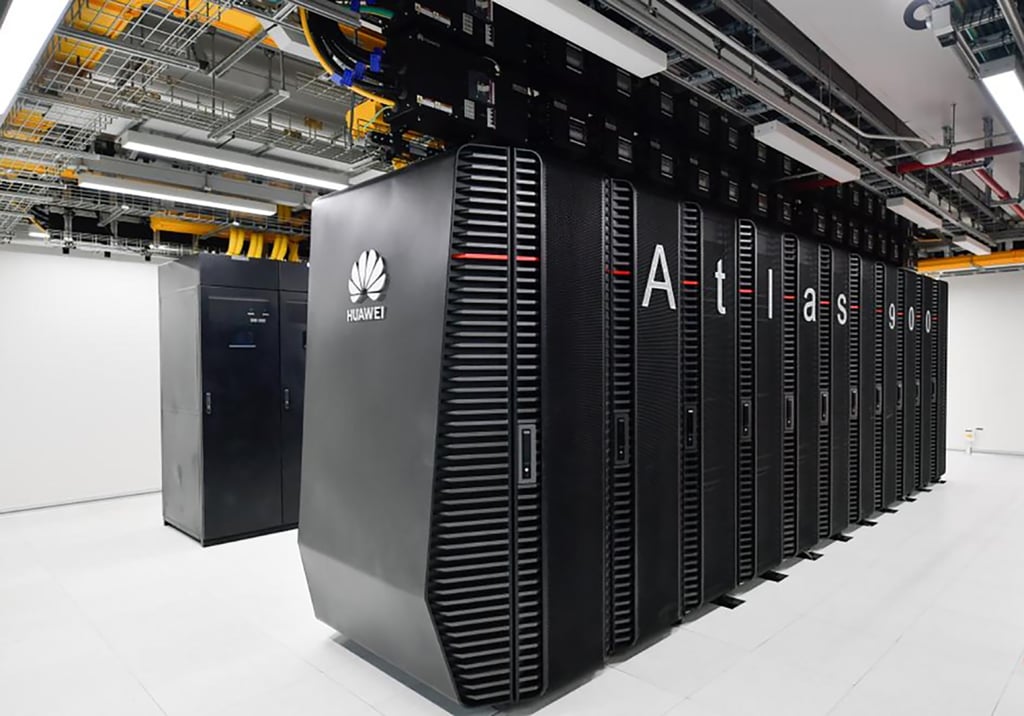
The plan calls for the “orderly deployment” of intelligent computing clusters with 10,000 graphics processing cards or those using 100,000 or more cards, alongside inference computing facilities tailored to different applications. It also calls for greater efforts to adapt infrastructure to home-grown computing chips.
The targets extend a rapid expansion already under way. China’s intelligent computing capacity had reached 2,185 eflops – short for exa floating-point operations per second – by the end of June, up 177 per cent from a year earlier, and the country had built 52 intelligent computing facilities each equipped with more than 10,000 accelerator cards, according to MIIT.
That means China would need to more than quadruple the June level to reach the 2030 target. By the end of July, capacity had already risen to about 2,450 eflops, according to the National Data Administration, an agency overseen by the National Development and Reform Commission.
The expansion builds on the “East Data, West Computing” project launched in 2022, which seeks to shift power-intensive computing workloads from densely populated eastern regions towards western areas with cheaper land and abundant energy. China has since formed a network centred on eight national computing hubs, 10 data-centre clusters and three regions focused on coordinating computing facilities with power supplies.