
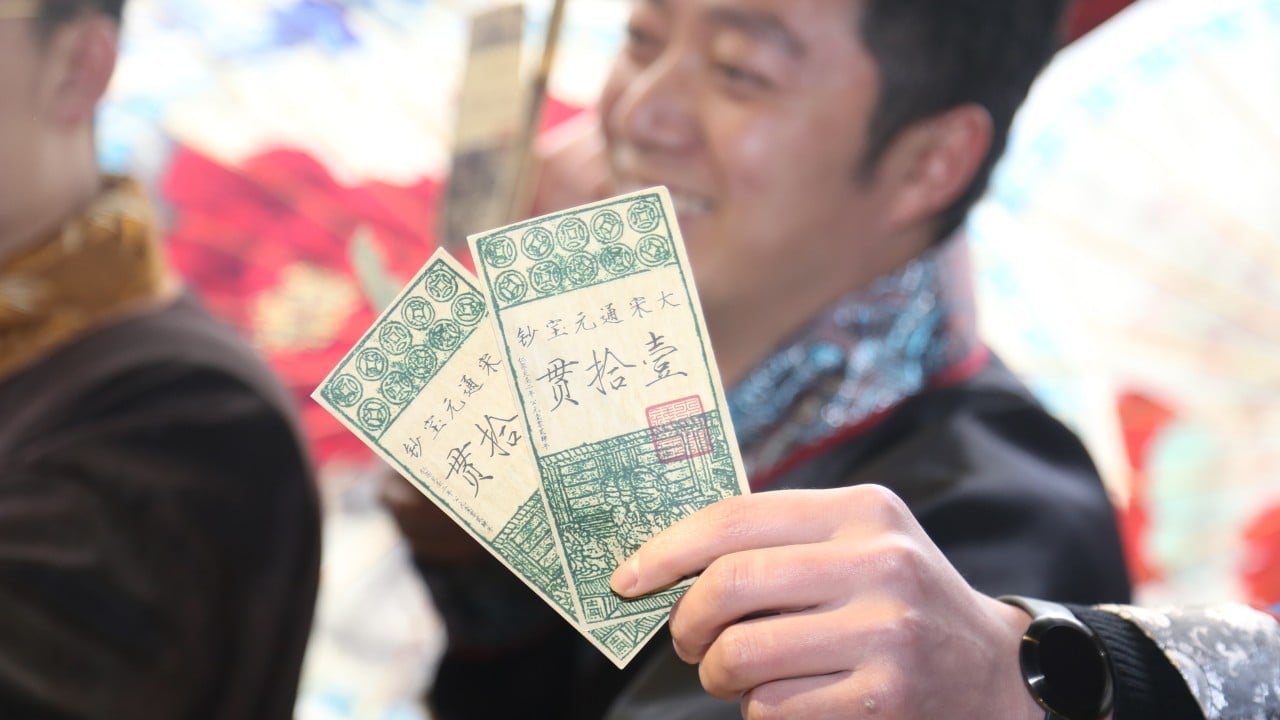
At least gold glitters. Long before the first paper banknotes fluttered through the financial houses of Europe, the bustling markets of 11th century China birthed an unprecedented financial “innovation”: the use of paper currency.
In the 1020s, burdened by the shortage of bronze coins and a rapidly expanding economy, merchants in the southwestern province of Sichuan began issuing paper promissory notes. This marked the genesis of jiaozi, the world’s earliest paper money. Soon, with the imperial government’s realisation of this tool’s power, the Song state eventually launched another form of paper currency, huizi.
With the issuance of jiaozi and huizi, China’s monetary system transitioned from the exclusive use of metal coins into an unprecedented era of state-backed fiat. This experiment pioneered a sophisticated financial practice centuries ahead of the rest of the world.
Advertisement
Before the introduction of paper currency, bronze and iron coins had been the lifeblood of the Chinese economy from the dawn of the Chinese imperial era in the 3rd century BC. The adoption of state-backed paper money lasted for nearly 200 years in one of the world’s largest empires.
To put this innovation into a global perspective, it happened at a time when paper itself was only just beginning to be manufactured and used in the West. It would take several centuries for similar concepts to take root globally. For instance, the Western world did not see a comparable government issuance of paper money until 1690, when the Massachusetts Bay Colony issued promissory notes to fund a military expedition.
Advertisement
China’s early adoption of paper money was not merely an accident of history, but a reflection of a deeply ingrained economic philosophy.
Unlike Western traditions that often treat money as a bottom-up medium arising from the demands of trade (and with intrinsic value like gold or silver), Chinese theorists held a different view: money is a top-down artefact of the state, whose value is derived entirely from the ruler’s authority.