
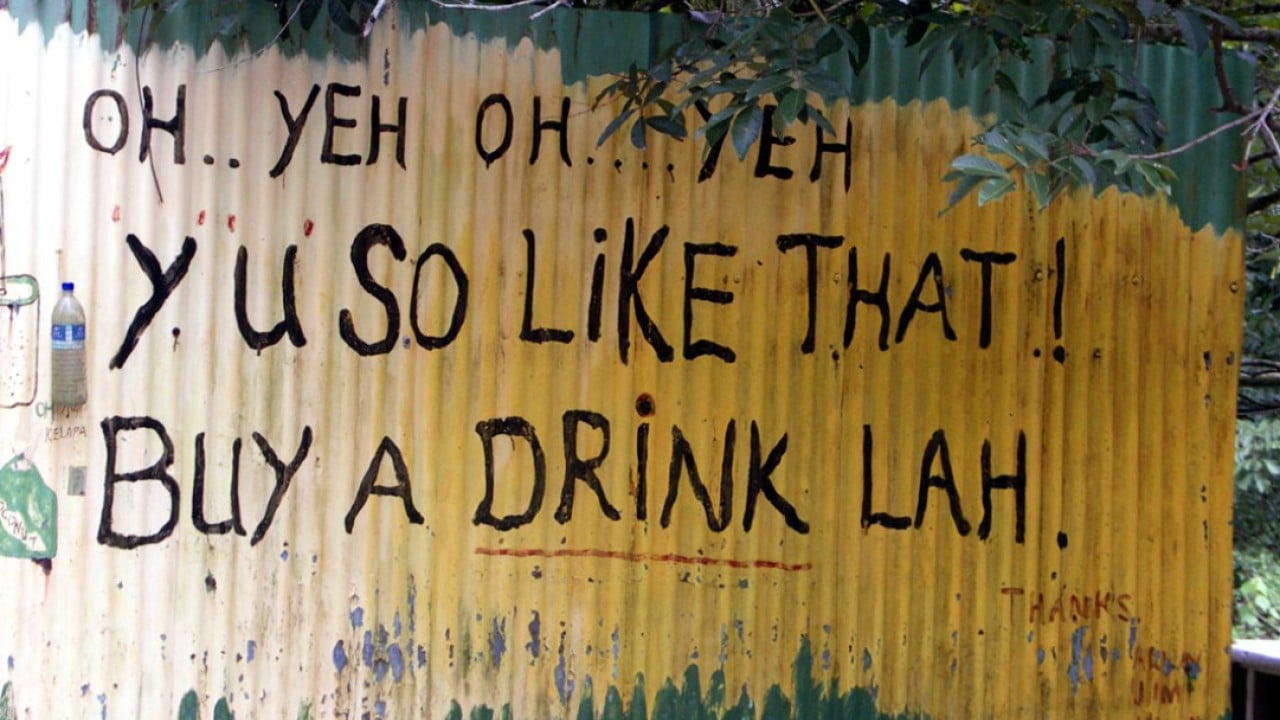
When Natasha Ann Lum was growing up, there was no place for Singlish – an English-based creole language in Singapore – at home. Her father was adamant that Lum and her brother not speak with broken grammar or use conversational markers such as “lah”, “lor” or “eh”.
“He didn’t have the luxury of education and felt like he missed out on work opportunities because he didn’t speak English at a level that was required, so he wanted to make sure my brother and I would be better off,” said the software engineer, 29.
But Lum soon realised speaking Singlish did not compromise her English skills, and now uses both languages interchangeably in different settings.
Advertisement
“When I order at the hawker centre, I love how a bond or connection is immediately formed when you speak Singlish,” she said. “But during meetings at work, I use standard English because it’s easier to articulate my thoughts and get my point across.”
Lum’s experience reflects Singapore’s changing perception of its colourful colloquial language. Once viewed by some as a detriment to the city state’s economy and communication with outsiders, Singlish is now a treasured marker of national identity.

Singlish combines Singapore’s four official languages – English, Mandarin, Malay, Tamil – as well as dialects such as Teochew, Hokkien and Cantonese.