
Two years ago, Narendra Modi skipped the Shanghai Cooperation Organisation’s (SCO) summit in Astana entirely, sending his foreign minister instead.
That absence was redressed first at last year’s summit in Tianjin and again this week in Kyrgyzstan, where India’s prime minister stood shoulder to shoulder with China’s Xi Jinping, Russian President Vladimir Putin and the leaders of other SCO member states.
Analysts say New Delhi’s revived engagement with the 10-member bloc reflects both its hedging against an evermore unpredictable United States and its desire to counterbalance China’s influence at the SCO – even if they expect it to remain a “somewhat aloof member”.
Founded in 2001 by China, Russia, Kazakhstan, Kyrgyzstan, Tajikistan and Uzbekistan, the SCO was originally envisaged as a vehicle for Eurasian security cooperation, expanding over the years to include Pakistan, Iran and Belarus as full members, with a wider circle of Asian and Middle Eastern countries as observers and partners.
India joined in 2017, but it has never been an entirely comfortable fit. China is widely seen as the bloc’s dominant force, bankrolling regional trade and infrastructure projects at a scale no other member can match, while the presence of Pakistan, Delhi’s arch-rival, serves as a perpetual irritant.
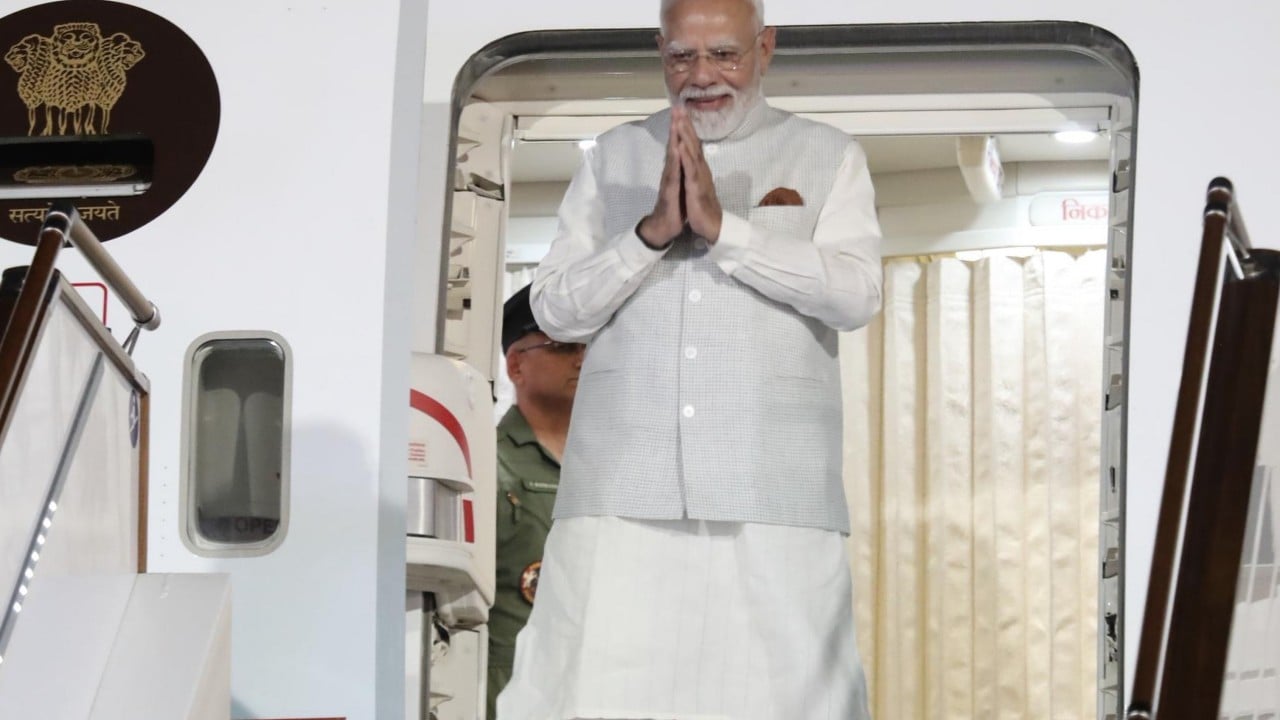
Still, Modi arrived in the Kyrgyz capital of Bishkek on Sunday to attend the 26th SCO summit, a two-day gathering concluding on Tuesday, where he was expected to address fellow heads of state on regional stability, counterterrorism and economic cooperation.