
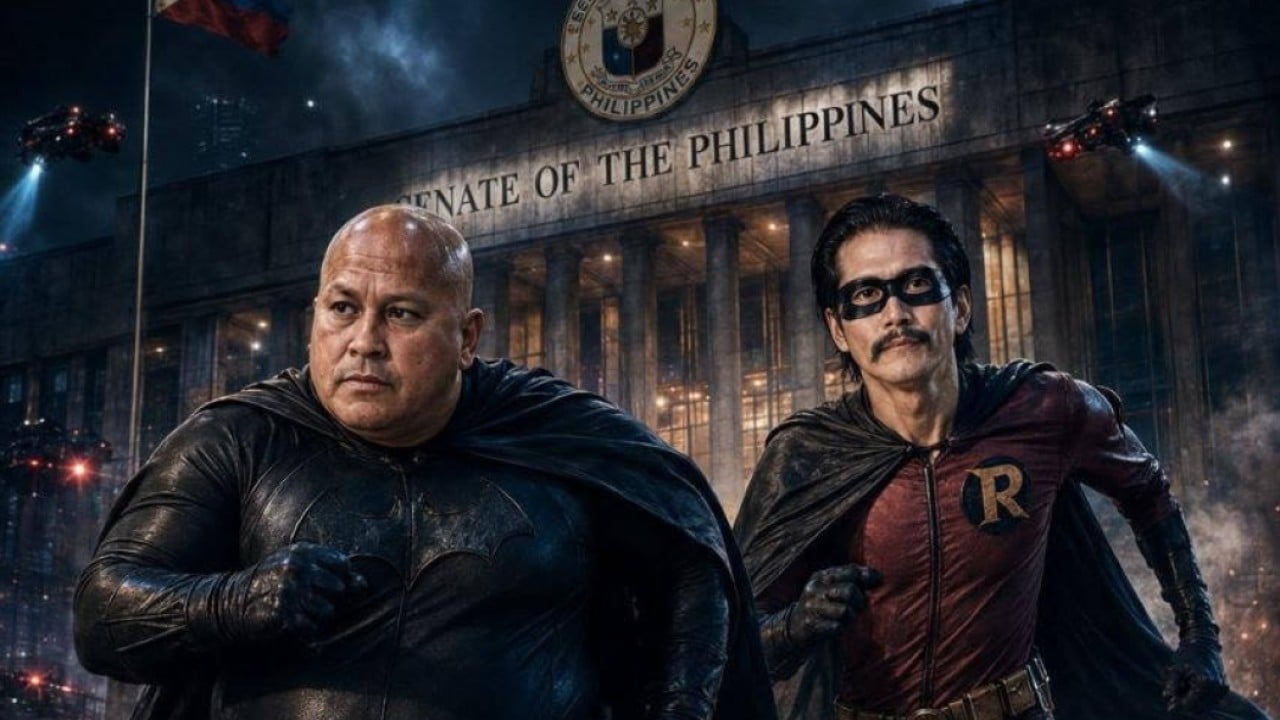
The Philippines is no stranger to politically weaponised memes and internet trolls. What has changed is the way information warfare is waged, now requiring nothing more than a smartphone and a well-crafted prompt.
Supporters of former president Rodrigo Duterte helped pioneer the industrialised use of social media to spread disinformation, rewarding loyalists and destroying opponents through the ruthless deployment of memes, viral videos, paid amplifiers and manufactured trending topics.
Analysts say generative AI tools are supercharging this online arena – handing ordinary social media users faster, more visually arresting ways to mock the powerful, while also allowing established propaganda networks to scale up content production at unprecedented speeds.
Advertisement
“What I see,” said Dominic Ligot, founder of advocacy group Data and AI Ethics PH, “is an ever-rising arms race to put out AI-generated content, which will further confuse and overwhelm the public.”
That dynamic exploded into view earlier this month. The target was Senator Ronald “Bato” dela Rosa, a fierce Duterte ally and the most recognisable enforcer of the former president’s bloody drug war.
Dela Rosa slipped into the Philippine Senate on the morning of May 11, pursued by government agents and wanted by the International Criminal Court. Within hours, he had cast the deciding vote in a chamber leadership coup that handed control to a Duterte ally – and then he simply stayed, as his allies declared him under “protective custody”.