
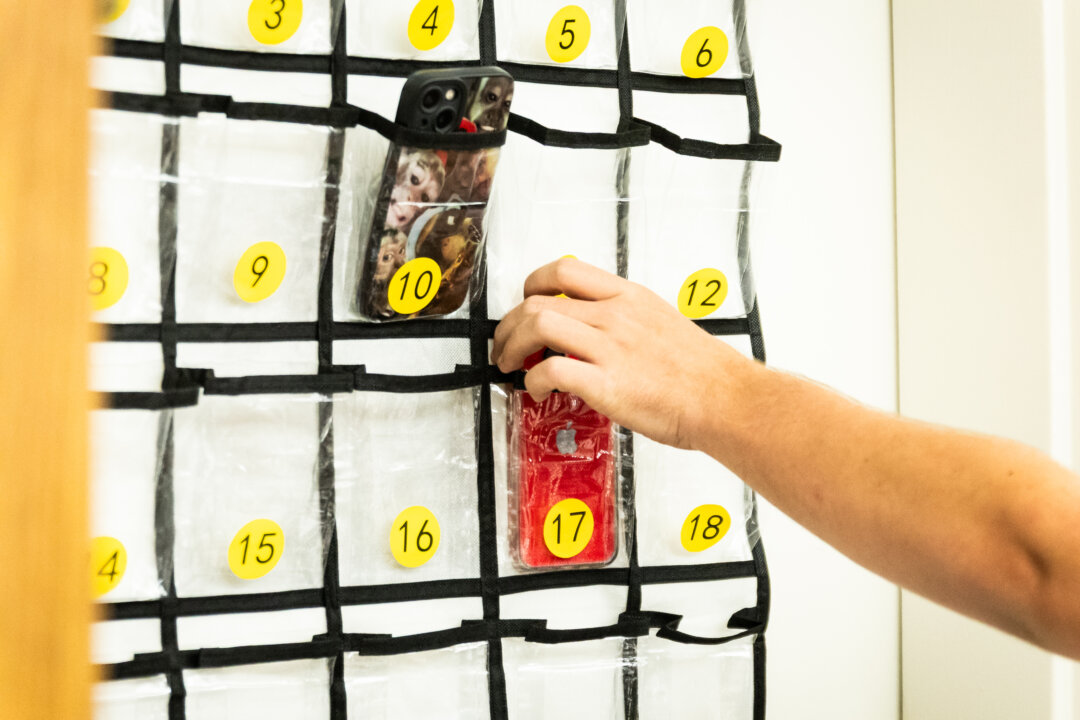
Strict phone restrictions in K-12 schools have restored up to two weeks of learning time per academic year so far, a new report shows.
The study, led by Harvard University’s Center for Education Policy Research in partnership with Dartmouth College and NWEA education advising and assessment organization, analyzed performance of 3.3 million students across 4,600 schools from 2021 through the end of the 2025-2026 academic year. It specifically looked at math and reading growth in grades 3 through 10.
When smartphones became commonplace around 2013, the research found that students began losing two to three weeks of learning time each year, and eighth graders eventually fell almost a year behind. Subsequent restrictions “seem to plug about half of that leak,” said Tom Kane, Harvard professor and one of the leaders of the study, in a Nov. 17 statement.
“While schools should not expect a large boost immediately, storing phones is a cost-effective way to add one to two weeks of instruction each year,” said Douglas Staiger, an economics professor at Dartmouth College who co-authored the study. “That could add up over time, just as the initial declines did.”
Some type of law is in place restricting student phone use in public schools in the vast majority of states, though the lack of a state law doesn’t necessarily prohibit restrictions at the district level.
Research for the study involved an analysis of National Assessment of Educational Progress scores, additional assessments from NWEA, 1,369 schools in states with bell-to-bell bans, 211 schools in states with instructional period bans, and 1,389 schools from states that did not have bans in the 2025–2026 academic year.
The study did not look at the effects of smartphone and social media use outside of school.
However, researchers still recommended restricting several social media platforms and encouraged state education departments and school districts to establish mechanisms for tracking student engagement, such as participation in extracurricular activities, homework completion, time spent reading, in-person socialization, and measures of anxiety and depression.
“We have lacked the data for understanding the role that cell phones are playing in students’ lives. Obviously, the social media companies know how much time students are spending on their platforms, but their data have not been linked to student academic or non-academic outcomes,” Kane said.
“We have an opportunity to build an evidence base on any negative impacts of social media use on students and to find commonsense regulations for reducing harms.”
A 2025 study of a large public school district in Florida, the first state to implement a phone ban, also determined that restrictions resulted in improved student performance.
That research, completed by RAND Corporation and the University of Rochester, found a slight increase in student test scores and reduced unexcused absences after the Sunshine State’s legislation passed in 2023.
The study indicated that students initially resisted the new policy. Suspension rates increased by double digits in the first year, but then the rate declined dramatically in 2024–2025.
“The challenge that educators face then is to minimize these short-term adverse effects until a new status quo without cellphones is established in schools,” the study found.
We had a problem loading this article. Please enable javascript or use a different browser. If the issue persists, please visit our help center.