
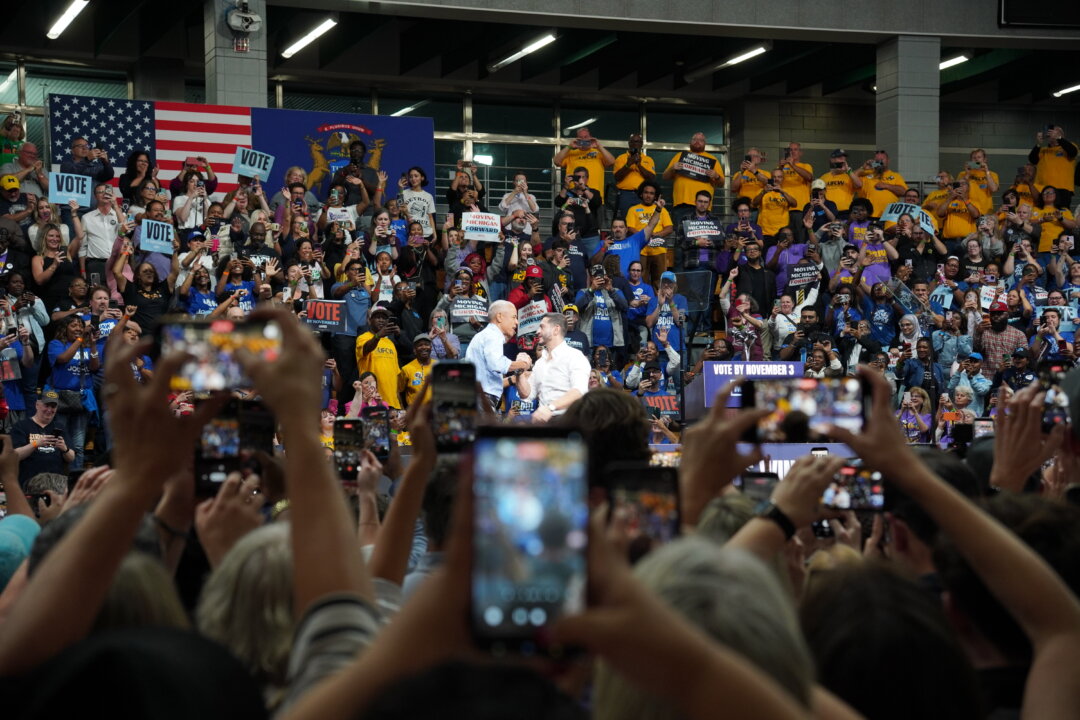
SAGINAW, Mich.—As Democrats try to wrest Senate control from the GOP, they must defend an open seat they’ve held since 1979, in a critical purple battleground state narrowly won by President Donald Trump in 2024.
Once considered part of the “blue wall” of states that voted for Democrats in every presidential election from 1992 to 2012, Michigan has earned its status as a purple battleground.
The state swung for Trump twice; Republicans have had a state government trifecta over a total of 14 years since 1992.
At the same time, Republicans haven’t won a U.S. Senate election in the Great Lakes State since 1994, and that was the first time in more than 20 years. Former Rep. Mike Rogers (R-Mich.) ran and lost to Sen. Elissa Slotkin (D-Mich.) in 2024 with Trump at the top of the ticket. He’s trying again this year in a less favorable political environment without the president’s ballot boost.
Before the final week before the election, polls showed him staying neck and neck with his opponent, epidemiologist and former Detroit and Wayne County Health director Abdul El-Sayed, a progressive Democrat to the left of Slotkin on most issues. Now, new surveys from CNN, CBS News, and Glengariff have widened El-Sayed’s lead. The race has devolved into a question of electability on both sides: Rogers argues El-Sayed’s platform makes him “too extreme for Michigan,” and has alleged the Rhodes Scholar is tied to Islamist groups like the Muslim Brotherhood.
El-Sayed has hit back, denying Rogers’ claims, calling the former FBI agent who supported and voted to extend the Patriot Act “Mass Surveillance Mike” and suggesting he’s tied to the “deep state.” And in a state where Trump’s approval rating is underwater with likely voters, the populist Democrat has also argued Rogers will simply rubber-stamp the president’s agenda.
The back-and-forth has reached a fever pitch as the race winds down into the week before the election, with Rogers receiving a last-minute endorsement from the fiance of El-Sayed’s primary opponent, Rep. Haley Stevens (D-Mich.) Meanwhile, Democrats are overperforming in red states such as Iowa, Kansas, Alaska, and Ohio.
As of Oct. 23, a consensus rating from election forecasters had put all but Alaska into the “toss-up” category. All of them backed Trump by double digits in 2024.
If El-Sayed wins, he will be one of the first candidates of his kind—a strong critic of Israel who supports Medicare for All and wealth taxes and wants to abolish Immigration and Customs Enforcement—to win statewide in a purple battleground like Michigan with a history of swinging back and forth between both parties.
But if Rogers wins, it would be a stunning upset after the former congressman failed in 2024 with Trump at the top of the ticket and a more favorable national environment for Republicans.
It would mean flipping a seat held by Democrats for more than four decades, while throwing off the math needed to reclaim a Senate majority. Instead of four pickups, Democrats would need five to gain the upper chamber.
“I think the Rogers campaign is really trying to make it seem like [El-Sayed] is sort of the kind of outlier, crazy Democrat in the race. That seems to be a maybe somewhat effective tactic based on what we’re seeing in the polls,” Joshua Koss, an assistant professor of political science at Eastern Michigan University, told The Epoch Times.

In a year when polls show previously uncompetitive House and Senate races increasingly leaning toward Democrats, Michigan could be one of the biggest surprises of the 2026 midterm cycle, regardless of who wins.
This is where the two candidates stand on key issues in the final week before Election Day, how they’re trying to litigate the electability argument, and where some Michigan voters stand as the historic 2026 midterms come to a close.
Running to the Center
El-Sayed and Rogers are both backing a pause on new data center development in Michigan, but the two diverge on almost every other issue.
El-Sayed has also called for eliminating tax loopholes for large corporations and imposing a wealth tax on billionaires. Rogers supports tax cuts for working families and backed Trump’s One Big Beautiful Bill Act, which passed sweeping tax cuts while also cutting spending for Medicaid and food stamps.
Both advocate for lowering energy prices, but blame different causes for their recent surge.
El-Sayed links skyrocketing gas and diesel costs to the war in Iran. Rogers has suggested Democrats’ policies at the state and federal level, combined with regulations and Michigan’s statewide energy standards, have created an “artificial increase” in energy costs.
But in the race’s final weeks, Rogers is running closer to the center by taking a step he had avoided until late September: rebuking Trump.
Previously a strong supporter of both the Iran war and Trump’s tariff regime, Rogers has now criticized both as recent polls have given El-Sayed an increasing edge over the former congressman in the final weeks of the race.
On Oct. 7, Rogers released a video ad calling for an end to Trump’s “tariff war” because “prices are too high and Canada is not our enemy.”
Two weeks prior, Rogers also broke with Trump on the Iran war while advocating for a suspension of diesel exports and gas taxes to lower prices at the pump.
This was likely an important break for Rogers to make based on much of the polling coming out of the state, which found voters overwhelmingly pointing to rising prices and poor economic issues as their main motivating factors this year, Jim Lee, CEO of Susquehanna Polling and Research, told The Epoch Times.
Lee said that 2026 is a “pocketbook election” like 2024, when many voters—particularly independents—flocked to Trump over inflation frustrations during the Biden administration, and like 2020, when some abandoned Trump amid COVID and the economic uncertainty that came with it. That may even impact some staunch conservative voters this year.
“I voted for Trump. I’ve been to 30 rallies across the United States,” John Wayne McNew told The Epoch Times at an El-Sayed town hall in Saginaw, Michigan, in late September.

The tradesman wore a Trump hat and a shirt with the word “freedom” on it and said he went to the event to educate himself and give El-Sayed “fair opportunity as a man to represent himself accordingly.”
“I love [Trump]. I respect the man, but there’s things he’s doing that’s not right, and don’t represent true America. I don’t care if you’re Democrat or Republican if it’s against America,” he said.
McNew said that he felt Trump had betrayed working-class Americans like himself by breaking his promises and starting a war with Iran that has driven gas prices up to $4.62 a gallon in Michigan on Oct. 30. A year ago, gas was around $3.00 a gallon on average in the Great Lakes State.
He said he knows other conservatives who feel frustrated with both Trump and the GOP this year and are considering voting for a Democrat for the first time in their lives. McNew said he wasn’t particularly inspired by Rogers’ remarks at a recent event and still hasn’t decided how he’ll vote this year.
‘Too Extreme’ for Michigan?
Breaking with Trump is not Rogers’ only campaign strategy. With polls showing him down or nearly tied with his opponent, Rogers said that he’s running against a different kind of Democrat, a progressive he says is “too extreme for Michigan.”
According to an analysis by AdImpact, El-Sayed faced a slew of attack ads and more than $60 million in opposition spending before he defeated Stevens in the 2026 Democratic Senate primary. Republicans and some Democrats attacked him for supporting a ban on arms sales to Israel, abolishing Immigration and Customs Enforcement, and for supporting Medicare for All.
Rogers has also grilled El-Sayed on his previous association with internet streamer Hasan Piker, who campaigned with the Democrat ahead of the August primary.
Piker faced scrutiny over a 2019 statement that the United States “deserved” the Sept. 11, 2001 terror attacks. El-Sayed distanced himself from the streamer’s statements and stepped away from campaigning with Piker after the primary.
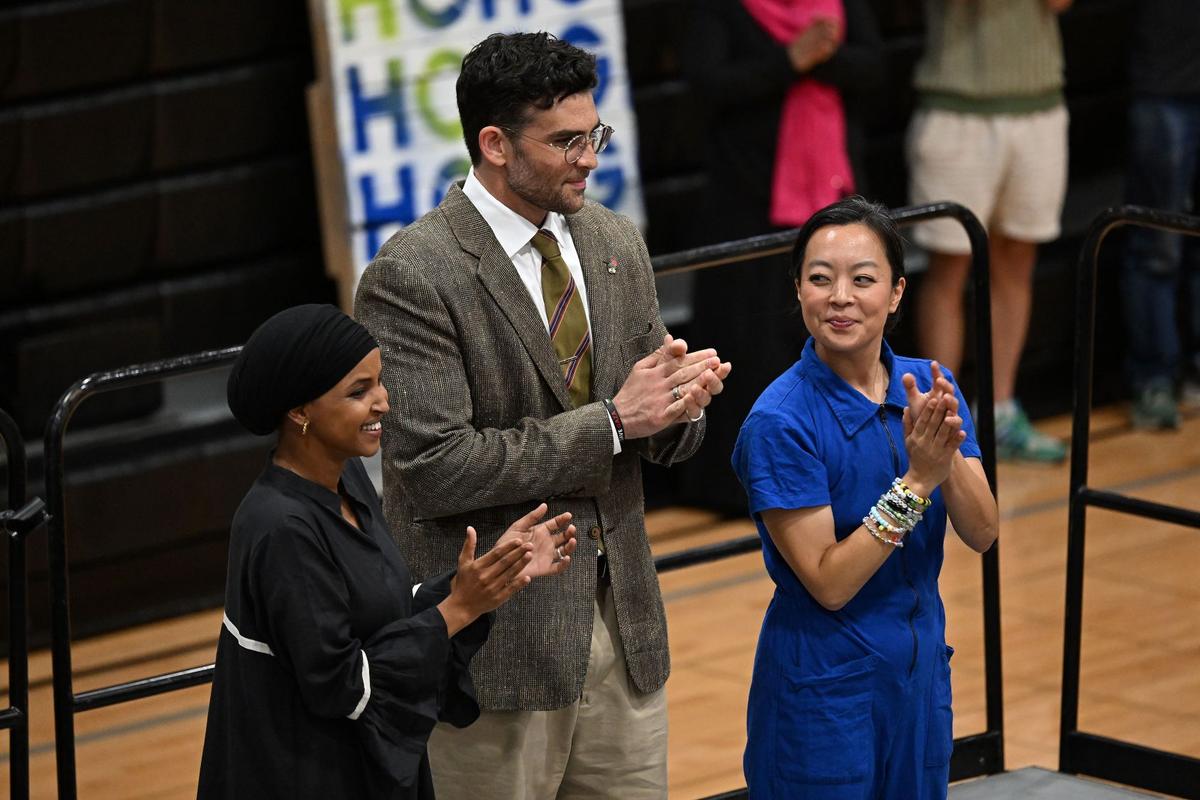
Piker has walked the statement back multiple times since 2019, as recently as last summer.
Some have also taken issue with Amir Makled—a civil rights attorney running for a seat on the University of Michigan Board of Regents—introducing El-Sayed at an April campaign rally.
Makled has been criticized for sharing social media posts referring to a deceased member of Hezbollah as a “martyr,” an archived version of his since-deleted post shows.
The Epoch Times has contacted Makled for comment.
The criticism has gone much further than simply El-Sayed’s campaign associations, with Trump directly calling the Democrat a “jihadist” and comparing him to the 9/11 terrorists during a recent campaign rally in Port Huron.
El-Sayed is the son of Egyptian immigrants and would be the first Muslim elected as a U.S. senator.
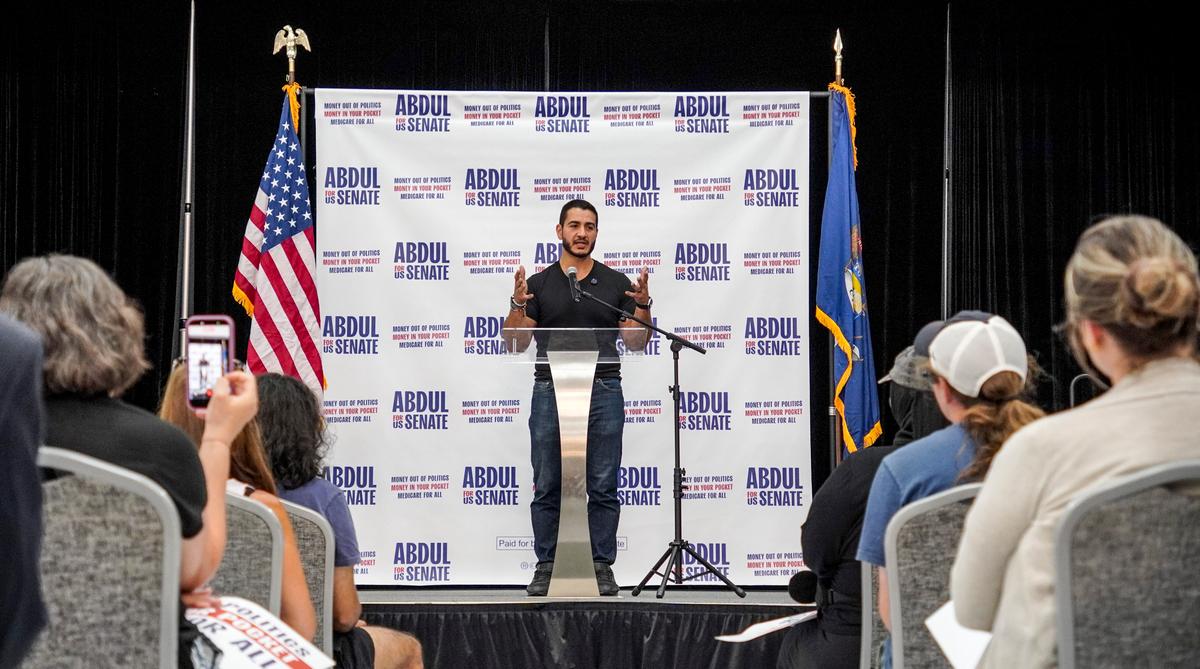
“I think that there’s probably some level of, if not necessarily fear, uncertainty among Michigan voters when it comes to that, paired with the idea that he is sort of painted as this extremist as well,” Koss said.
Rogers has repeatedly alleged that El-Sayed not only supports the Egypt-based Muslim Brotherhood, but has also said that his mother and half-sister have direct connections that make the Democrat unfit to serve in the Senate and receive classified briefings.
In January, the Trump administration designated some branches of the Muslim Brotherhood as a terrorist organization. El-Sayed, who was mostly raised by his father and stepmother, has disavowed the group, denied having any ties to it, and has said he has never spoken to his mother about the organization.
When the group’s candidate won the 2012 Egyptian presidential election, Rogers, then chairman of the House Intelligence Committee, said: “Do I think there are moderate Muslim Brotherhood individuals we are going to have to reach out to and talk to? Yes. But we are going to have to watch it carefully.”
Kailey Mize, who attended El-Sayed’s town hall in Saginaw with her friend Kennedy Miller, said some in Michigan are concerned that El-Sayed’s name and ethnicity might impact turnout.
“And while I don’t feel that way, and while most of my friends and family don’t feel that way, they’re afraid that because of those misconceptions from other people, it will make it harder for them to come out,” Mize told The Epoch Times.
Miller said she has heard a similar sentiment in conversations with certain members of her family, but said El-Sayed is “not tied to the religion” in the ways that some claim.
“This person was born here in Michigan. This is a Michigan-born doctor,” she told The Epoch Times, referring to El-Sayed’s medical and public health degrees.
According to the 2020 Religious Census, Michigan has the sixth-largest estimated Muslim population in the U.S. and the fifth-highest estimated per capita rate.
“I think the Muslim community, by and large, has made gains in this country, and the perception of them has not gotten worse. It’s gotten slightly better. So I don’t think that that’s [Republicans’] ace in the hole,” Lee said.
Rogers in the Spotlight
El-Sayed has criticized Rogers’ record in Congress and some of the former FBI agent’s past statements.
In a social media post, El-Sayed called Rogers “Mass Surveillance Mike” above a clip of an interviewer asking Rogers what his greatest accomplishment in Congress was, prompting Rogers to name his work on passing the Patriot Act.
El-Sayed has also accused Rogers of “deep state grift,” commenting on a Drop Site News investigation published on Oct. 13 reviewing allegations and criticisms of Rogers’ role in investigating the 2012 Benghazi attack, in which a terrorist group killed four Americans at a U.S. compound in Libya.
Conservative non-profit organization Judicial Watch, which investigates alleged government overreach, reported in 2014 that British-based security contractor Aegis Defense Services had been involved in Libya at the time of the attack, citing documents released by WikiLeaks.
Rogers’ wife, Kristi Rogers, was a top executive at Aegis from 2006 to 2011, according to her LinkedIn profile.
Some Republicans, including political operative Dick Morris, accused Rogers of having a “conflict of interest” that impacted his investigation of Benghazi as House Intelligence Committee chairman at the time.
In a statement to Drop Site, a lawyer for Rogers said: “Neither Mrs. Rogers, Aegis LLC, nor any Aegis entity has ever entered into a contract with any department of the U.S. government to perform work in Libya, and none was involved in the Benghazi attack.”
Others have pointed to Rogers’ performance in his previous Senate race as raising potentially bigger questions about his electability this year.
Rogers lost to Slotkin in 2024, in one of the most favorable electoral environments for Republicans in modern history. Trump became the first Republican to win the national popular vote since 2004, and won Michigan by 1.4 percentage points, a swing of 4.2 percentage points compared to 2020.“

But this wasn’t enough to push Rogers over the edge, although he trailed Slotkin by just 0.34 percentage points in 2024. Beyond carrying most of Michigan’s rural counties, Rogers fared well in Livingston and Macomb counties, both of which have mixed suburban and rural populations and are near the Detroit area.
In this year’s primary, El-Sayed carried Livingston by less than 1 percentage point, while Stevens won Macomb by 7.5 percentage points.
Lee said Rogers will need to drive turnout among suburban and “affluent” Republicans in both of those counties to win in November, while simultaneously overcoming the same factors sinking the president’s approval ratings: the Iran war, rising gas prices, and inflation.
“El-Sayed is staying laser-focused on the economy and inflation, and that’s the winning message. It’s not terrorism. It’s not 9/11. It’s not ‘socialism is going to ruin our country,’” Lee said.
Economy Takes Center Stage
Based on Lee’s statewide August poll at Susquehanna, economy-focused voters backed El-Sayed by a 9-point, “statistically significant” 47–38 margin over Rogers, Lee said.
As of Oct. 23, a consensus rating based on projections by seven major election forecasters showed the odds leaning toward El-Sayed.
Even though Rogers has strategically broken with Trump on a few key issues, Lee said that some voters might see it as too little, too late, particularly if they’re concerned the former congressman will simply be a reliable Senate ally for the president.
“The electability problem is really for Rogers because he’s running in an extremely difficult environment,” Lee said.
Michigan and Illinois have seen the highest rises in gas prices in recent months in the Midwest, according to AAA.

“It’s life,” John Hoffard, a Republican from Bay City, told The Epoch Times when asked about the current state of the economy. Hoffard said he plans to vote “for the Republican” in the race and said his number one issue is cracking down on fraud.
The Epoch Times interviewed voters across several counties ahead of the general election. Most of them said they were worried about the economy and expressed concerns over rising prices, including fears over how much it will cost to heat their homes this winter.
Sheryl Maloney was sitting on a park bench in Bay City near the Saginaw River as a drizzle of rain pelted the ground. She said it cost $5 a gallon to fill up her gas tank for the drive from Detroit because Trump started a “war that nobody wanted, and that’s costing everybody.”

“There are a lot of things going on that are crazy,” she told The Epoch Times. “I really like [El-Sayed]. When I listen to him, he’s talking family. He’s talking, you know, schools, roads, the things that are important to us.”
John and Melissa Stewart are a retired couple who have lived in the Saginaw area their entire lives. John worked at General Motors, which has had a plant in Saginaw since 1919.
The couple said they worry about how their children can afford to feed themselves and their grandchildren, especially after factoring in health care, child care, and gasoline.
“I just don’t understand how we can be able to even carry on like this without some change,” Melissa told The Epoch Times.
Saginaw teacher Dawn Granberry said the biggest issues on her mind this year are health insurance costs, gas and food prices, and the state of the economy.
But when asked if she thinks some might vote differently this year compared to 2024, she told The Epoch Times that a lot of Michiganders are hesitant to say who they are supporting and encouraged everyone to “get out to vote” regardless.
Granberry said she was attending El-Sayed’s town hall in Saginaw to hear his platform “and listen.”

“If you’re not sure, go to these situations where you have an opportunity to listen to [candidates] firsthand on your own,” she said.
Some voters say they’re still on the fence heading into November.
Tamika Cromer is a senior commercial attorney in Farmington Hills, a city in Oakland County that is almost 25 miles northwest of Detroit. “Safety and the cost of living” are foremost on her mind ahead of the election, Cromer told The Epoch Times.
While she said she will “likely” vote for El-Sayed in November, she’s “not final yet.”
Cromer spoke to several voters who recently attended El-Sayed events in the Flint and Saginaw areas and left “feeling really good about him,” but said some Michiganders feel like they don’t yet fully know the progressive populist.
“He’s not sort of a typical born and raised politician. So we only know what we see. The commercials, of course, now are crazy, right? So that’s all people pay attention to,” Cromer said.
Barbara, a retiree from Farmington Hills who asked to go by her first name only, said rising prices are her number one issue ahead of the election, but she still hasn’t settled on either El-Sayed or Rogers.
Whichever candidate can convince her he will “cut inflation” and improve the country will likely win her over, she said.
But it may take even more to convince Republicans like McNew to pull the lever for a Democrat for the first time in their lives.
“Not everybody’s concerned about health care like they claim they are. We’re going to get health care. I think the war and the current gas prices are America’s two top issues right now, and I think that most of America don’t approve of the [expletive] war that way. I don’t,” McNew told The Epoch Times.
We had a problem loading this article. Please enable javascript or use a different browser. If the issue persists, please visit our help center.