
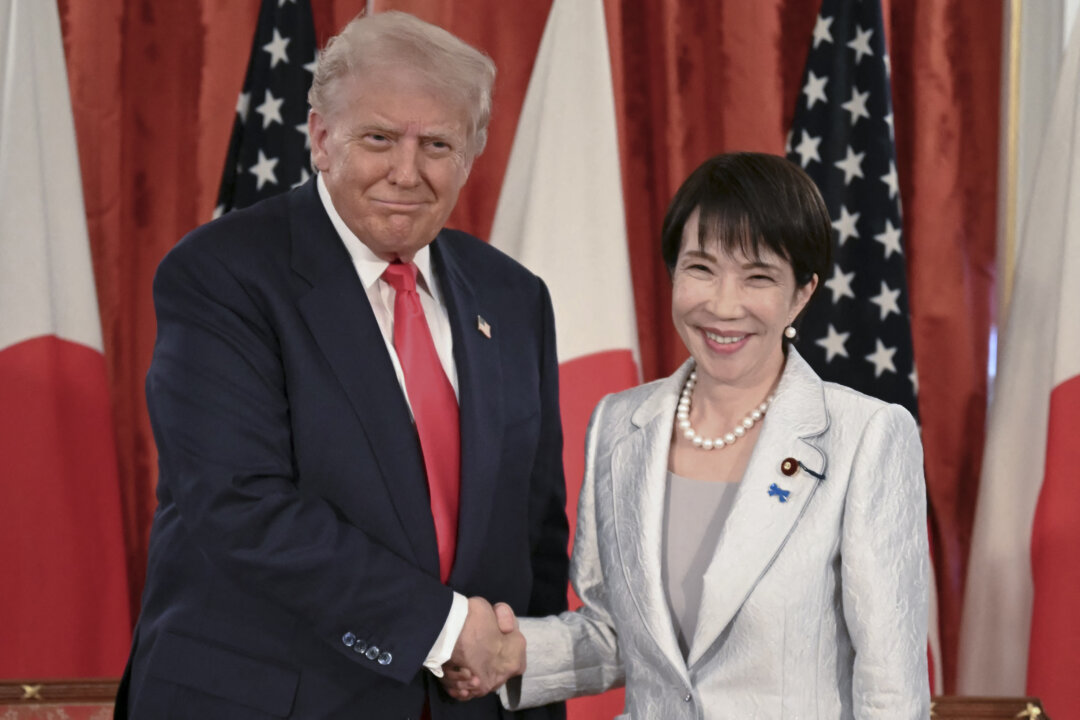
Chinese leader Xi Jinping’s rare-earth squeeze on Japan is backfiring, pushing Tokyo and Washington to join forces to shield their economies and, an expert says, likely strike back.
“Xi is spurring the Japanese and the Americans to cooperate on ‘economic defense’ and probably even ‘economic offense’ against China,” Grant Newsham, a retired U.S. Marine officer and former U.S. diplomat, told The Epoch Times.
“China will find that it is driving the free nations to decouple from China—and to greatly reduce or eliminate reliance on Chinese sources for materials of most importance.”
China accounts for roughly 70 percent of global rare earth mining production and controls nearly 90 percent of the world’s refining and processing capacity.
But Beijing is weakening its position, since Japan, the United States, and other Western nations it targets have hardware and know-how China cannot do without, according to Newsham.
“China may find its access to these essential products and technologies restricted,” he said.
Newsham’s remarks follow comments by the Chinese Foreign Ministry in support of Beijing’s rare earth export curbs on Tokyo at an Oct. 21 press briefing.
Mao Ning, the ministry spokesperson, claimed the export restrictions were meant to “thwart Japan’s remilitarization and attempt to possess nuclear weapons.”
She was responding to a question about an Oct. 20 Financial Times report that Japan is months away from running out of yttrium, a rare earth element essential to producing cars, chips, and jet engines.
The report said Tokyo has asked Washington to help persuade Beijing to ease its export controls.

Chinese customs figures put yttrium oxide shipments to Japan at 4,000 kilograms (about 8,820 pounds) in September 2026, down from 51,000 kilograms (about 112,400 pounds) a year earlier.
Japan–China relations have soured since Japanese Prime Minister Sanae Takaichi said in November 2025 that her country would be justified in activating its Self-Defense Forces if Taiwan were attacked.
Taiwan is a self-governed democracy that the Chinese Communist Party (CCP) has never controlled but has vowed to annex by force.
The Chinese regime responded to Takaichi’s remarks by sharply cutting rare earth exports to Japan and staging a string of military provocations.
No Political Payoff
Bonnie Yushih Liao, a senior research fellow at the Japan Forum for Strategic Studies in Tokyo, said that even if Japan’s yttrium stocks are as thin as reported, she would be wary of calling the curbs “a political success.”
“Economic leverage is not the same as political compliance,” Liao told The Epoch Times.
“China can make production more expensive or uncertain without necessarily persuading Tokyo to change its security policy.”
Liao said Tokyo’s appeal to Washington should also not be confused with a concession to Beijing.
“The supply chain itself crosses borders: American defense and aerospace industries depend in part on Japanese manufacturing,” Liao said.
“Seeking American engagement can be a practical response to a shared industrial vulnerability, rather than evidence that Japanese political preferences have changed.”
Not a ‘Magic Weapon’
Yoichiro Sato, a professor at Ritsumeikan Asia Pacific University in Japan, said China’s weaponization of rare earth exports has negatively affected Japan’s electronics, ceramics, alloys, and other industries.
“Substitutions are possible to some degree with other rare earth material,” Sato told The Epoch Times.
“However, for a short to medium term, the tight supply will push the production cost of the Japanese companies.”
Newsham said the regime’s curbs on yttrium have caused immediate concern and sent Japan scrambling for alternatives, but the country can almost always find enough in the near term.
“Japan has for a long time—since 2010 at least—understood the Chinese use of critical minerals as a ‘weapon’ by withholding exports,” Newsham said.
“And Japan has, overall, reduced dependencies on Chinese sources down to 60 to 70 percent compared to the United States’ and other nations’ 90 percent plus reliance on China for processed rare earths.”
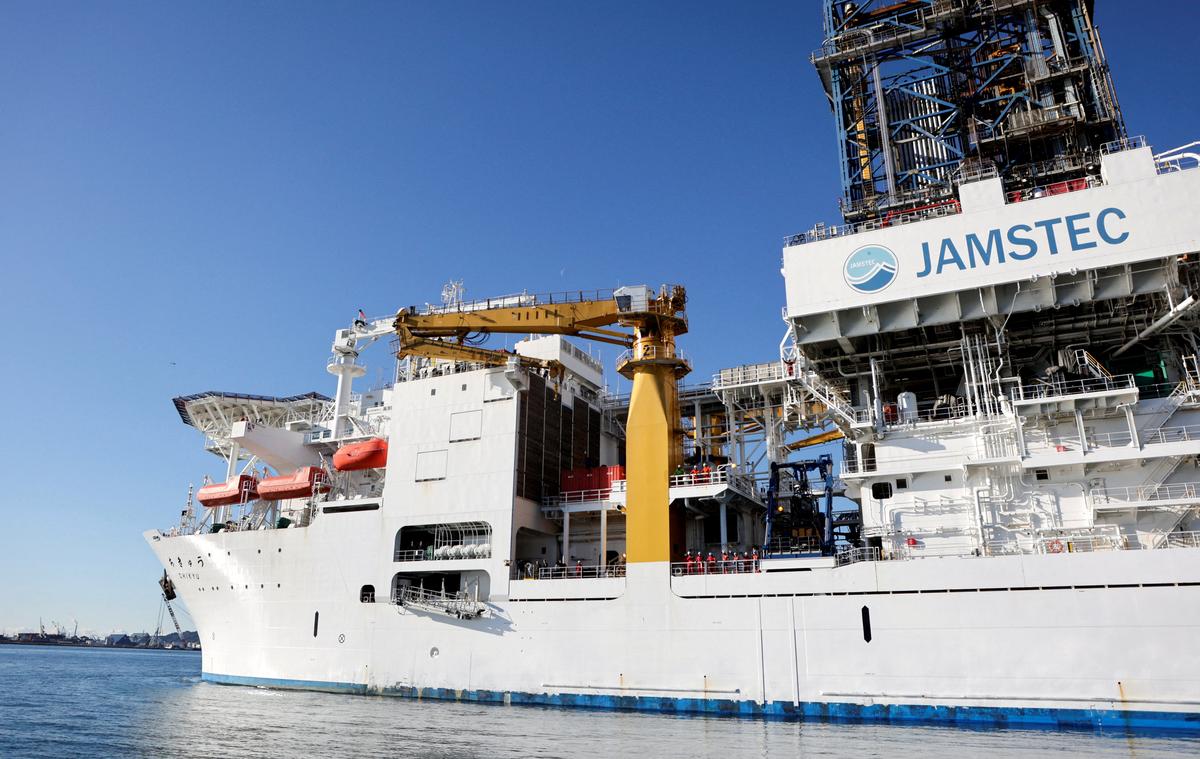
Newsham said Japan is also locating new supplies, including from the seabed in its territorial waters, while Japanese companies work to build processing plants at home and abroad.
“The Chinese will learn that restricting exports of a certain material or item in order to apply political pressure on Japan is not the ’magic weapon’ they think it is,” he said.
“And over time it is no longer a weapon at all as the intended victim simply finds or develops other sources.”
Costly for Beijing
Liao said repeated supply interruptions are changing how Japanese companies weigh the dangers of sourcing from China.
“Once businesses begin treating geopolitical exposure as a recurring operating cost, their investment decisions may change even without any dramatic political announcement,” she said.
Sato said a wider fight carries risks for the regime, since Japan has already tightened controls on exports to China of semiconductor manufacturing equipment, materials and other items with possible military uses.
“Escalation of the mutual sanctions will partially delink the two economies in high-end technology products,” Sato said.
Strengthening US-Japan Alliance
Takaichi has held nine meetings and phone calls with President Donald Trump since taking office in October 2025, including two in a single week in September, according to an Epoch Times tally.

Amid the flurry of high-level contact, Liao said Tokyo and Washington can play a larger role together, and the most consequential change in their relationship may lie beyond the military sphere.
“The next test of alliance resilience is not only what Japan and the United States can defend, but what their industries can continue to produce under pressure.”
U.S. and Japanese government and company officials met on Sept. 10 to discuss supply bottlenecks affecting access to Chinese yttrium, according to a Reuters report.
Liao said it demonstrates that “supply-chain vulnerabilities have entered practical alliance consultations.”
“Japan brings advanced materials science, precision manufacturing and semiconductor equipment expertise,” she said.
“The United States brings research, financing capacity and substantial aerospace and defense demand.”
Newsham said most nations in the region welcome a tighter bond between Tokyo and Washington that could fend off Chinese domination.
“The U.S.–Japan alliance is the foundation of freedom in the Indo-Pacific and the only real defense against Chinese communist totalitarian aggression,” he said.
We had a problem loading this article. Please enable javascript or use a different browser. If the issue persists, please visit our help center.