
New Delhi has not been put under pressure from Washington to ease up on its importation of Russian crude oil, Indian Minister of Petroleum and Natural Gas Hardeep Singh Puri said.
Speaking at an oil industry event in the Indian capital on Tuesday, Puri confirmed the absence of pressure to cut India’s reliance on Moscow for the vital energy source, India Today reported.
His comments come amid a reorganization of India’s crude oil sourcing, with refiners increasing purchases from the Middle East and backing off on imports from Russia.
New Delhi’s September imports of Russian crude dropped to their lowest level since April, Indian outlet Energy Watch reported on Sept. 28, citing data from ship tracking service Kpler, while Middle Eastern crude returned to levels last seen before the outbreak of the U.S.–Iran war.
Puri said crude shipments from various regions depended on availability and prices, with Middle Eastern supplies rising as producers in the region have been able to ship more cargoes.
He said India was getting 0.2 percent of its oil imports from Russia before the Ukraine war, while imports have surged since the war started due to discounts on Russian oil.
The minister said that the purchase of Russian oil is linked to discounts and pricing when compared with other suppliers, though imports have been reduced as refiners buy more discounted Gulf oil.
India is one of the world’s largest purchasers of Russian crude, importing 4.5 million barrels of crude oil and condensate per day in 2023, making it the world’s second-largest net importer, according to a 2023 report by the U.S. Energy Information Administration, with Russia accounting for about 39 percent of those imports.
China, however, remains the world’s top purchaser of Russian oil.
Russian oil imports were a topic of conversation between U.S. Secretary of State Marco Rubio and Indian Foreign Minister Subrahmanyam Jaishankar when the pair met earlier this month as the two nations strive to finalize a trade deal.
Ahead of his trip to India, Rubio said that U.S. President Donald Trump’s Oct. 16 decision to waive sanctions on countries that are purchasing Russian oil was influenced, in part, by the effort to get the India–U.S. trade deal over the line.
The newly authorized Russia-related sanctions and tariffs that had been spearheaded by then-Sen. Lindsey Graham (R-S.C.) included penalties targeting the five largest buyers of Russian oil and gas. The law allowed tariffs of up to 100 percent on goods from those countries and up to 500 percent on Russian imports.
The waiver has no fixed expiration date. It remains effective until Trump or the secretary of state decides that further action is appropriate.
“I think the President wants to take the 60-day period of time to sort of analyze what imposing both sanctions and tariffs will mean to the global economy and even to the U.S. economy,” Rubio said on Oct. 18.
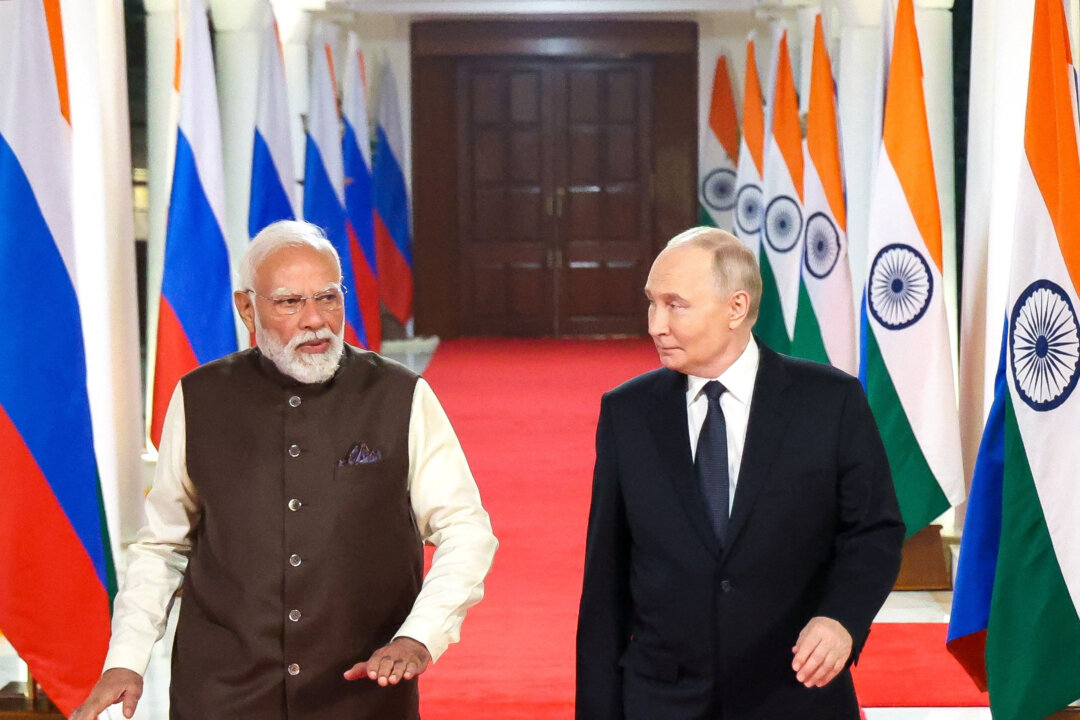
Indian Prime Minister Narendra Modi received Russian President Vladimir Putin on a visit last December, where the two leaders marked 25 years of the countries’ formalized strategic partnership.
Owen Evans and Tom Gantert contributed to this report.
We had a problem loading this article. Please enable javascript or use a different browser. If the issue persists, please visit our help center.