
Spencer Taylor describes his high school experience as a dark time, rife with detentions, suspensions, and over-medicated peers who acted up because they, too, couldn’t sit still in class all day.
“You would have maybe five minutes to go out and see the sun,” the Michigan native recalled. “We just needed to run around. We just needed to get all our energy out. … I barely graduated.”
Fifteen years later, Taylor released a documentary about a similar problem affecting millions of U.S. students, “The Death of Recess.”
He researched laws and policies across the nation and visited schools across several U.S. states and Europe. He snuck into a national teachers union annual meeting to understand why so many competing interests continually overshadow conversations about school recess time.
“There’s no voice that represents the parents and students,” Taylor said during a June panel discussion hosted by The Heritage Foundation in Washington. “Everybody’s trying to get a hold of those valuable minutes of the kids being in the classroom because they view that—they all view it—as social engineering.”
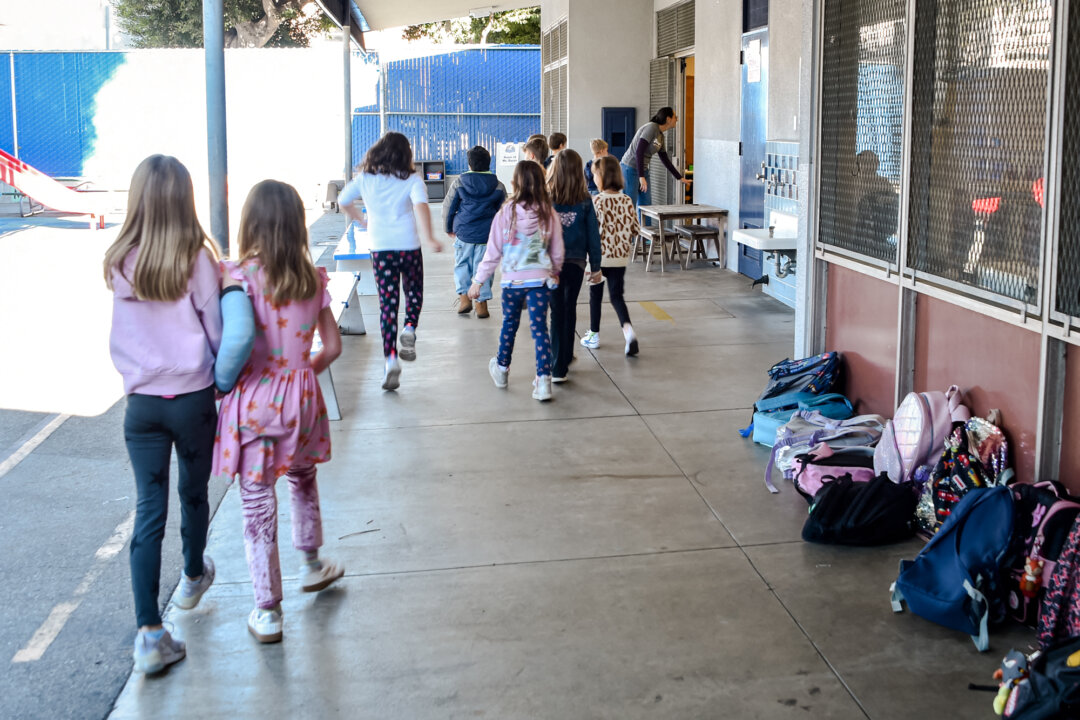
The film, released earlier this year, coincides with a nationwide push to bring back or increase recess time for public school students based on research citing higher academic achievement and improved mental health in children who attend schools with more free play time between blocks of instruction.

Thirteen states now have laws requiring recess periods until at least middle school, while 12 states have passed legislation mandating minimum “physical activity” minutes per week that can include recess and physical education class.
In May, the American Academy of Pediatrics updated its guidance on school recess, calling for multiple 20-minute breaks per day. A new parent organization, Say Yes to Recess, is lobbying policymakers and elected leaders across the nation.
“The issue has created this momentum,” Debra Lawrence, president of the U.S. affiliate of the International Play Association, told The Epoch Times. “Parents are talking.”

Policy
In December 2025, Johns Hopkins University published a policy guide for advancing recess in school laws.
Its model legislation calls for at least 20 minutes of daily recess for grades K through 8 and mandates that schools cannot withhold recess from children as a disciplinary measure. There should also be enforcement and accountability measures, it says, along with an explanation of how districts and states will monitor the requirement.

The Department of Health and Human Services recommends at least 60 minutes of daily physical activity for children aged 6 to 17, regardless of whether that’s at school, at home, or elsewhere, while the Centers for Disease Control and Prevention advises that the 20 minutes of daily elementary school recess should be supplemented by regular physical education classes, the policy report states.
Lawrence said there should be a clear national standard for recess, preferably outdoor unstructured play, covering kindergarten through 12th grade. Twenty minutes a day for elementary school children, she added, isn’t much if that includes the time students take to put on jackets and boots, get in line, and make their way out of the building.
Her organization recommends up to 15 minutes of outdoor recess time for every 45 minutes of instruction, a longstanding practice in Finland.
Short-term memory breaks are needed for information to be absorbed into the brain, while long-term memory develops with proper sleep.
“Their little brains need a break,” she said.

State Legislation
South Carolina is the latest state to mandate recess. Its law, which was signed in June and takes effect this academic year, requires 20 minutes of unstructured outdoor recess time for pre-K through eighth grade in addition to 90 minutes of physical education class per week.
Illinois, Kentucky, Texas, Tennessee, Vermont, and Virginia enacted school recess-related laws last year. California, Connecticut, and Washington state enacted laws in 2024.
In Kansas earlier this year, Gov. Laura Kelly vetoed legislation that would have required 30 minutes of daily recess for elementary school students. Similar legislation in Oregon and Utah failed, but passed in Oklahoma.
New York state legislators are still considering a measure providing 30 minutes of daily recess to K–6 students. It also prohibits school leaders from withholding recess for disciplinary reasons.
Ohio state House Reps. Tom Young and Melanie Miller have introduced legislation calling for 30 minutes of morning and 30 minutes of afternoon recess for students through eighth grade. Gov. Mike DeWine supports the measure.
“Developing healthy habits can help every Ohioan reach their God-given potential,” he said of the proposal during his March 10 state of the state address.

Parent Organizations
The Say Yes to Recess group was formed by three mothers in early 2025, after a local push for more outdoor time for kids in Tennessee resulted in only a 10-minute increase.
After successfully pushing a state mandate in the Volunteer State, the organization launched a national movement for 60 minutes of unstructured play. It now has chapters in 18 states. Additional chapters in Pennsylvania, New Jersey, and Utah are expected in the coming months, according to its website.
Kathryn Truman, one of the group’s founders, said Say Yes to Recess prevailed in Tennessee because it found practical solutions without extending the length of the school day to accommodate more recess time while still complying with state curriculum mandates.
“Some instructional time requirements were recommendations rather than state mandates,” Truman told The Epoch Times. “This distinction created opportunities for schools to reorganize their schedules and prioritize recess without lengthening the school day.”
An international organization, the Global Recess Alliance, was formed six years ago.
Lawrence’s group works with both Say Yes to Recess and the Global Recess Alliance, along with several similar state and national organizations. She has hosted 300 “Porch Play Chat” episodes on her YouTube channel with parents, researchers, and medical professionals since 2020.
What’s Next?
Policymakers and legislators continue to push for state protections on recess time, but that doesn’t necessarily prohibit action at the district level.
The Lockhart district in Texas, for example, just increased recess time from the state-mandated 30 minutes to 45 minutes through fifth grade, while also providing free play time for middle school students before class and during lunch periods.

States and school districts across the country are paying attention to research on children’s sleep patterns that suggest the school day should start later in the morning.
Terry Cralle, a certified clinical sleep educator, said if a 9:30 a.m. first bell is out of the question, school leaders should at least get their students outside during the day, hopefully when the sun is shining, to reset their circadian rhythms.
“We’re more likely to fall asleep at a good time of night if we get that morning light,” she said during the Heritage Foundation panel discussion. “When kids get good sleep at night, they’re more receptive to learning, their memory is better, there’s better problem solving, their behavior is better.”

While no person or organization in education would publicly question the importance of recess and physical activity, there are concerns about reduced instructional time and logistical challenges. One way to increase recess time within the current duration of a school day, Lawrence said, is to eliminate standardized testing.
With most state assessments happening in April, elementary and middle school teachers often spend most of March “drilling and killing” for those tests, she said.
“That’s what we think should be looked at—not cutting arts and music, because that also helps with stress and anxiety relief,” she said.
“We need to reconsider how we structure our days.”
We had a problem loading this article. Please enable javascript or use a different browser. If the issue persists, please visit our help center.