
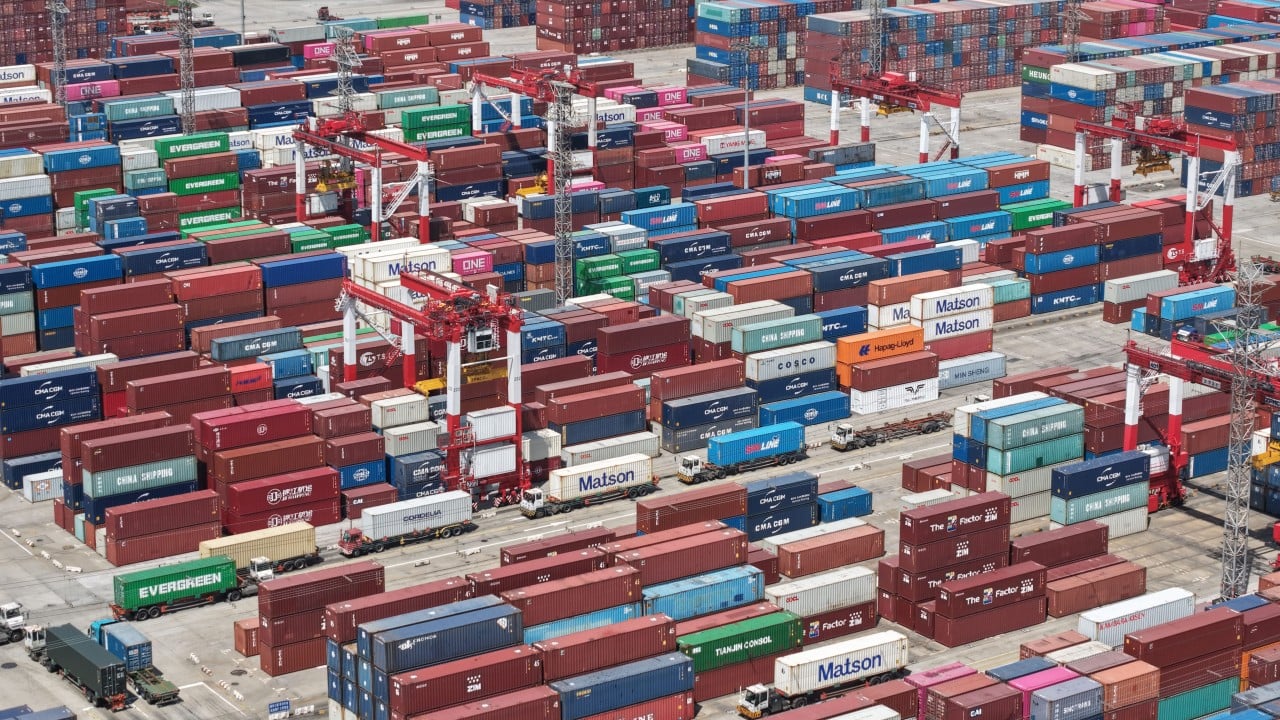
Shanghai, already home to the world’s largest container port, has unveiled a strategic road map to further bolster its shipping-services sector, escalating a challenge to hubs in Hong Kong, Singapore and London.
The Port of Shanghai, China’s most prominent commerce and trading gateway, aims to leverage tech, including artificial intelligence and automation, to boost efficiency and expand value-added industries, from financing and insurance to legal services, according to a five-year plan released by the Shanghai government on Wednesday.
The move reflects how the city’s ambitions go beyond just maintaining its status as a leading cargo terminal, by mapping out intentions to accelerate its rise as an international shipping and maritime hub, putting pressure on other major hubs to keep pace.
“We will build a shipping-insurance ecosystem and develop new specialised insurance products for multimodal transport; promote ship financing and leasing; and expand arbitration to handle more foreign cases,” Shanghai vice-mayor He Qing said at a press conference on Wednesday. “Furthermore, we will enhance branding, including for the Shanghai Shipping Index, and build a world-class shipping exchange.”
In 2025, Shanghai handled more than 55 million 20-foot equivalent unit (TEU) containers, more than any other port across the globe – a crown it has held since 2010.
By 2030, that number is forecast to reach at least 58 million TEU, according to the new plan.
More significantly, Shanghai has set targets in shipping services to move up the global echelon amid China’s drive to be a maritime powerhouse, with the city recognising that global-shipping-centre leadership is not measured solely by container or cargo capacity.