
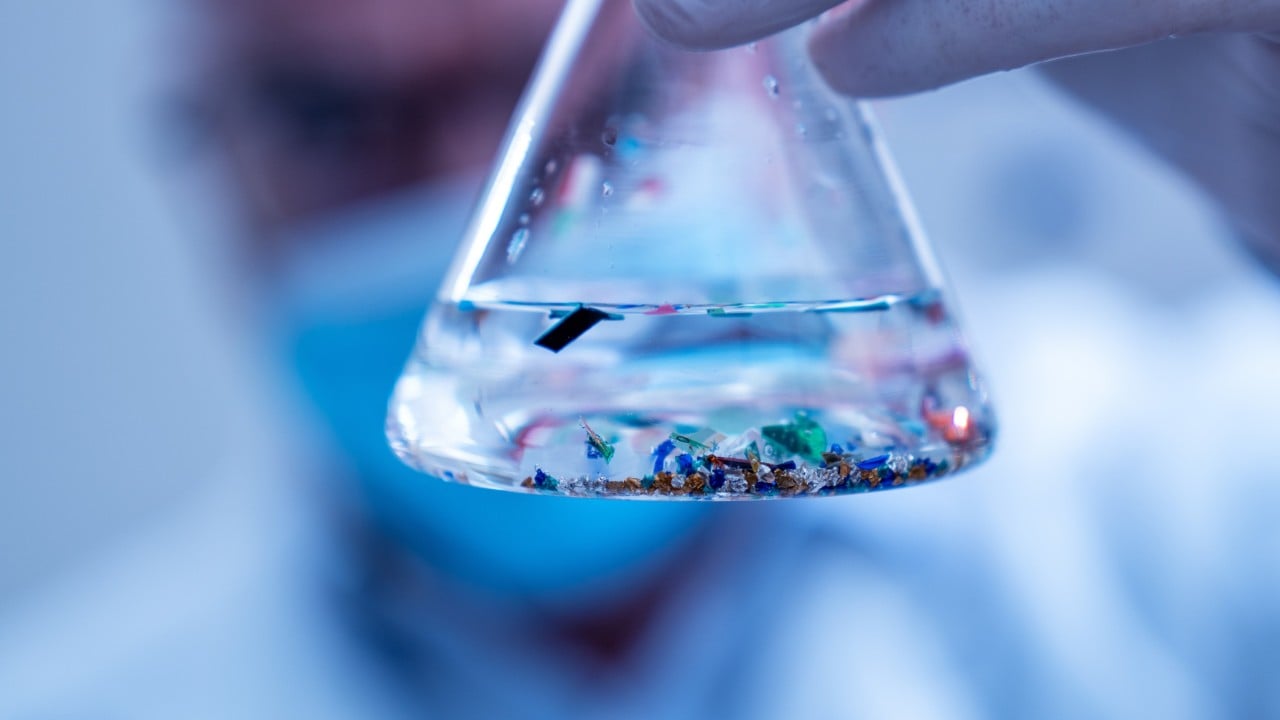
Global plastic production exceeds 460 million tonnes annually, and the material’s resistance to degradation is fuelling growing concern about its environmental impact.
Traditional disposal routes – incineration and landfilling – are not only wasteful but also highly polluting. However, a new chemical technique that converts discarded plastics into aviation fuel is now emerging as a promising and potentially low-cost solution.
Chinese researchers have proposed a technology that can convert waste plastics into aviation fuel at a low cost.
The research, conducted by a joint team from the Shanghai Advanced Research Institute of the Chinese Academy of Sciences and Fudan University, centres on the hydrogenolysis of polyolefins. The reaction operates under relatively mild conditions and offers tunable product selectivity, allowing researchers to steer the conversion towards desired hydrocarbon ranges.
Polyolefins – primarily polythene and polypropylene – account for over 60 per cent of plastic waste, yet they are notoriously inert and difficult to break down.
Aviation fuel, meanwhile, relies heavily on C8-C16 hydrocarbons, so the process is akin to precisely cutting a fishing net into manageable pieces – avoiding shredding it into useless fragments while ensuring the pieces are not too long to be of any practical use.
At the heart of this chemistry lie metal catalysts, which provide the active sites for selectively cleaving and rearranging carbon‑carbon bonds. However, a fundamental challenge has long plagued this route.