
In the high‑stakes space race between the United States and China, the decisive advantage could come down to a metal cap that few outside the industry have ever heard of: the propellant tank dome.
An ellipsoidal bulkhead several metres wide but only millimetres thick, the dome must withstand extreme internal pressures, vibration and shock. The rounded, capsule-like end cap is also very difficult to mass-produce.
Whichever country can make these components faster, cheaper and more reliably will have an advantage in building the large fleets of reusable rockets needed for the future space economy.
Now, China is signalling that it may have found not one but two ways to break the bottleneck.
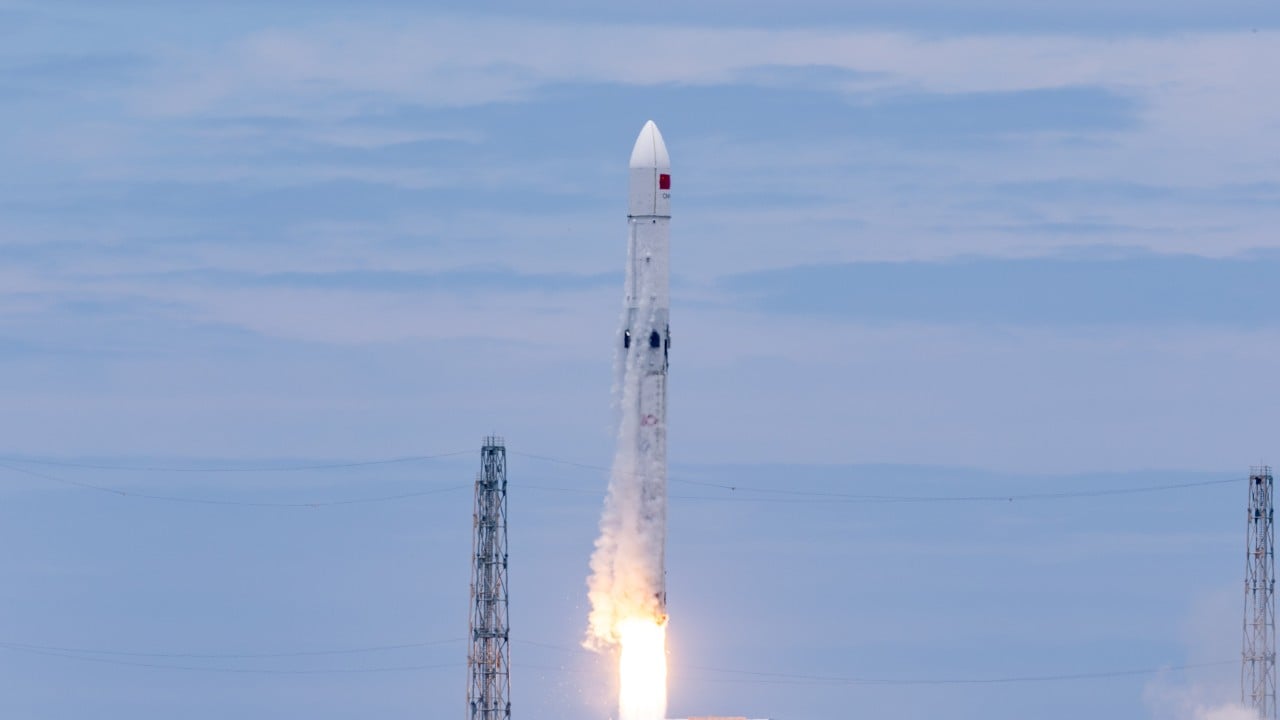
On Friday, the country’s Long March 10B (CZ-10B) delivered satellites into orbit and then made a vertical descent into a giant buffer net aboard an offshore recovery platform. The moment marked China’s first recovery of a reusable rocket.
The flight showcased a dome made with a welding method benchmarked against SpaceX’s Falcon series but potentially faster off the production line.
At the same time, Chinese researchers have unveiled a revolutionary “cold forming” technique that can shape a complete, seamless dome in a few hours rather than a week – an advance that could tilt the balance of the US-China space race in the years ahead.