
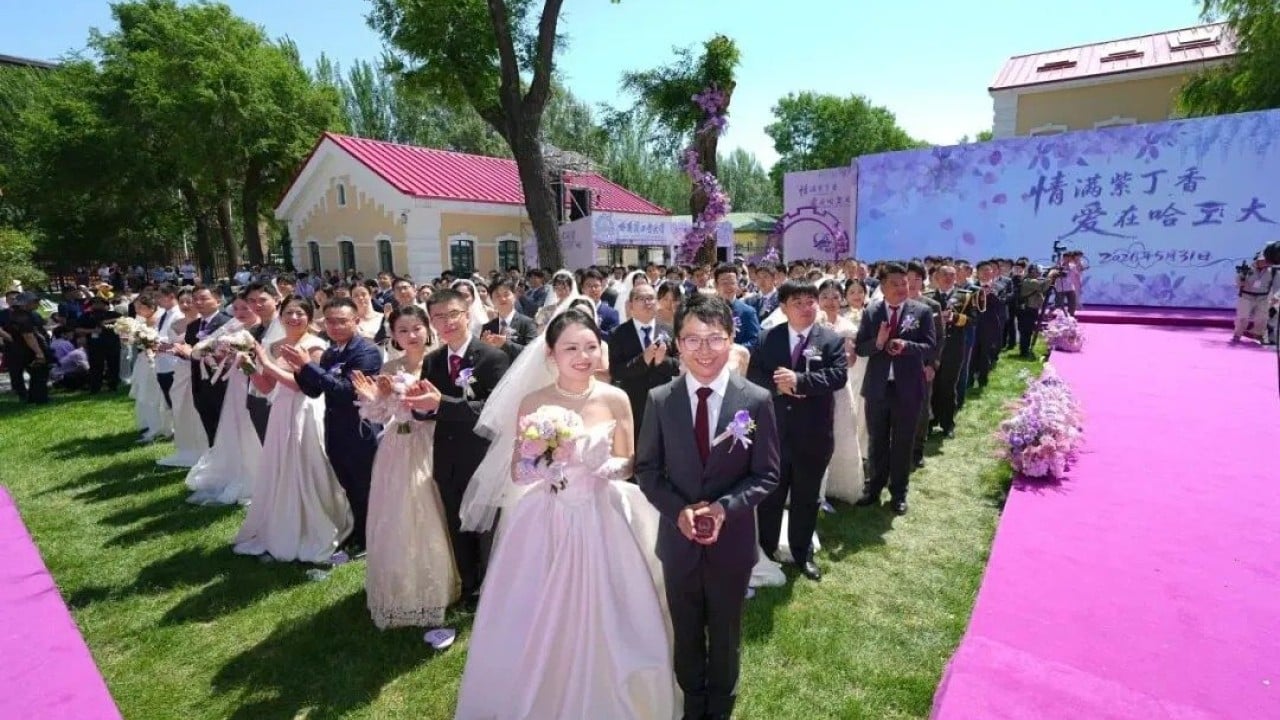
When Harbin Institute of Technology (HIT) held its 11th group wedding for doctoral students on May 31, each of the 187 newlywed couples was presented with a one-carat diamond ring, with the diamonds grown in the university’s laboratory.
The gems were developed by Zhu Jiaqi and his team from HIT’s School of Astronautics using a technology that in theory could produce high-purity, single crystal diamonds of any shape and size – from wedding jewellery to a wafer as wide as a basketball.
Known as microwave plasma chemical vapour deposition (MPCVD), the process generates carbon atoms in an ultra-clean environment, depositing them layer by layer onto a diamond seed crystal.
Advertisement
As the global artificial intelligence race enters an era defined by computing power, China is emerging as a leading producer of ultra-large synthetic diamonds – increasingly viewed as critical to dissipating the heat generated by semiconductors.
With chip performance increasingly constrained by the more fundamental physical challenge of heat, a series of breakthroughs in the growing of large single-crystal diamonds could give China an unexpected advantage in next-generation AI hardware.
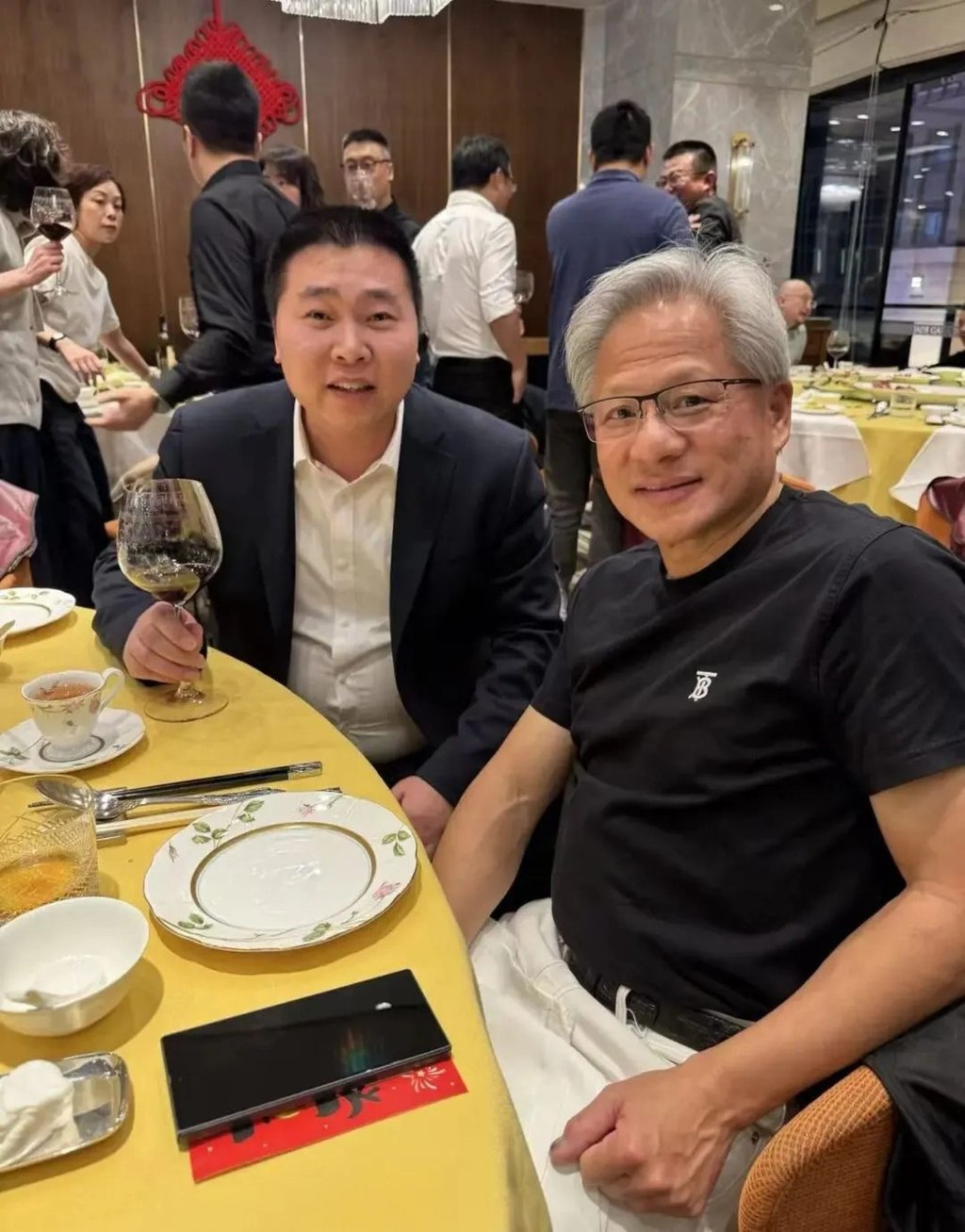
During a visit to Beijing in January, Nvidia chief executive Jensen Huang had a meeting with Zhu Yanhui, founder of Chaoying Diamond Technology, a supplier of diamond technology application materials.