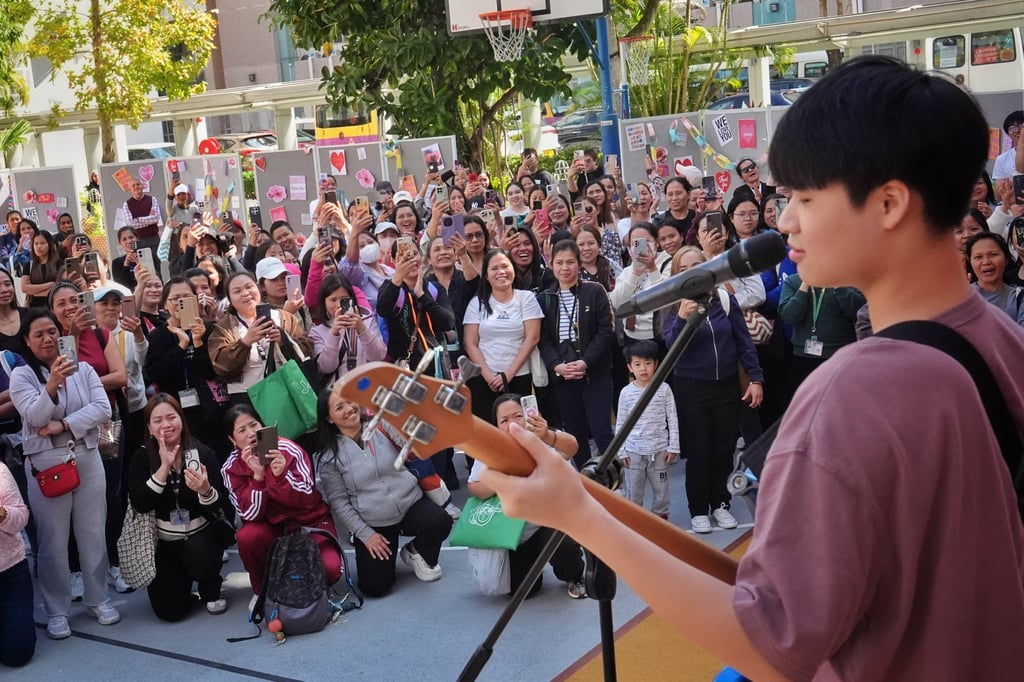
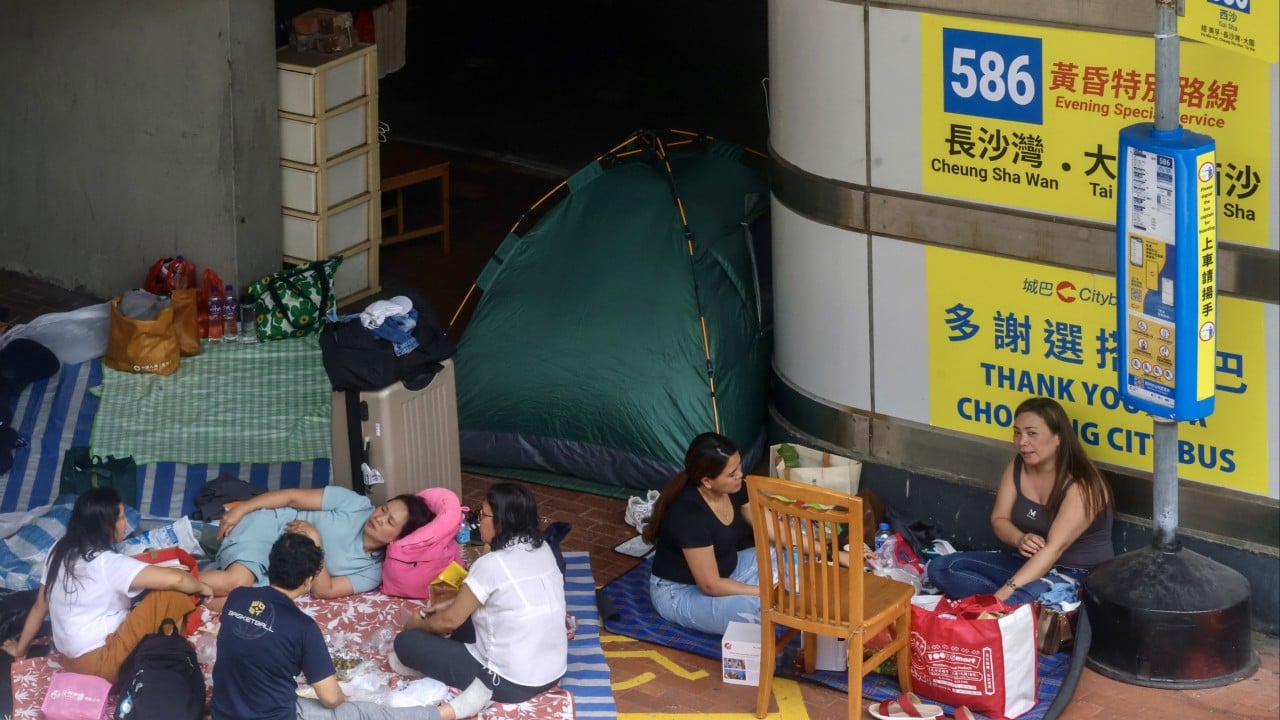
Two big issues are bubbling up over Hong Kong’s army of foreign domestic helpers. The whole community will have to sit down and decide how to address them. The first is the availability of places for helpers to congregate safely and freely on their days off without putting too much stress on public facilities, other residents and tourists. The second is figuring out how to provide an acceptable working environment inside the home during hot summer months.
Two underlying trends are adding to the complexity and severity of the problems. One is sheer numbers, the other is the increasing impact of climate change.
Given the robust improvement in Hong Kong’s economy since the Covid-19 pandemic, the number of foreign domestic helpers in the city is moving steadily back towards the 2019 peak of 399,000. Numbers fell in 2022 before recovering to 368,000 in 2024. Foreign domestic helpers make up around a tenth of Hong Kong’s workforce. Most are women, with 55 per cent from the Philippines, 42 per cent from Indonesia and the balance from other Asian countries.
Advertisement
Local families rely on them as carers for young children and the elderly, in addition to general housework. Given the city’s ageing population, this trend is likely to continue.
At the same time, since prospective employers are only required to show a monthly income of at least HK$15,000 (US$1,914), and the engagement of helpers frees up increasing numbers of women to take up more lucrative employment themselves, the situation is self-reinforcing. Helpers’ minimum monthly pay is just HK$5,100.
Advertisement
Increasing those two minimums might provide a superficial solution, but it would probably be socially disruptive. So the problem is likely to get bigger. Many helpers get Sundays off, because that best suits their employers and also permits the helpers to worship according to their own religious beliefs – and many do.