
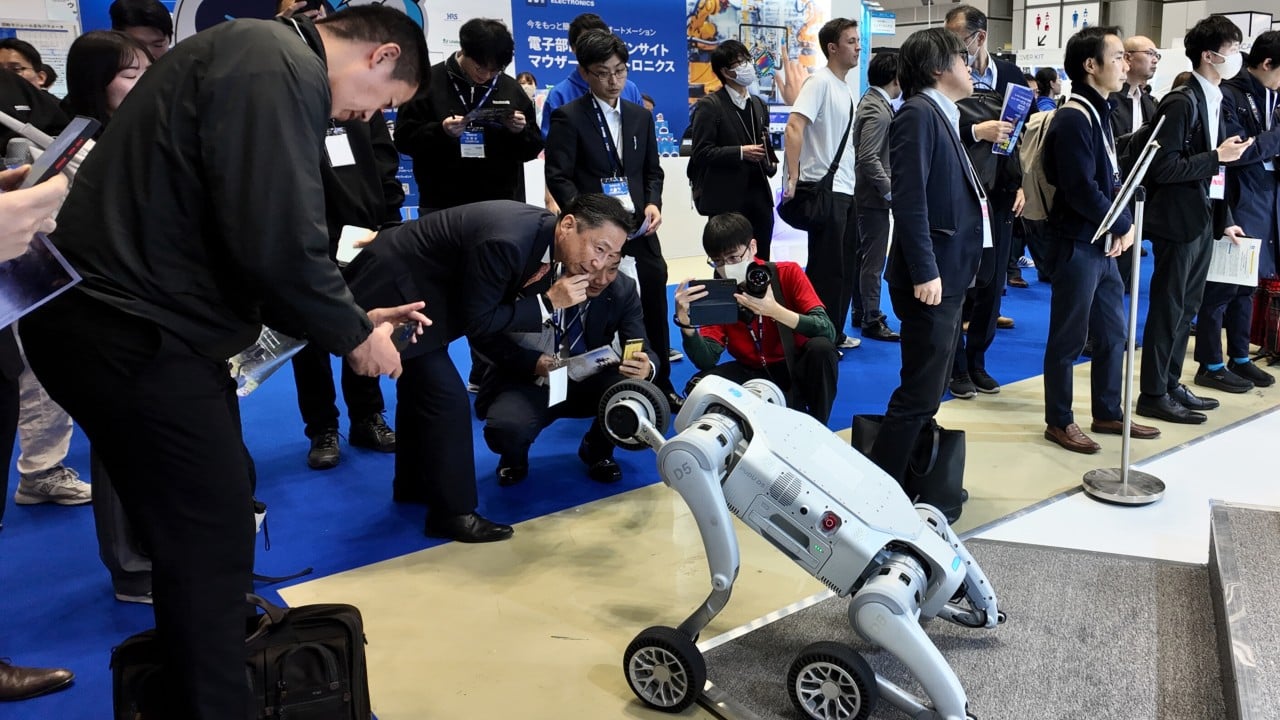
The surge of interest in Chinese humanoid robotics has raised a practical question for investors, corporate strategists and supply chain executives: who makes the parts?
Reduction gears. Torque sensors. Precision bearings. Industrial software. The further one traces the supply chain, the more often the answer leads to companies that are not household names or well understood by foreign investors. Many carry a designation that deserves closer attention: “little giant”.
China began cultivating little giant enterprises – specialised and innovative small and medium-sized companies – in 2018. By late last year, it had developed more than 17,600 national-level little giant enterprises, making up just 3.5 per cent of industrial SMEs in official data but contributing 9.6 per cent of the sector’s operating revenue and 13.7 per cent of profits.
Advertisement
In China’s push towards advanced manufacturing, supply chain resilience and “new quality productive forces”, the designation offers a window into how it identifies specialised companies and connects them to local government execution, bank credit, industrial funds, procurement systems and capital market pipelines.
Robotics is only one example. The same logic runs through precision components, speciality materials, industrial software and advanced equipment.
Advertisement
Yet the label is often misread. Some see little giants as government-endorsed winners or subsidy recipients. Some reach too quickly for a comparison with Germany’s “hidden champions”. But that can obscure a key difference: little giants are selected through a formal policy process and directly linked to local industrial execution, not just market success.