
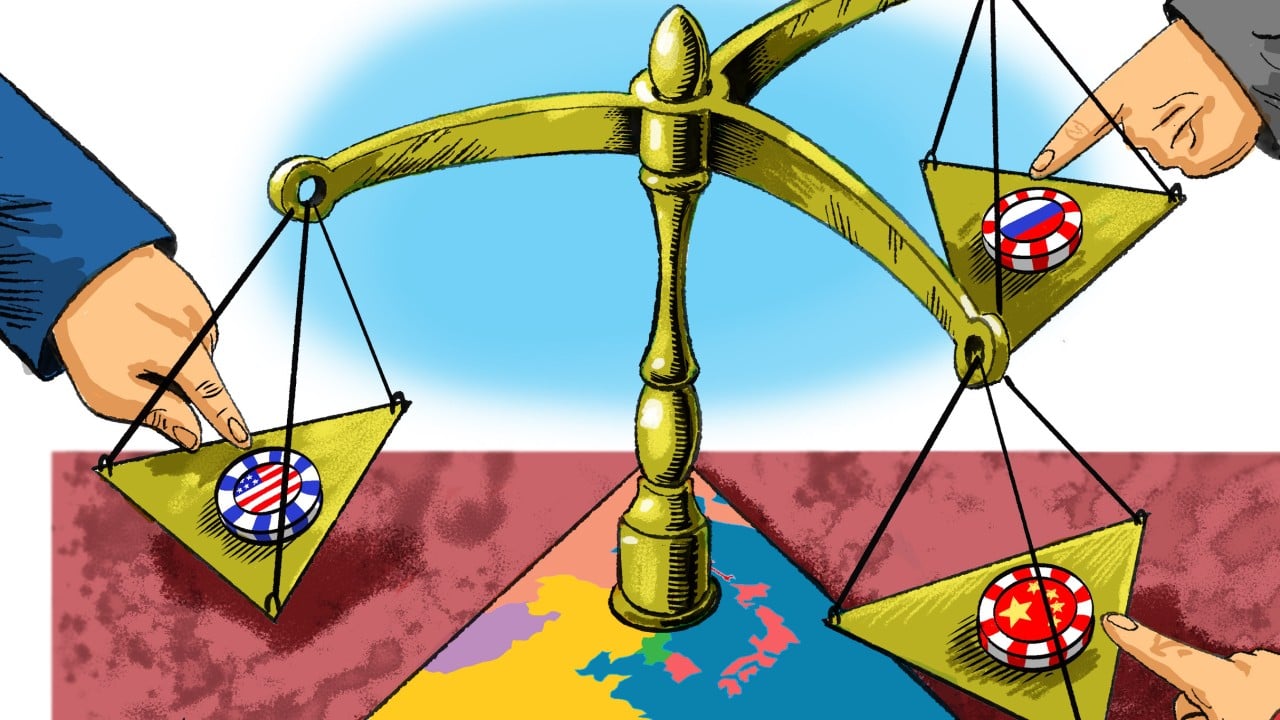
When Washington, Beijing and Moscow begin to treat one another as bargaining partners again, northeast Asia feels the pressure. Taiwan, Korea, sanctions, energy routes, nuclear risks and missile defence are no longer separate theatres. They increasingly belong to one strategic conversation between the US, China and Russia.
Northeast Asia itself is already being reorganised through three trilateral structures with different purposes, degrees of institutionalisation and strategic effects. Thus the region is now shaped by four layers of trilateralism: an emerging US-China-Russia great-power management; the US-Japan-South Korea deterrence partnership; China-Japan-South Korea functional cooperation; and a China-Russia-North Korea counter-alignment.
Northeast Asia is not being divided by one line. It is being pulled by several overlapping triangles.
Advertisement
The top layer is US-China-Russia bargaining. It is not a new G3 or a concert of powers. There is no formal trilateral summit, no common secretariat and no shared doctrine for managing the region. But the logic is becoming harder to ignore. The Trump administration has shown a preference for direct leader-level engagement with both Beijing and Moscow.
Beijing rejects formal G2 co-governance, but it also sees direct engagement with Washington as useful for stabilising Taiwan, maritime crises, trade and technology. Russia, meanwhile, wants direct US engagement to regain great-power recognition and shape any Ukraine settlement.
Advertisement
This layer functions as a pressure regulator. If US-China-Russia bargaining stabilises Taiwan, Ukraine, nuclear risk and sanctions, it can lower the temperature in northeast Asia. If it becomes opaque, transactional or dismissive of regional interests, it will make US allies, China’s neighbours and North Korea more anxious. Great-power management can lower regional tensions; great-power trading can intensify them.