
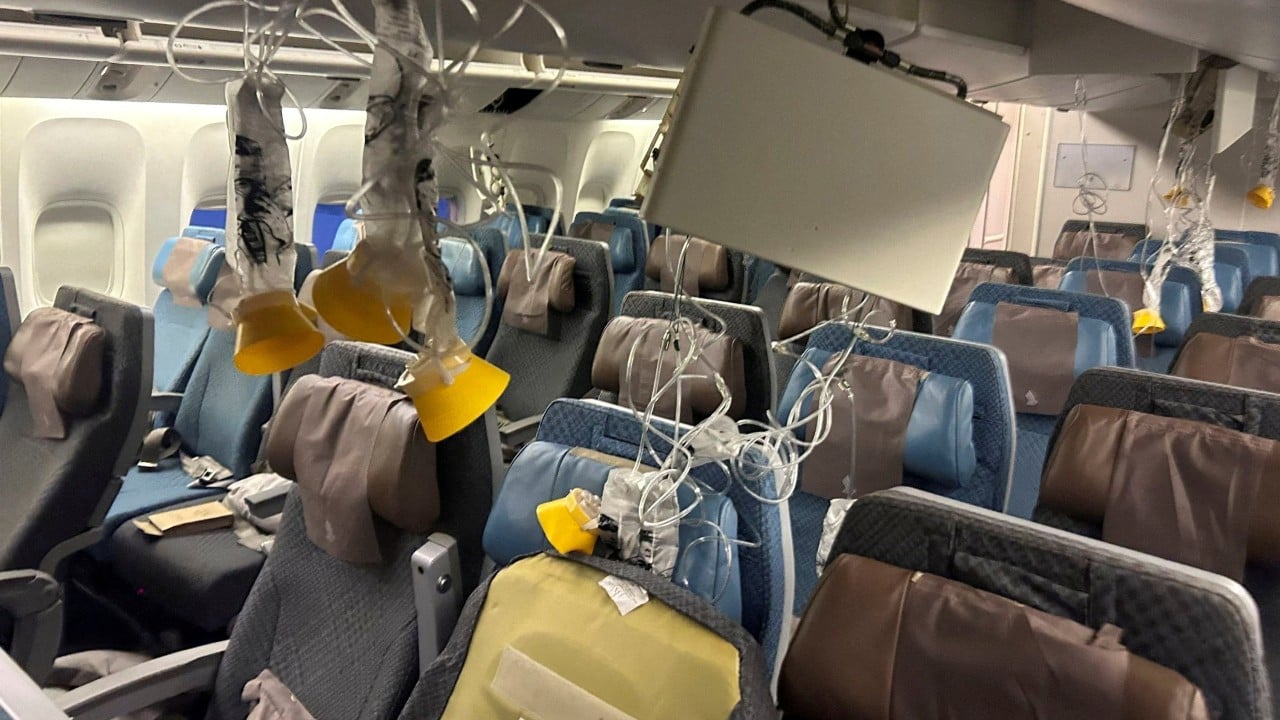
Two years after severe turbulence left one passenger dead and dozens injured on a Singapore Airlines (SIA) flight, investigators have released their final report, addressing major questions about what caused the disaster.
Flight SQ321, travelling from London to Singapore, was diverted to Bangkok so passengers and crew could receive medical treatment.
In the immediate aftermath, multiple analysts attributed the incident to clear-air turbulence – invisible pockets of air that can occur at high altitudes in clear skies, without warning and with no time for crew to alert passengers.
Advertisement
The Transport Safety Investigation Bureau (TSIB) report concluded otherwise. The turbulence was convectively induced, meaning it was associated with convective clouds and thunderstorms – generated by air movement into the storm, strong updrafts, downdrafts and outflow winds.
This type of turbulence can exist outside cloud and can be encountered several thousand feet above it, and up to 32km (20 miles) laterally. TSIB noted it is common year-round in the tropics when thunderstorms develop.
Advertisement
Investigations found groups of clouds near the point where severe turbulence struck. One cloud’s top grew rapidly from about 27,500 feet at 7.40am UTC to about 40,000 feet within 10 minutes.