
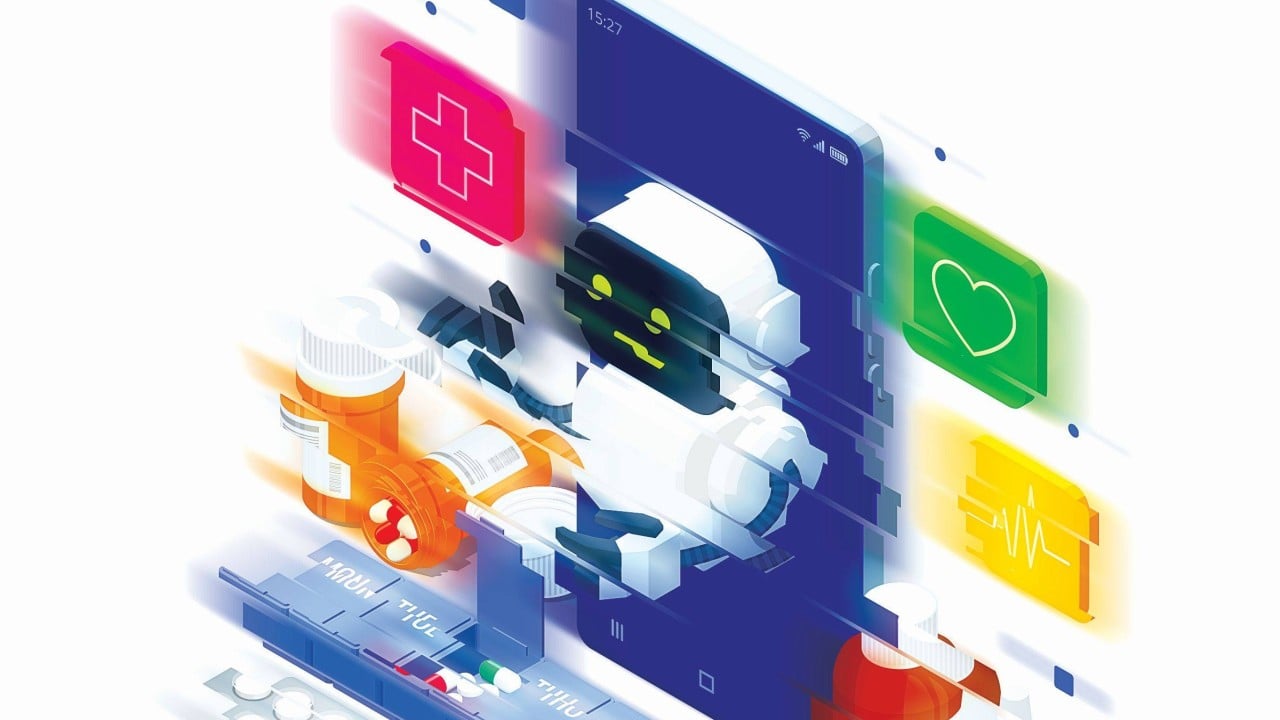
China’s industrial sectors are racing to integrate artificial intelligence to boost efficiency, bolstered by state support, but experts warn that critical vertical markets – such as healthcare and aerospace – may be too “high risk” for the shift towards autonomous agents.
Hailed as the driver of a “fourth industrial revolution”, AI is shifting away from chatbots to agentic AI – systems capable of independent execution within a workflow, industry experts said at the International Data Corporation (IDC) CIO Summit in Shenzhen on Friday.
Upper-layer software, which includes consumer-facing apps and internal management systems, will be “entirely replaced by agents”, said Liu Xiangyang, chief information security officer of Midea Group, as these agents are designed to understand business logic and execute workflows
Advertisement
“In the future, 90 per cent of an AI agent’s value will come from industrial expertise,” said Du Yanze, senior research manager at IDC. “The core of the industrial AI value chain has shifted from how you build the software, to the industry knowledge inside it.”
AI agents could drastically compress the time needed to manually deliver a supply chain order from two hours to several minutes through automated data analysis, planning, risk recognition and decision making, according to an example given by Du.
The shift is fuelled by Beijing’s “AI Plus” strategy, which mandates aggressive adoption targets across manufacturing, agriculture and services: over 70 per cent by 2027 and more than 90 per cent by 2030. This ambition comes as China’s industrial software currently lags, especially in advanced manufacturing, including electronic design automation software for semiconductors which is still heavily dependent on foreign technology.