
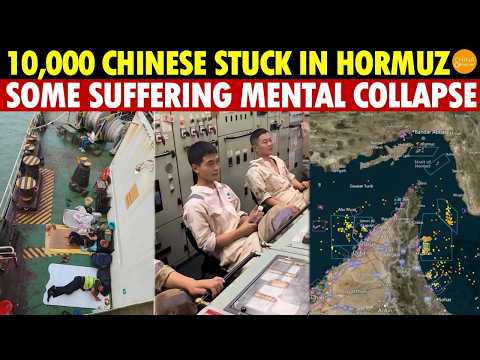
As tensions between the US and Iran cast a shadow over the Persian Gulf, the Strait of Hormuz, a vital passage for one-fifth of global oil transport, has become a floating maritime blockade.
Over 2,000 commercial ships and nearly 20,000 sailors from various countries are trapped, caught in a standoff with no way out. Many ships have been stuck since the first day of the US-Iran conflict on February 28, and they have now endured nearly two months in this steel prison.
Missiles frequently whistle overhead, false and real news bombard the airwaves, and the sailors are filled with endless longing for their families, coupled with deep uncertainty about the future. On top of all that, there’s a severe shortage of food and fresh water. Every day is an agonizing test of patience.
Meanwhile, daily life aboard the ship is becoming increasingly difficult. The war has caused supply prices around the Strait of Hormuz to soar nearly tenfold. Occasionally, small boats—nicknamed “mobile floating stores”—appear, selling vegetables and fruits.
Intermittent and unreliable internet signals are the sailors’ only link to their families, but these fragile connections are often severed by the fog of war. The physical confinement is slowly turning into a mental strain. A sailor, who wished to remain anonymous, revealed that on his ship, there are already individuals who have “collapsed mentally” and require constant monitoring by their colleagues.
Join this channel to get access to perks:
https://www.youtube.com/channel/UCT2kPBcD6tXn8TP_aV7BmgA/join
#chinaobserver
All rights reserved.
⭐You can support us at: https://donorbox.org/china-observer-supporting-independent-news
⭐For business cooperation, please contact us: business@chinaobserver.co