
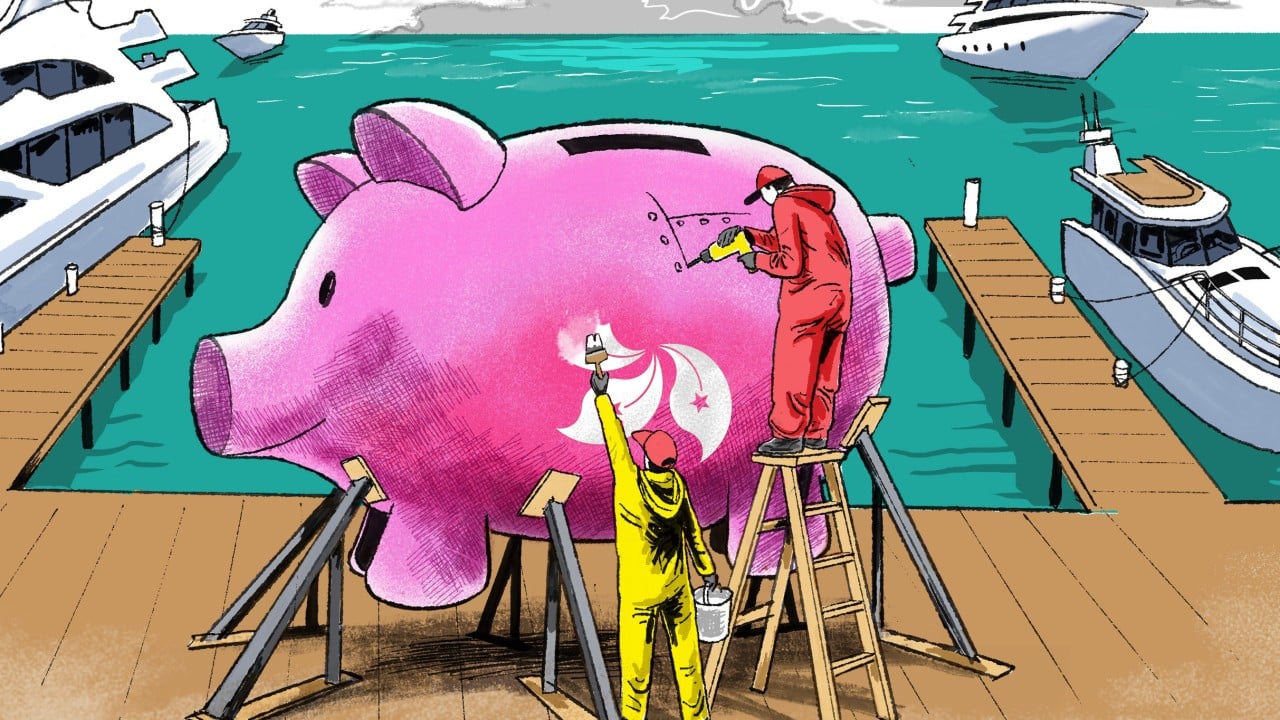
Hong Kong is in a unique position to capitalise on yacht tourism – with over 1,000km of coastline and more than 200 islands, this natural advantage is something few international cities can match.
Recent policy initiatives, ranging from new mooring developments to cross-boundary integration within the Greater Bay Area, signal the government’s clear intent to further promote the marine economy. Plans to add over 1,100 new berths and expand key sites, such as the Aberdeen typhoon shelter and the former Lamma quarry, show real action.
Much of the media conversation around Hong Kong’s yacht economy has focused on the city’s shortage of berths and marina facilities. And rightly so – physical infrastructure is crucial to the industry. But infrastructure alone will not unlock Hong Kong’s full potential.
Advertisement
The conversation must shift to include items beyond physical infrastructure. Improved licensing regulations, increased integration with the Greater Bay Area and the vital role of vessels that fall outside the superyacht designation need to be included in the discussion.
The first of these significant, yet overlooked, barriers is Hong Kong’s system for operator licensing. Under current regulations, pleasure vessels operating in Hong Kong waters must have a captain with a local Pleasure Vessel Operator Licence on board and in charge of the craft. This licence is not easily obtained by international sailors and in most cases does not have global reciprocation with other licence regimes.
Advertisement
One notable exception includes reports that the Hong Kong authorities may, in some cases, accept the RYA Yachtmaster Offshore Certificate of Competence as equivalent to the Pleasure Vessel Operators Certificate Grade 1. While this would be a clear precedent for mutual recognition in principle, this particular RYA certificate is seldom obtained by personal sailors and incredibly difficult to obtain, requiring a very high investment of time and money.