
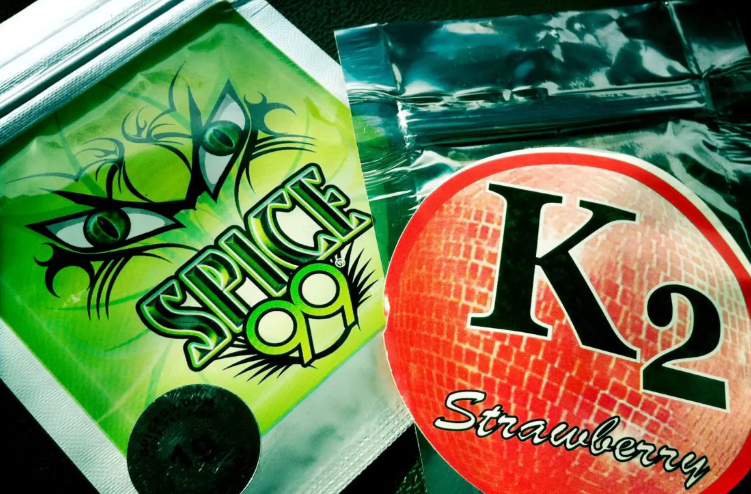
A U.S. investigation into synthetic drugs allegedly shipped from China and smuggled into American prisons has led to the arrest of 21 suspects in China, according to the Justice Department (DOJ).
China’s Ministry of Public Security arrested Chinese nationals Lisa Xing, 36, and Zhanwen Song, 38, along with 19 alleged co-conspirators. It also seized 475 kilograms of synthetic cannabinoids and shut down four illicit manufacturing sites, the U.S. Attorney’s Office for the Eastern District of Texas said on Sept. 9.
“This investigation led us to China,” Drug Enforcement Administration head Terry Cole said. He credited cooperation with Chinese law enforcement for Xing and Song being taken into custody.
A first superseding indictment returned under seal on Aug. 19 alleges that Xing and Song supplied synthetic opioids, cannabinoids, stimulants, and other controlled substances to Adell Willis, 43, of Lewisville, Texas. Prosecutors say Willis communicated with the China-based suppliers through WhatsApp and paid them in Bitcoin.
Willis and Judy Ly, 30, of Grand Rapids, Michigan, allegedly mixed the drugs into liquid solutions, soaked sheets of paper with them, and arranged for the sheets to reach inmates around the country. Prosecutors allege Willis and Ly sent at least 65 parcels containing drug contraband to federal prison destinations between January 2024 and October 2025.
Willis and Ly were originally indicted in May. The August indictment added Xing and Song, and expanded the case from three to six counts.
Drugs Shipped From China
The original May 20 indictment already alleged that Willis bought synthetic opioids, cannabinoids, stimulants, and controlled-substance analogues from unidentified suppliers in China, causing some of the drugs to be sent directly from China to Ly’s Michigan residence.
The superseding indictment named Xing and Song and detailed alleged WhatsApp conversations, Bitcoin transactions, and shipping instructions.
In July 2024, Willis asked Xing when a “new opioid” would be ready and whether it would be strong.
Xing replied that it would be ready the following week and said a laboratory had tested it and found it stronger. The indictment does not identify the laboratory or say whether it was among the four manufacturing sites later shut by Chinese authorities.
In October 2024, Song quoted Willis prices for a synthetic cannabinoid, bromazolam, a “new Opioid,” and xylazine.
Willis then transferred $1,801.01 in Bitcoin to a wallet attributed to Song and provided two delivery addresses. He instructed Song to send one product to Lewisville, Texas, and the opioid and bromazolam to an address in Grand Rapids, according to the indictment.
Prosecutors allege Willis sent at least $13,300 to a Bitcoin wallet associated with Xing between March and June 2024 and at least $5,700 to a wallet associated with Song during the same period.
Drug-Soaked Paper
Once the drugs reached Texas and Michigan, prosecutors say Willis and Ly mixed them into liquid solutions and saturated sheets of paper.
Their domestic coordination included the encrypted messaging service Threema. In April 2025, Willis allegedly asked Ly to make 30 sheets. Ly later told him she had the sheets set aside and asked him to send the name and address of the intended recipient.
In one WhatsApp exchange, an unidentified alleged co-conspirator sent Willis the name, inmate number, and mailing address of a prisoner at USP McCreary in Kentucky, adding that it was “the address for the magazine only send 5 pages.”
The indictment does not explain how inmates consumed the treated paper after it entered a prison. In other federal cases, prosecutors have said drug-infused paper can be cut into strips and smoked. A 2019 case involving synthetic drugs obtained from suppliers in China described pages disguised as photographs, books, pamphlets, and purported legal mail to circumvent prison security.
In that case, prosecutors said drug-infused sheets sold for at least $500 each. In the current Texas case, Willis likewise discussed charging as much as $500 for a sheet in a February 2025 WhatsApp exchange.
The indictment lists 19 federal prison destinations, including U.S. Penitentiary McCreary, USP Leavenworth, USP and Federal Correctional Institution (FCI) Beaumont, FCI Coleman, FCI Terre Haute, and FCI Victorville, and says the sheets were intended for inmates at state and federal institutions around the country.
Arrests in China
The FBI–Ministry of Public Security counternarcotics working group facilitated the collaborative effort against the network, according to DOJ. The department said the group was established in January 2026.
The August indictment charges all four defendants with conspiracy to distribute controlled substances, conspiracy to possess contraband in prison, conspiracy to manufacture and distribute controlled substances knowing they would be unlawfully imported into the United States, and conspiracy to commit money laundering. Willis also faces a possession with intent to distribute charge.
The indictment also alleges that money connected to the drug conspiracy was transferred from the United States “to and through” China. Prosecutors are seeking $100,000 in criminal forfeiture.
DOJ did not say when Xing and Song were arrested or whether they are expected to be transferred to the United States. Willis is scheduled for jury selection and trial on Nov. 9.
A Trump-Xi Issue
The arrests come about two weeks before Chinese leader Xi Jinping is expected to visit Washington on Sept. 24 for a meeting with President Donald Trump.
Trump has repeatedly pressed Xi and Chinese authorities over fentanyl, synthetic opioids, and precursor chemicals entering the United States.
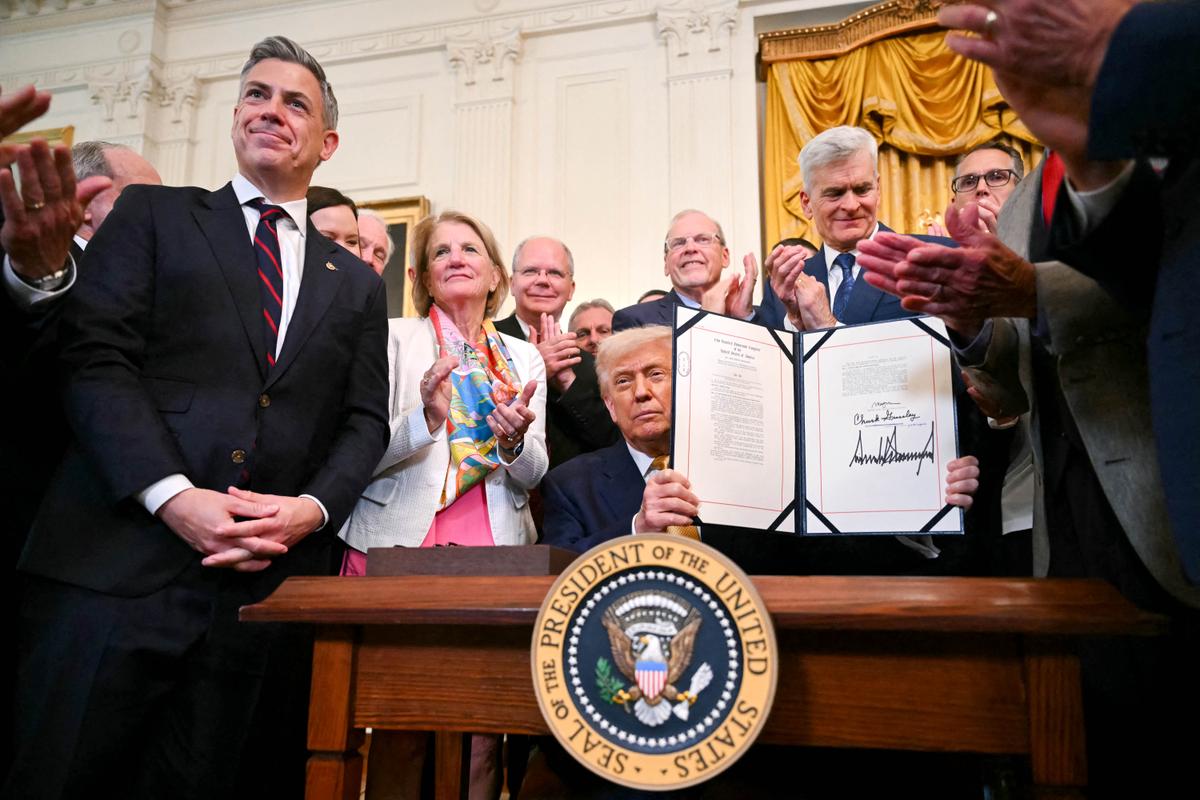
During Trump’s first term, he raised the fentanyl issue directly with Xi at their December 2018 meeting in Buenos Aires. After the meeting, the White House said Xi had agreed to designate fentanyl as a controlled substance.
After returning to office, Trump tied the issue directly to tariffs. In February 2025, he imposed an additional 10 percent tariff on Chinese imports, citing Beijing’s failure to curb the flow of synthetic opioids and precursor chemicals into the United States.
Trump raised the tariff to 20 percent in March 2025, saying China had not taken adequate steps to alleviate the illicit drug crisis through cooperative enforcement actions.
After later U.S.-China talks, Beijing pledged to restrict shipments of designated chemicals, and Trump reduced the fentanyl-related tariff from 20 percent to 10 percent effective Nov. 10, 2025.
Rao Yiming, an insider within the Chinese Communist Party system who spoke under a pseudonym out of fear of reprisal, told The Epoch Times in August that fentanyl was among the issues Beijing was considering in negotiations surrounding Xi’s planned visit.
Rao said one scenario under discussion involved Beijing trying to keep disputes from derailing the summit while offering concessions on trade purchases, artificial intelligence cooperation, fentanyl, rare earths, and market access in exchange for relief from some U.S. sanctions.
“Beijing would calibrate any countermeasures to ensure that points of contention do not derail the summit,” Rao said, while seeking concessions involving areas including “measures concerning fentanyl and rare earths.”
Alex Wu contributed to this report.
We had a problem loading this article. Please enable javascript or use a different browser. If the issue persists, please visit our help center.