
WASHINGTON—Two months ago, at an event near the Texas Republican Midterm Convention, Matthew Williams warned The Epoch Times that the GOP risked losing a key pillar of President Donald Trump’s 2024 victory base: younger men.
On Nov. 6, three days after the Republicans’ historic midterm defeat, Williams, a 30-year-old YouTuber who goes by the handle The Prudentialist, sounded vindicated, but not happy—he had voted straight-ticket Republican.
When asked whether Republicans failed to respond to warnings about an anticipable shift, Williams replied, “I’d say so.”
Exit polling after the Nov. 3 election shows that young voters, including younger men, fled the Republican brand in droves, having moved toward Trump and his party in 2024.
Pollster Patrick Ruffini, using preliminary exit polls, documented a net swing of 22 points toward the Democrats among voters aged 18 to 29—the largest of any group in his analysis of groups that shifted toward Republicans in the last election cycle.
In interviews with The Epoch Times, pollsters and other insiders underscored that trend and analyzed some of its causes. Among them were economic woes, the Iran War and Israel, corruption, and, related to all three, a sense of dissatisfaction with the Trump administration, they said.
Big Data Poll’s Rich Baris told The Epoch Times that male voters under 45 swung hard toward the Democrats, benefiting in part from low-propensity Millennial male voters.
Baris said extended interviews indicated that many younger men who believed in Trump’s promise were, by July 2026, very disappointed.
“There was almost a loss of hope,” he said, describing concerns about the cost of food, challenges of affording a home, and the Iran War, whose impact on gas prices was “the cherry on top” for discontented Americans.
Jim Lee of Susquehanna Polling told The Epoch Times that Gen Z voters were “the group that feels most betrayed by who Trump is today.” He cited gas prices, inflation, the cost of housing, and corruption as major causes of worry for younger voters.
Blake Neff of the Charlie Kirk Show, which is closely associated with the conservative youth organization Turning Point USA, told The Epoch Times that Turning Point said its chapter members were dissatisfied with the economy, the Iran War, and other issues.
“They were told ‘no new wars’ in ‘24 and then a new war happened, and it hasn’t gone great. That is a tough thing to fix. It may not… get fixed in one cycle,” he said of younger men who have defected from the GOP.
These sentiments square with what The Epoch Times heard from younger male voters on Election Day and in the weeks leading up to it.
The Numbers
The collapse in support from younger male voters on Nov. 3 followed cycles in which Trump and Republicans made gains with that group.
In 2016, 33 percent of men under 30 backed Trump. But by the 2022 midterms, support for Republicans in House races ticked up to more than 40 percent, according to data from a Tufts CIRCLE analysis and the Brookings Institution.
Trump’s historic achievement came in 2024, when, according to the AP VoteCast survey, he won the votes of more than half of men under 30.
However, the same survey found that, this year, 39 percent of that group voted for Republicans in House contests.
Baris’s analysis of presidential approval rating trends showed a stark decline among men ages 18 to 29, and men ages 30 to 44—drops of 24.4 percent and 32.8 percent, respectively.
That decline among Millennial men tracks with a roughly 30-point swing Baris anticipates will dovetail with voter-validated surveys.
In 2024, “the Millennial man was very, very crucial in a lot of battleground states,” Baris said. This time, “Democrats did it in reverse.”
The pollster also found that younger counties moved strongly toward Democrats.
Lee said that Republicans’ large-scale defection to the Democratic Party in 2026 aligned with his pre-election polling.
“The GOP wasn’t having a turnout problem; they were having a problem keeping their base in line,” he said.
Michigan and Israel
Vice President JD Vance, in a midterm postmortem on X, said one pollster told him that Trump 2024 voters who abandoned the Republican brand frequently cited concerns with the Iran War and the U.S. relationship with Israel, the nation with which it launched strikes on Iran.
Neff and Baris both described the U.S.-Israel relationship as an issue for younger male voters.
“You run into it in real life far too often to think that it’s totally irrelevant to the election,” said Neff, adding that Israel’s salience was increased by the war.
Baris agreed that the war magnified the issue and said the young men he interviewed “feel like Israel hijacked their presidency, their last chance to turn things around.”
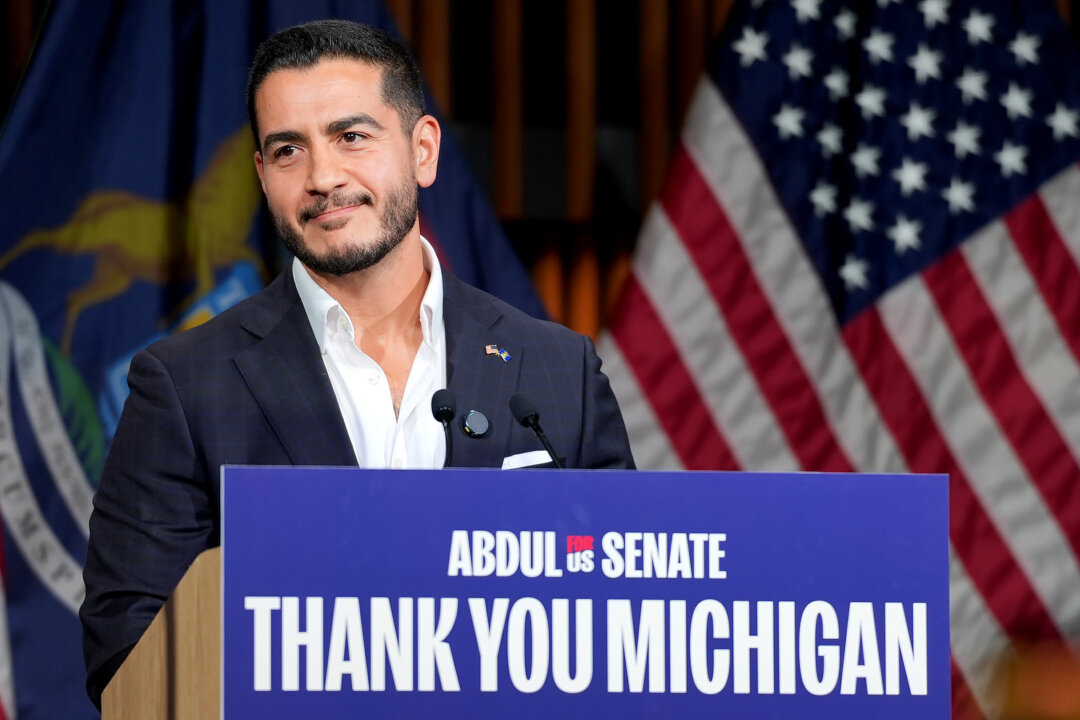
Israel came sharply into focus in Michigan’s Senate race. Democrat Abdul El-Sayed and his ally Hassan Piker’s criticisms of Israel sparked controversy, prompting El-Sayed’s primary opponent, Rep. Haley Stevens (D-Mich.), to eventually endorse his Republican adversary Mike Rogers.
Like many other progressive Democrats across the country, El-Sayed won—with significant help from young men.
NBC News’ exit polling found that 66 percent of men aged 18 to 29 backed El-Sayed over Rogers.
Lee attributed that result to Gen Z voters’ hostility to politicians they see as establishment figures, contrasting Rogers—“a consummate insider” closely linked to Trump—with El-Sayed, described as “a true political outsider.”
However, Lee thinks the partisan swing among young voters is temporary.
“You could buy them for one election, but you can’t own them,” he said. “I think Democrats have been given a short leash to govern for the next two years.”
We had a problem loading this article. Please enable javascript or use a different browser. If the issue persists, please visit our help center.