
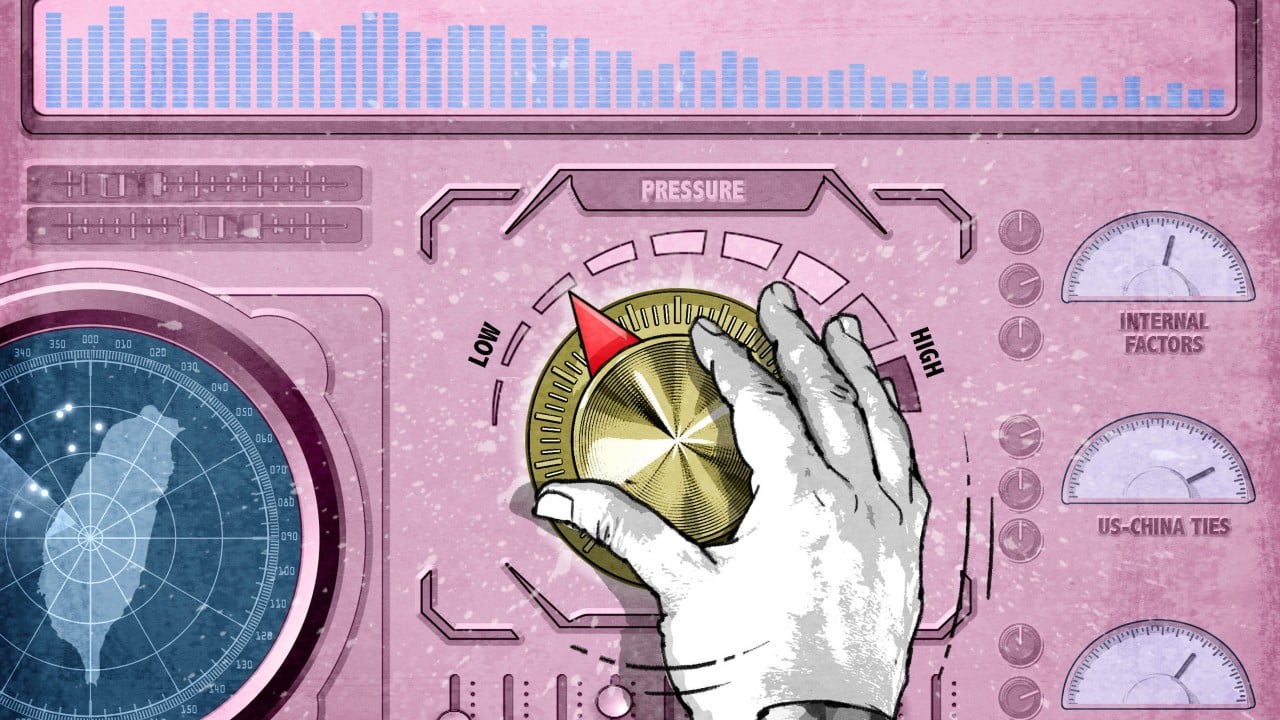
All eyes are on how Beijing’s “Chinese dream” of eventual Taiwan reunification will unfold at a time when the leader of the United States – Taipei’s top international backer – appears less likely to intervene in case of a cross-strait conflict. In the third of a three-part series, Amber Wang looks at how PLA activity may reflect the wider political picture.
In the past five years, People’s Liberation Army activity near Taiwan has been seen by many observers as a key indicator of when and whether a conflict that may involve the world’s two most powerful militaries could erupt.
Over that period, Chinese military drills have been getting larger and edging closer to the island. They include what the PLA has described as increasingly “combat-oriented” exercises that more closely resemble what might happen in the event of a real blockade or war.
Advertisement
Admiral Samuel Paparo, head of US Indo-Pacific Command, warned last year that such manoeuvres amounted to “rehearsals” for an armed assault.
Meanwhile, Taiwanese analysts have warned that the PLA is also practising a switch “from training to war”, raising concerns that such drills could turn into a sudden attack on the island.
Advertisement
Mainland China has also turned up the heat by sending increasing numbers of warplanes, ships and coastguard vessels on regular manoeuvres around the Taiwan Strait.
Beijing has said that its manoeuvres in the area are meant to deter pro-independence politicians, and many analysts believe that the intensity of its military activities – which increased after William Lai Ching-te was sworn in as the island’s leader last year – reflects its thinking regarding the island.