
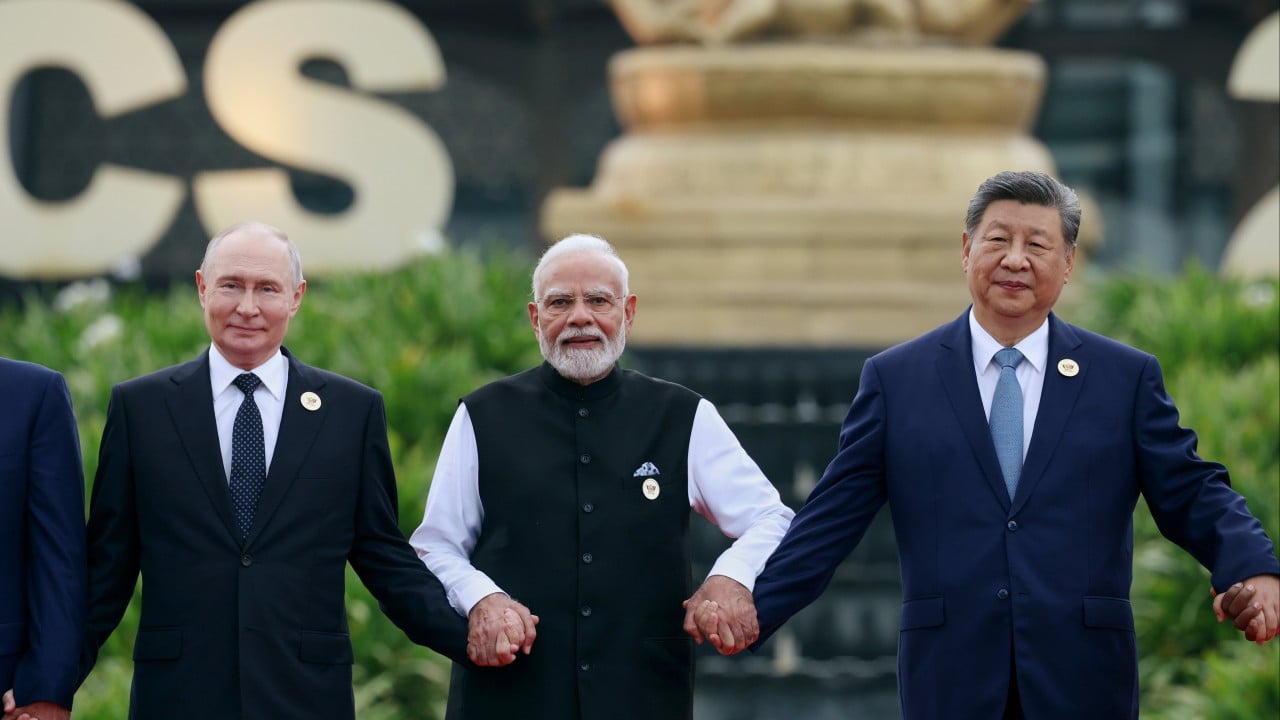
On September 12, Chinese President Xi Jinping met Indian Prime Minister Narendra Modi on the sidelines of the Brics summit in New Delhi. In their talks, Xi said China approached the relationship “from a strategic and long-term perspective”.
He called for an objective and rational “strategic” perception. That means the two sides should treat each other as partners rather than rivals, and as opportunities rather than threats.
In Chinese official and diplomatic language, the term “strategic” is routinely used to denote matters of high importance, long-term significance and central weight in the nation’s interests and development. When China defines a bilateral relationship as “strategic”, it signals that the relationship is viewed from a high level, beyond immediate disputes or short-term calculations. It implies a willingness to invest sustained political attention and effort, and a belief that the engagement can generate mutual benefits and positive externalities for the wider region or the world.
China’s partnership diplomacy is organised in a clear ladder. At the basic level are ordinary “strategic partnerships”. Higher up are “comprehensive strategic partnerships”, which China has established with a wide range of countries including Brazil, France, Indonesia, Egypt and Saudi Arabia.