
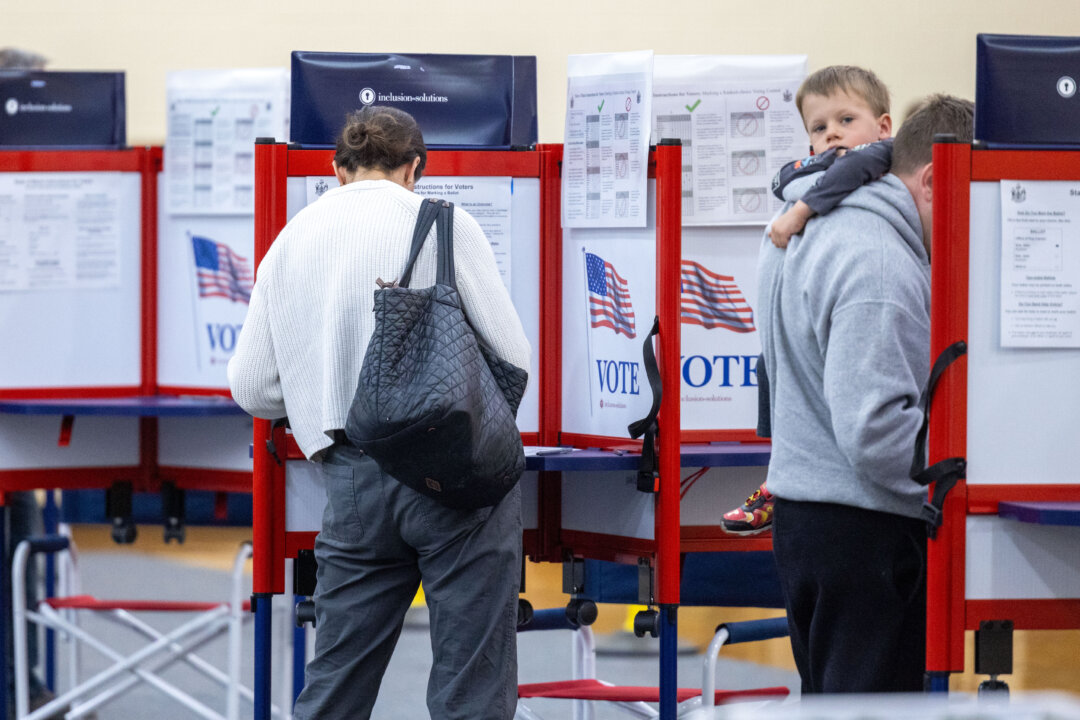
Voters in eight states backed ballot measures that sought stricter election rules during Tuesday’s election, approving voter ID and U.S. citizenship requirements.
In West Virginia, South Dakota, Kansas, Alaska, and Arkansas, voters approved measures affirming that only U.S. citizens can vote in state elections. All but Alaska’s were constitutional amendments, while Alaska’s was a ballot initiative.
Voters in Ohio and Nevada approved constitutional amendments requiring photo ID to vote in person. North Carolina voters approved an amendment extending the state’s photo ID requirement, already in its constitution for in-person voting, to mail ballots.
Voters in California and Colorado rejected measures that would have tightened voter ID rules. California’s Proposition 39 would have required voter ID, and Colorado’s Amendment 84 would have required an ID number for mail-in ballots.
In Arizona, a measure that would require voter ID and prohibit foreign contributions in elections was trailing but hadn’t been called.
Other voting-related measures were on the ballot in several states.
Massachusetts voters approved a measure allowing same-day voter registration on Election Day. In Alaska, preliminary results showed voters narrowly rejecting a measure that would have repealed the state’s ranked-choice voting system, open primaries, and some campaign finance disclosure rules.
California voters also weighed Proposition 5, a constitutional amendment that would change how statewide officials are recalled. Under current law, voters answer two questions on a recall ballot: whether to remove the official and who should replace them. Proposition 5 would eliminate the replacement question. As of Thursday morning, it was narrowly ahead, with the results not having been called yet.
About 7 in 10 registered voters nationwide favor requiring photo identification to vote, according to an October poll by The Associated Press-NORC Center for Public Affairs Research. Support is higher among Republicans, but a majority of Democrats also favor it.
Before Tuesday, at least 15 states had adopted citizenship voting requirements in the past decade, including all eight states that voted on them in 2024 and Texas last year.
Aside from elections-related issues, dozens of other ballot measures were being considered by voters in a multitude of states.
In Arizona, voters approved measures restricting school sports teams and school facilities, such as bathrooms, by biological sex. In Colorado, measures to restrict school sports teams by biological sex and to prohibit gender transition surgery for minors were leading but hadn’t been called, as was a similar sports measure in Washington state.
Arizona voters approved a measure to declare drug cartels terrorist organizations, and in Tennessee, voters passed a measure to grant more rights to the victims of crimes.
Alabama voters approved amendments requiring students to recite the Pledge of Allegiance daily, requiring public schools to play the national anthem weekly, and requiring schools to allow student-led prayer.
Voters in California appeared likely to reject Proposition 40, a one-time 5 percent tax on the wealth of residents worth more than $1 billion as of Jan. 1, 2026. Vote counting is ongoing, but “no” was ahead by about 11 percentage points as of Thursday.
Democrats won control of both the House and Senate in the midterms, giving them power in Congress for the final two years of President Donald Trump’s term. Democrats also won the governor’s races in Georgia and Texas.
The Associated Press contributed to this report.
We had a problem loading this article. Please enable javascript or use a different browser. If the issue persists, please visit our help center.