
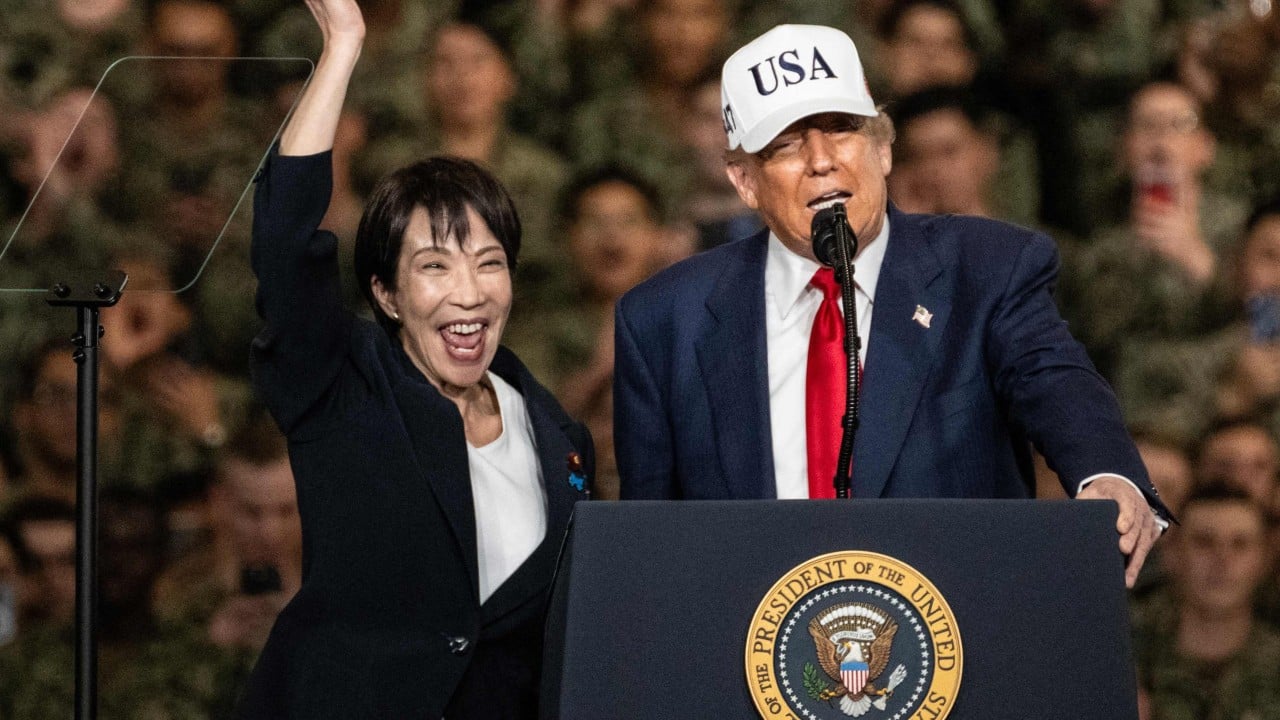
Retrenchment appears to be the buzzword following the Trump administration’s release of its new National Security Strategy (NSS). Under the heading “Balance of Power”, the report states that “the US rejects the ill-fated concept of global domination for itself”. And under “burden-sharing and burden-shifting”, it says that “the days of the US propping up the entire world order like Atlas are over”.
The document asserts a “‘Trump corollary’ to the Monroe Doctrine” and vows to “restore American pre-eminence in the Western Hemisphere”, effectively reaffirming the Americas as the US’ sphere of influence.
The NSS also warns of “civilisational erasure” facing Europe and says the US should prioritise re-establishing the “conditions of stability within Europe and strategic stability with Russia”.
Advertisement
The first Trump administration singled out China as a strategic competitor and the Biden administration designated it as America’s “most consequential geopolitical challenge” in their respective NSS papers. However, the latest strategy identifies China as a “near-peer”, with which it wishes to “rebalance America’s economic relationship … prioritizing reciprocity and fairness to restore American economic independence” while “maintaining a genuinely mutually advantageous economic relationship with Beijing”.
Meanwhile, it makes clear that the administration’s preference is deterring a conflict over Taiwan by “preserving military overmatch”. It also maintains that “the US does not support any unilateral change of the status quo in the Taiwan Strait”.
Advertisement
The NSS is really confirmation of the obvious under Donald Trump: an America-first policy recalibration imprinted with the US president’s mercurial personality. To see this in action, one does not have to look beyond what the US is doing to coerce Venezuela under its interpretation of the Monroe Doctrine.