
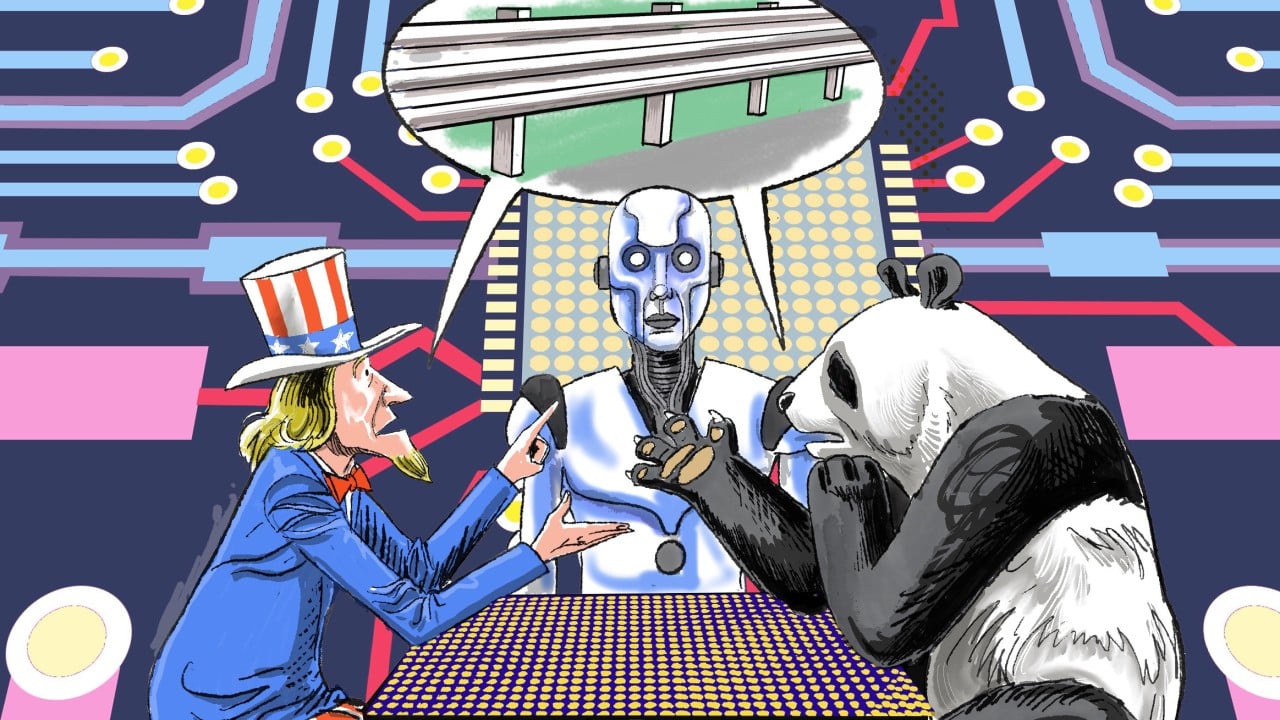
In November 2024, US president Joe Biden and Chinese President Xi Jinping made their first substantive joint statement about the national security risks posed by artificial intelligence (AI). Specifically, they noted that both the United States and China believe in “the need to maintain human control over the decision to use nuclear weapons”.
That may sound like diplomatic low-hanging fruit, since it would be hard to find a reasonable person willing to argue that we should hand control over nuclear weapons to AI. But with the Chinese government, there is no such thing as low-hanging fruit, especially on weighty security matters.
The Chinese are inherently sceptical of US risk reduction proposals. Russia had opposed similar language in multilateral bodies. Because bilateral talks with the US on AI and nuclear security would open daylight between Russia and China, progress on this front was not a foregone conclusion.
Advertisement
In the end, the result was significant because it demonstrated that two AI superpowers can engage in constructive risk management even as they compete vigorously for AI leadership.
Moreover, diplomats and experts from our two countries had also met earlier in 2024, in Geneva, for an extended session dedicated to AI risks. Though it didn’t produce any significant results, the very fact that it occurred was an important step.
Advertisement
Now, as the momentum behind AI development and deployment, both civil and military, gathers pace, the US and China need to build on this foundation by pursuing sustained, senior-level diplomacy on AI risks, even as each strives for the lead in the AI race.