
As Britain’s Defence Secretary John Healey talks up his plans to buttress the UK military, doubts over funding and the country’s ability to move fast enough are unsettling the industry and armed forces.
Healey in June laid out a 130-page defence review, billing it as the first in a generation that would transform and grow the UK military. He set out plans to rebuild arms stockpiles, expand Britain’s nuclear deterrent and submarine fleet, and invest more heavily in long-range weapons and advanced technologies such as drones and lasers.
But six months on, with little clarity beyond 2027 on where the money would come from, military chiefs were increasingly concerned the government would need to scale back its ambitions, while authors of the review have called on ministers to redirect money from welfare into defence.
Advertisement
Moreover, there was frustration among manufacturers that they do not know when certain contracts would be awarded, executives from four different companies told Bloomberg, speaking on condition of anonymity. One said they needed to be able to show their investors soon that the British government was making good on their commitments, while another said some of its smaller programmes were at risk of being dropped.
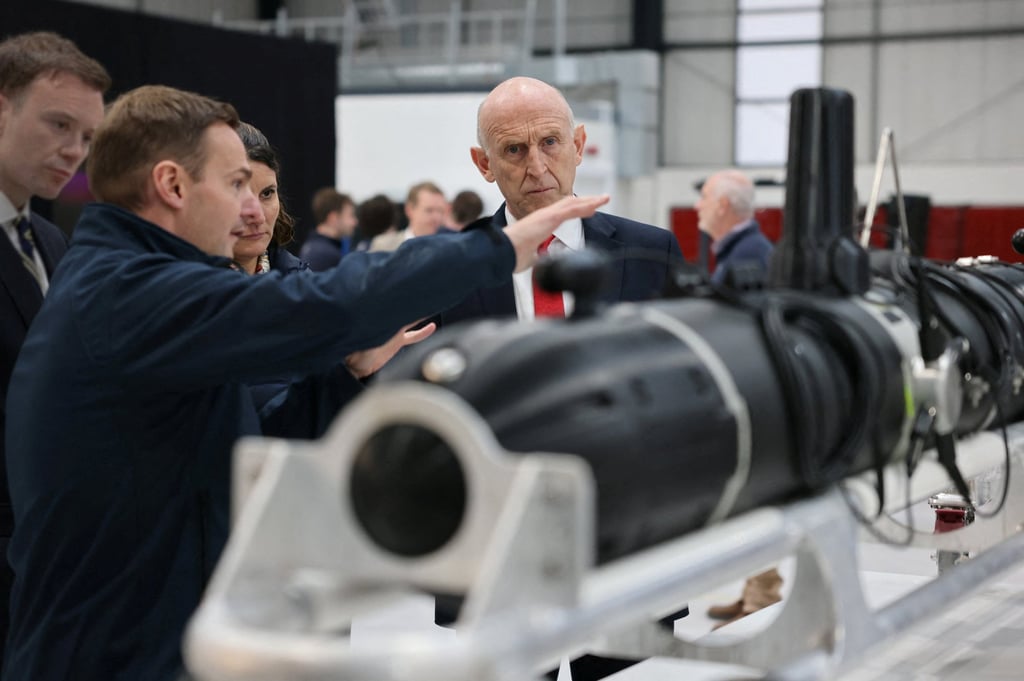
The UK last Monday unveiled a strategy dubbed “Atlantic Bastion” that was designed to create a hybrid navy by combining autonomous vessels with warships and aircraft to better protect undersea cables and pipelines, after a 30 per cent increase in Russian ship activity in and around UK waters. It would enable the UK to find, track and act against adversaries.
Advertisement