

[The content of this article has been produced by our advertising partner.]
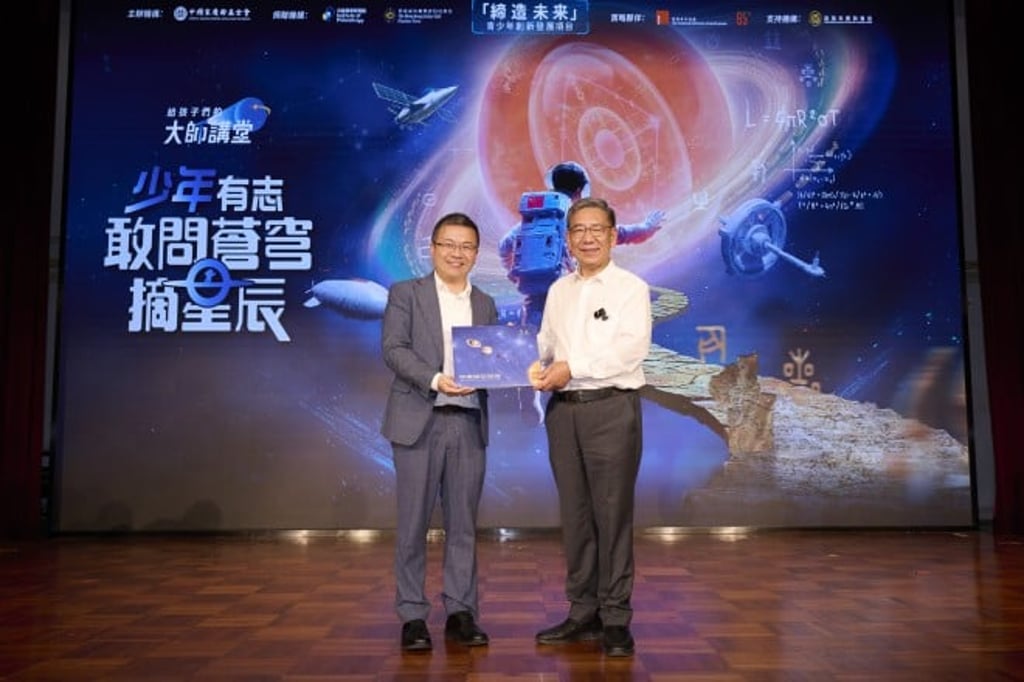
Over two weeks in September, seven leading national-level scientists shared cutting-edge technology and discoveries with 3,800 students from 16 schools and tertiary institutions as well as via a special forum at the Hong Kong Palace Museum.
AI, spaceflight, archaeology, new energy and ocean carbon science were just some of the topics under discussion as part of the Masterclass Series organised under the Nurturing Future InnoTech Talent Project.
Advertisement
The project is funded by the Institute of Philanthropy and The Hong Kong Jockey Club Charities Trust to launch activities in the Chinese Mainland and Hong Kong, and organised by the China Soong Ching Ling Foundation with The Hong Kong Federation of Youth Groups as strategic partner.
An enthusiastic response
Advertisement
Students from the HKFYG Lee Sau Kee College said the lectures were a rare chance to quiz experts directly and to learn about developments they cannot usually find online.
One Form 5 student said semiconductor materials scientist Yang Deren’s talk made the environmental gains from solar power feel concrete and sparked interest in physics beyond the classroom.
Another student said they came away with a better understanding of China’s leading role in solar energy and its firm commitment to decarbonisation through renewables.
Advertisement
A Form 5 student from SKH Lui Ming Choi Secondary School said archaeologist Tang Jigen’s discussion of oracle bone inscriptions deepened students’ understanding of Chinese culture and encouraged them to read more about its archaeology.
A business studies student said computer scientist Guo Yike’s presentation of AI shows how quickly AI technology is moving. He now aims to closely track developments.
Inside China’s solar dominance
Advertisement
Semiconductor materials scientist Academician Yang Deren explained that China sees solar as a key industry as demand for renewables rises. China turns out more than 80 per cent of the world’s solar cells, a position built in about 15 years.
Qinghai’s Talatan photovoltaic base, at roughly 600 square kilometres is close to half the size of Hong Kong, offers a glimpse into the scale of renewables now being deployed in China.
Tracing the moon myth to its sources
Advertisement
Archaeologist Professor Tang Jigen used bamboo slips from a Qin-era tomb in Jingzhou, Hubei, to trace the legend of Chang’e in the historical record, showing how the story of her stealing the elixir of life and flying to the moon dates back at least 2,000 years.
Using oracle bones, bronzes and slips from the Warring States era, he showed how the legend has been written and rewritten across the centuries.
The safety net behind every rocket launch
Advertisement
From the space sector, Lei Zhanxu of the 510 Institute, Fifth Academy, China Aerospace Science and Technology Corporation introduced the extensive safety precautions behind every rocket launch.
His team hunts for propellant leaks in the extreme vacuum conditions of space, a vital job repeated across hundreds of missions to prevent vacuum-related failures.
AI built for Hong Kong
Advertisement
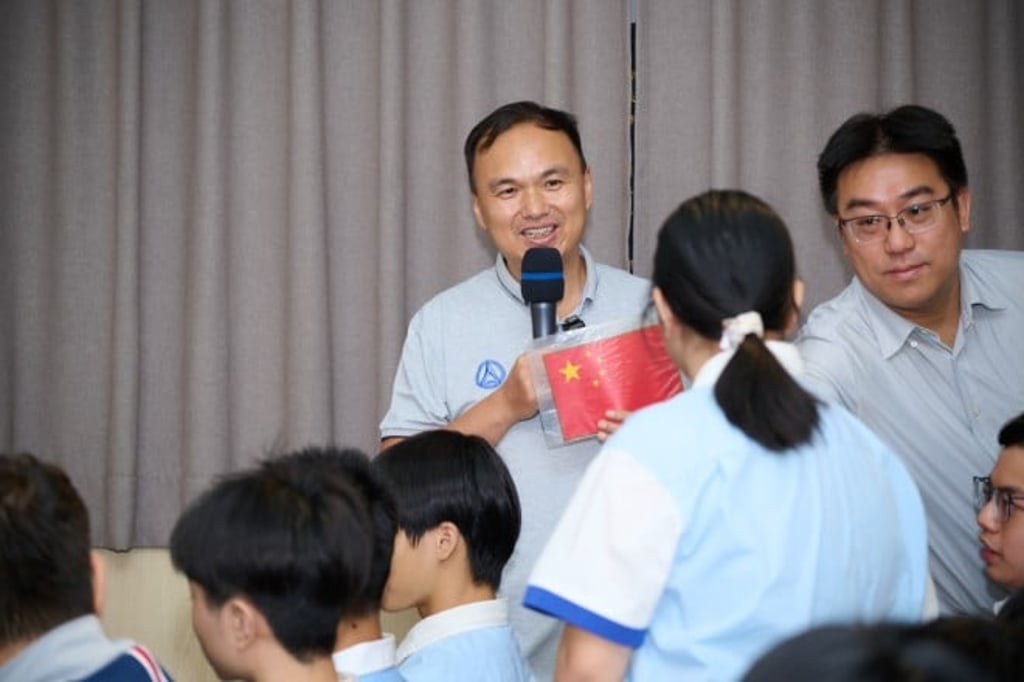
Professor Guo Yike, Provost and Chair Professor of Computer Science and Engineering at The Hong Kong University of Science and Technology, argued for Hong Kong specific generative AI.
Guo’s team is building local chat systems aligned with the city’s social context, laws and languages. He demonstrated models already in use across government including HK Meeting, which provides live transcriptions of meetings, and HK Pilot which manages document workflows. He also showed how AI can be used creatively, such as for generating songs from different languages.
How the ocean stores carbon
Advertisement
Marine biologist Academician Jiao Nianzhi described how the ocean is a vast carbon store. Research into marine microbes is exploring how labile organic carbon can be converted into more refractory forms with long-term storage potential. The effort now spans dozens of institutions worldwide and is informing standards for ocean negative emissions.
How asteroid deflection works
Academician Wu Weiren, Chief Designer of the Chinese Lunar Exploration Programme, made the case for planetary defence. He described a rendezvous-impact-rendezvous mission in which an observer spacecraft surveys a small asteroid, an impactor strikes at high speed, and the observer then returns to measure the effects.
Advertisement
Precision at the limits
Vacuum metrologist Academician Li Detian spoke about precision measurement in extreme environments and explained the importance of fundamental metrology for aerospace and advanced manufacturing.
Testing in a near-vacuum and across wide temperature ranges gives engineers reliable baselines for materials, seals and instruments. A strong metrology culture built on standards, calibration and repeatable methods can shorten testing cycles, improve safety and lift product quality.
Advertisement
.jpg?itok=YR5FyO4m "More than 30 students witnessed the launch of the Lijian-1 Y11 rocket inscribed with the project name “Nurturing the Future”")
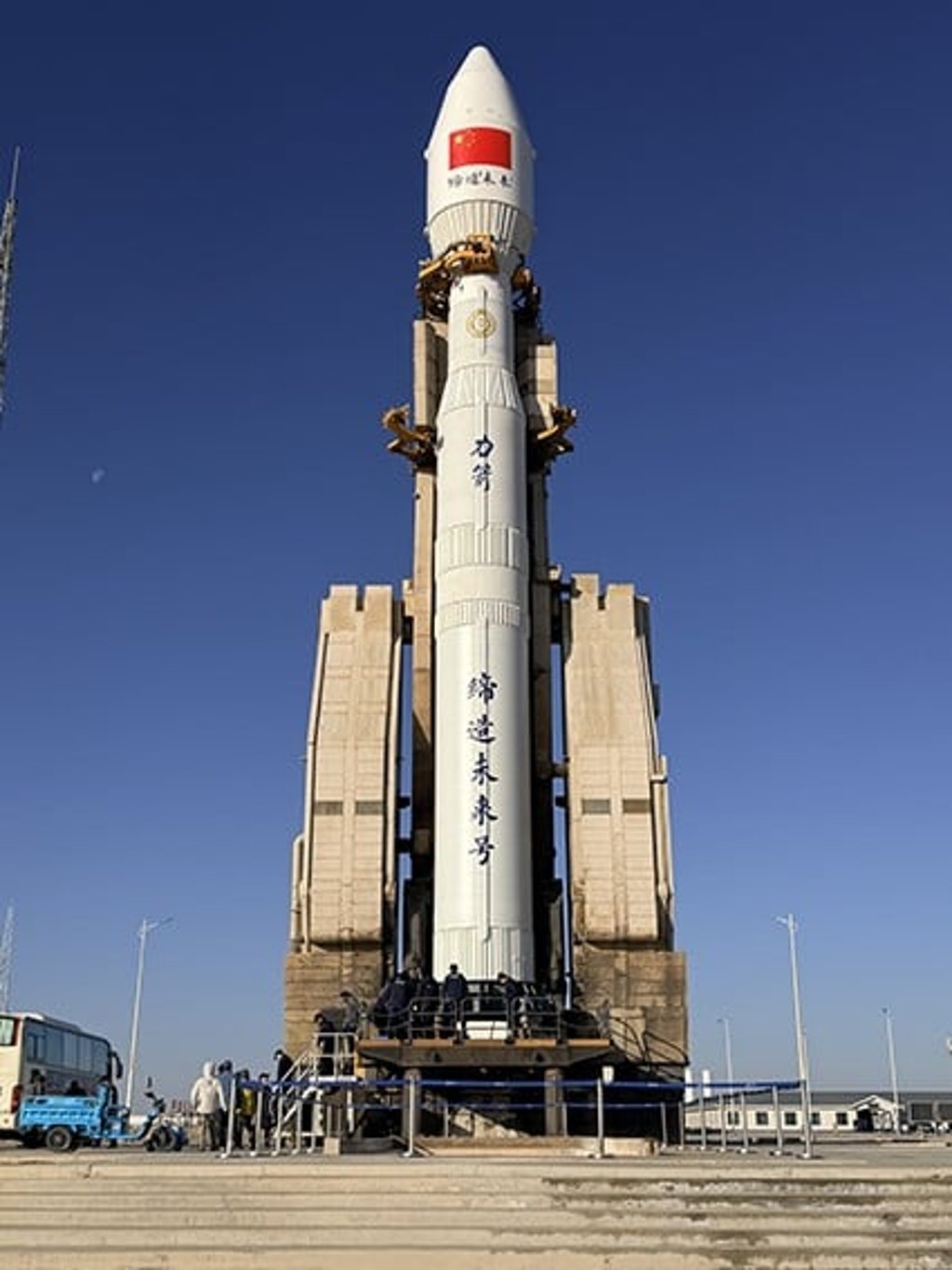
Theory became reality for 39 Hong Kong students and teachers participating in the Nurturing Future InnoTech Talent Project, when in December they travelled to the Dongfeng commercial aerospace innovation pilot zone near the Jiuquan Satellite Launch Centre in Gansu. Here they witnessed a Lijian-1 Y11 rocket inscribed with the project name “Nurturing the Future” blast off into space carrying a load of nine satellites.
Lau Pak Ho from Buddhist Yip Kei Nam Memorial College shared that witnessing the rocket launch was an awe inspiring experience and that he was deeply grateful to the exchange programme for the opportunity. He explained that it allowed him to feel the passion of the space dream and that the journey would continue to inspire him to pursue his future with confidence and determination.
Details are available athttps://nurturingyouth.hkfyg.org.hk.
Advertisement
Advertisement