
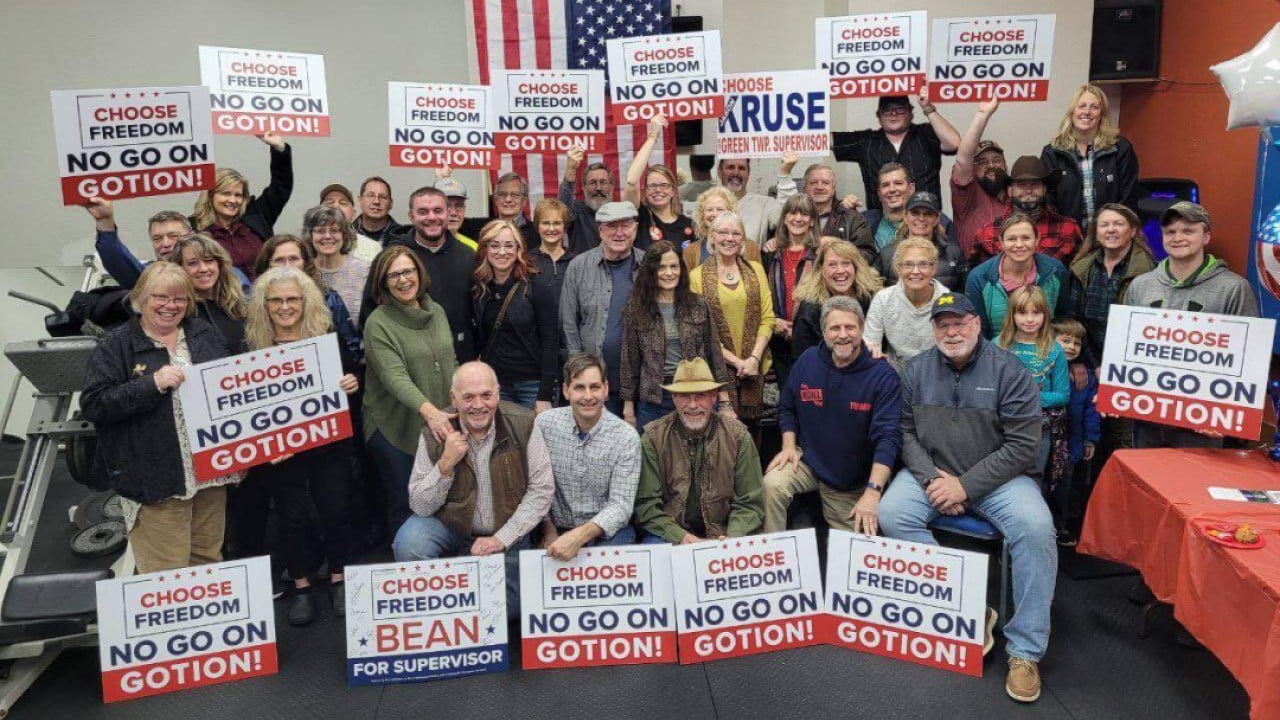
Less than three years ago, residents of a small rural township in the US state of Michigan packed a community hall to celebrate what many saw as a victory for local democracy over a Chinese-headquartered battery manufacturer.
The residents of Green Charter Township prayed, cheered and congratulated one another for overturning a town board that had supported Gotion’s proposed US$2.36 billion electric vehicle battery project.
As the new board quickly rescinded the Gotion plan, the residents applauded the defeat of a project they viewed as a “Trojan horse” that could bring undue Chinese Communist Party influence, environmental risks and irreversible changes to their way of life.
Advertisement
But the town could face a staggering financial price for that victory, leaving the community with an uncertain future.
Backed by Michigan Governor Gretchen Whitmer, the proposed project was a 109-hectare (270-acre) campus to produce lithium iron phosphate cells and EV components on a site that included more than 24 hectares of protected wetlands.
Advertisement
Projected to create nearly 2,500 jobs, it was promoted as a win for domestic manufacturing and clean-energy jobs.
It was designed to support Gotion Inc’s North American expansion and US efforts onshore critical supply chains. Gotion Inc is the US subsidiary of Gotion High-Tech Co Ltd, a China-based battery manufacturer.