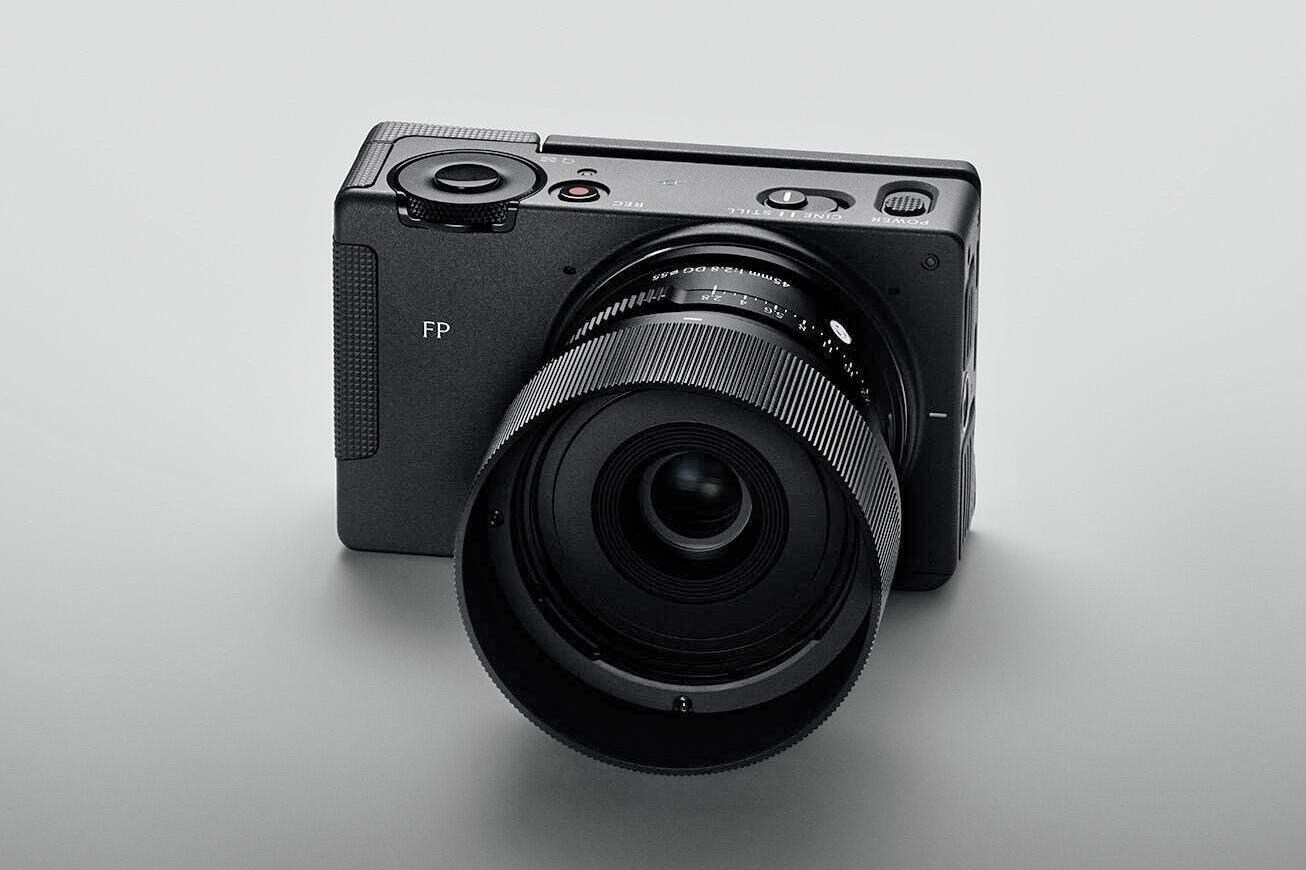
A faster sensor, an articulated preview screen, and longer battery life are just a few of the SP2’s improvements.A faster sensor, an articulated preview screen, and longer battery life are just a few of the SP2’s improvements.Oct 23, 2026, 2:42 PM UTCImage: SigmaSeven years after Sigma claimed its original fp was the world’s smallest and lightest full-frame mirrorless camera, the company has announced a similarly compact follow-up with several welcome upgrades including an improved sensor, an articulating LCD display, and longer battery life. But this time around Sigma is only claiming its new FP2 is the “world’s smallest” full-frame shooter as those upgrades have increased its body-only weight by about six grams.The Sigma FP2 will be available on November 11th and starts at $2,199 for the camera body alone. For $2,749 you can bundle it with Sigma’s upgraded EVF-21 viewfinder featuring a 5.76 million dot OLED panel and an eye sensor the camera uses to switch between its LCD screen and viewfinder. For the same price you can alternately bundle the new camera with an I-series 50mm F2 DG lens.The FP2’s sensor upgrades don’t include more resolution but increased data speeds facilitating higher shooter rates and new autofocus capabilities.Image: SigmaThe biggest upgrade for the FP2 is a new 24.5-megapixel, partially stacked, back-side illuminated, full-frame CMOS sensor. In terms of resolution it’s a tiny step down from the original fp’s 24.6-megapixel sensor, but the new architecture allows for faster data reading off the FP2’s sensor. That comes with many benefits including a reduced rolling shutter effect in stills (the camera is still limited to just an electronic shutter), faster autofocus capabilities that now include bird recognition in addition to people and animals, still shooting at up to 20fps, and video capabilities that max out at 6K at 60fps, or 4K at 120fps when using only a cropped portion of the sensor.The FP2’s new articulated screen can tilt up and down and extends away from the camera’s body to improve cooling when recording video.Image: SigmaThe Sigma FP2 carries forward the streamlined and compact body of the original which can still occasionally result in challenging ergonomics, particularly with a longer lens attached. But multiple tripod mounts facilitate the use of optional accessories like an extended grip and the aforementioned viewfinder. Its 3.2-inch, 2.1-million dot LCD touchscreen on the back can now angle up and down to facilitate more shooting angles while at the same time improving airflow and cooling so the FP2 can record videos for longer.A full-size HDMI port has been added that’s more durable than the original fp’s micro HDMI option, alongside two USB-C ports. One is limited to USB 2.0 speeds and is primarily designed to be used for powering the camera or connecting accessories like headphones or the viewfinder. The other is a 10Gbps USB 3.2 Gen 2 port that can be used for high-speed data transfers or for connecting an external SSD for capturing footage in Apple’s ProRes RAW format.There’s just a single SD card slot so there’s no option for redundant backup storage, but the FP2 does come with 70GB of storage built-in that can be used when your memory card unexpectedly fills. Sigma has also increased the capacity of the battery in the FP2. It makes the new model closer to 40 grams heavier than the original fp with the battery inserted, but offers 30 percent longer battery life which equates to around 370 photos, or about 130 minutes of video capture, according to the company.Follow topics and authors from this story to see more like this in your personalized homepage feed and to receive email updates.Andrew LiszewskiThe Verge DailyA free daily digest of the news that matters most.Email (required)By providing your information, you agree to our Terms of Use and our Privacy Policy. We use vendors that may also process your information to help provide our services. This site is protected by reCAPTCHA and the Google Privacy Policy and Terms of Service apply.
The Sigma FP2 brings significant upgrades to the ‘world’s smallest’ full-frame camera