


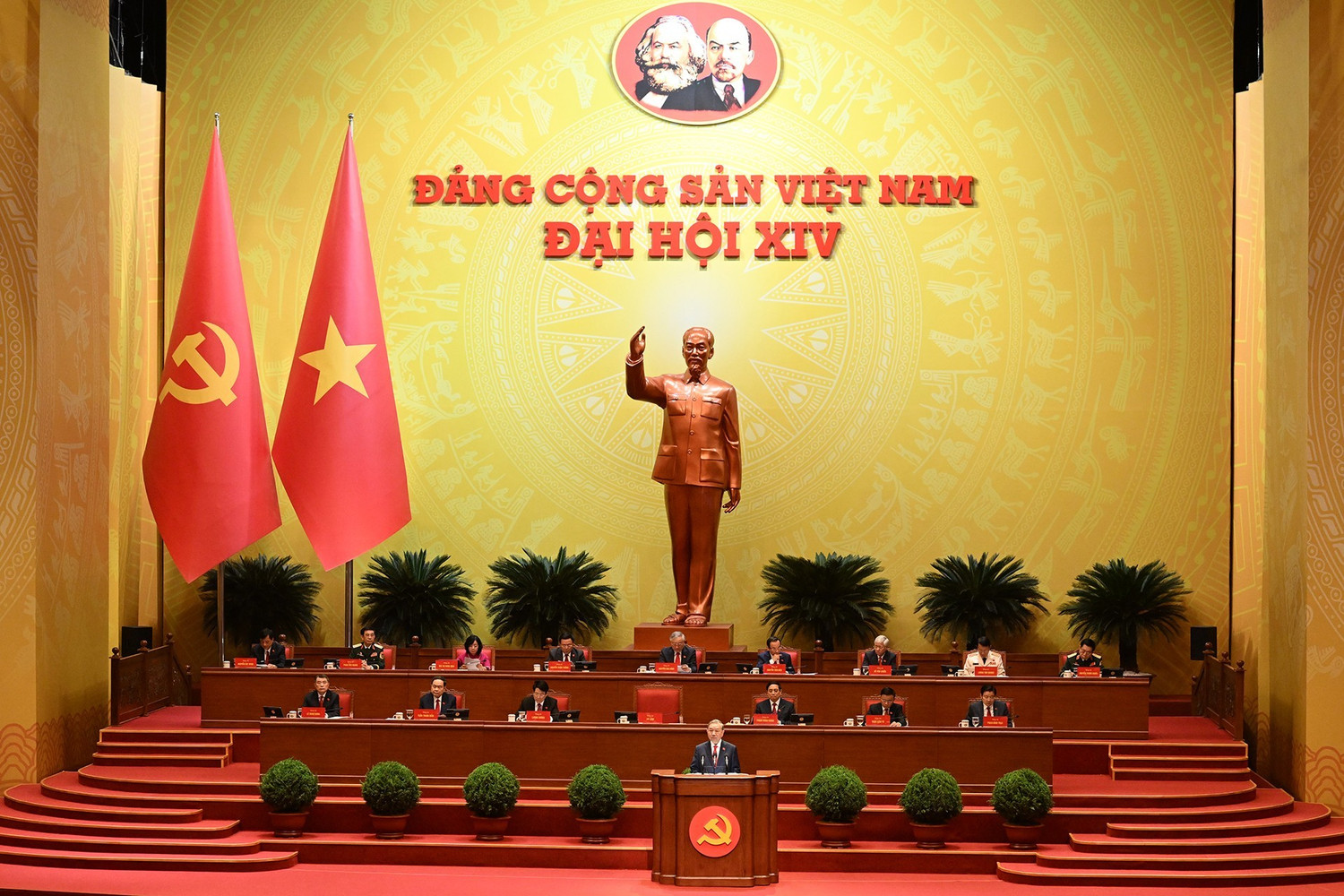
Media outlets were saturated last week with coverage of the 14th Congress of the Communist Party, an event described as “the most momentous for the country” and a “historic turning point.” It earns these labels because it will determine the fate of more than 100 million people, shaping the country’s economic, political, and social future for at least the next decade.
Despite oft-repeated declarations of a “democratic, law-based state” and slogans asserting that “the people know, the people discuss,” or “the people inspect and supervise,” the Congress’s deliberations are taking place behind closed doors, inaccessible even to the press.
It is hard not to ask: in an event that decides their future and destiny, where do the people actually stand?
A “Momentous” National Event Behind Closed Doors
Since the opening ceremony on Jan. 20, the 14th Party Congress has operated in closed sessions. Information reaches the public only through a filtered, circuitous process: from the Congress to a press center, then to 156 authorized domestic and foreign media outlets.
The schedule itself has been opaque. Originally set for Jan. 19 to 25, the Congress was unexpectedly shortened by one and a half days and is now expected to close on the afternoon of Jan. 23. [1] The official justification was vague, attributing the early finish to “the highest level of effort, highly scientific and responsible work,” without providing details to the public.
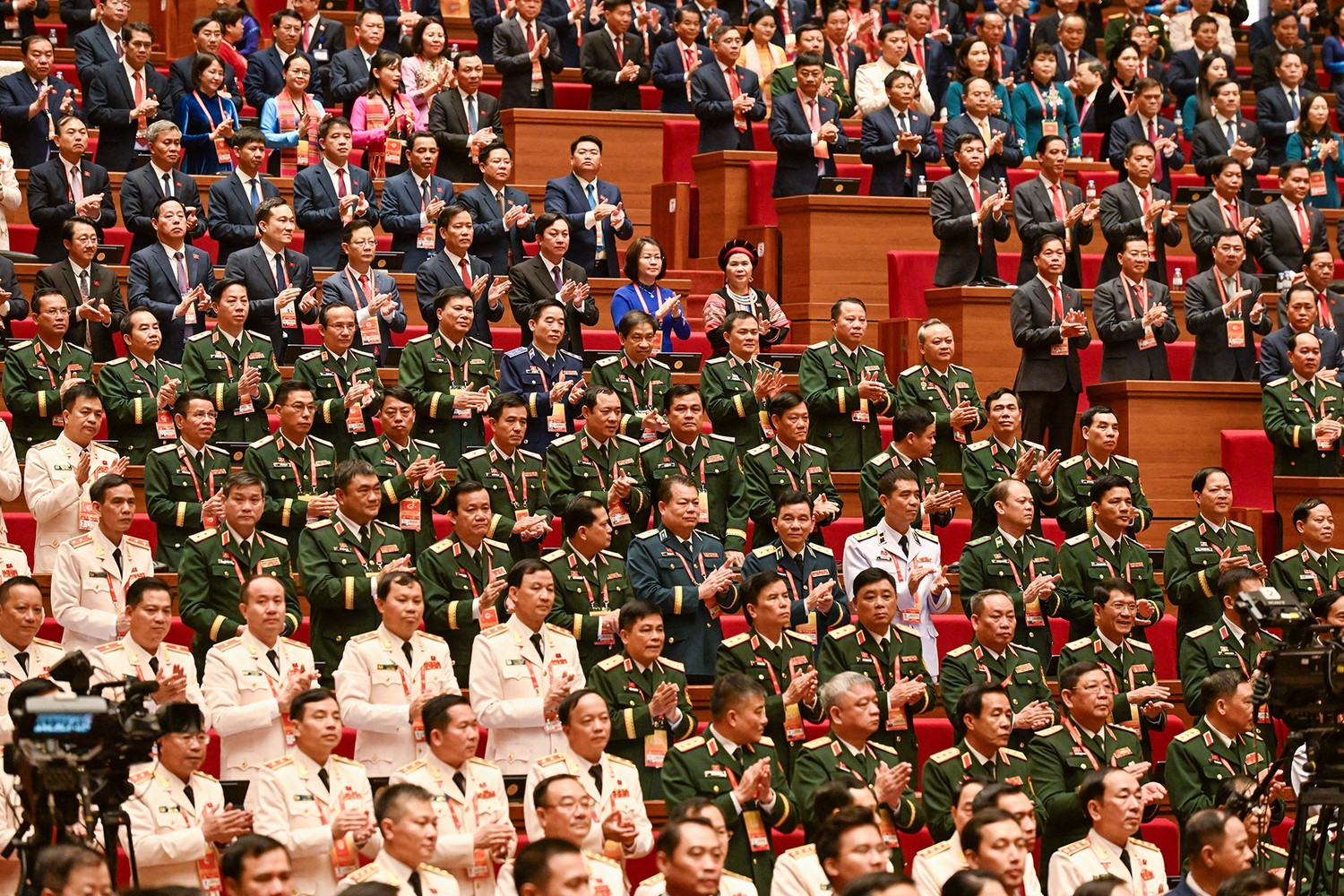
Despite this lack of transparency, the Party Congress is portrayed as having immense weight. State media claims it will decide the country’s development direction for the next 100 years, from 2030 to 2130, [2] and “open a new era” for the nation. [3] However, the 1,586 delegates making these decisions are explicitly described as “representing more than 5 million party members nationwide,” rather than the general population.
Beyond policy, the Congress is the decisive venue for personnel. It will elect 200 members to the Party Central Committee, [4] from whom the most powerful leaders—including the general secretary and Politburo members—are chosen.
These party elections overshadow the National Assembly elections in significance. Central Committee members typically migrate to the candidate lists for the parliamentary elections in March. Under the “consultation” process conducted by the Party-controlled Fatherland Front, around 95 percent of candidates are party members, leaving only about 5 percent for non-members. [5]
While the National Assembly formally elects top officials like the president, prime minister, and assembly chair, these positions are effectively chosen in advance by the Party Congress. The National Assembly’s role is simply to approve them.
The People are the Root
State media has broadcast live speeches praising the Party’s commitments, saturated with “for the people” rhetoric since the week began. In the report submitted to the Congress, Tô Lâm repeatedly emphasized the view that “the people are the root,” defining them as the “central subject” and urging a “tightened” relationship between the Party and the population. [6]
Similarly, State President Lương Cường stressed in his opening speech that the new Central Committee must consist of “truly deserving servants, faithful to the people.” [7]
Official documents reinforce this, stating that “data, indicators, and feedback from the people are considered important bases for policy adjustment and accountability.” To this end, Phạm Thị Thanh Trà, Minister of Home Affairs, affirmed the goal of an integrity-based government that “takes effectiveness in serving the people as its core value,” ensuring that “the Party’s will aligns with the people’s hearts.” [8]
Hà Thị Nga, secretary-general of the Việt Nam Fatherland Front, expanded on this during the third day of sessions. She called for strengthened democracy and transparency, ensuring citizens have real rights to participate and conduct social criticism. She cited the governing principle: “The people know, the people discuss, the people act, the people inspect, the people supervise, and the people benefit.”
However, the surrounding media coverage raises questions. While the press repeatedly states that the people “place their hopes in the Party’s decisions,” there is no concrete measure of these expectations. It remains unclear exactly which people are being referred to, or where this alleged consensus exists. [9]
Where are the People, Really?
According to the 2013 Constitution, the Vietnamese people are the “masters” of the country. It explicitly defines Việt Nam as a “state of the people, by the people, and for the people,” where the Communist Party must be accountable to the population it serves.
This principle was reinforced by former State President Trần Đức Lương, stating that in Việt Nam, “all state agencies and organizations, including party organizations, must operate in accordance with the law, comply with the law, and be accountable to the people for their activities.” [10]
Similarly, the late General Secretary Nguyễn Phú Trọng signed Resolution No. 27-NQ/TW on Nov. 9, 2022, which clearly stipulated mechanisms for the Communist Party to be supervised by and held accountable to the people. [11]
However, the 14th Congress reveals a stark contradiction between these commitments and reality.
While the Congress makes decisions that will reportedly shape the next 100 years of national development, the process remains entirely opaque. The public has no access to the agenda, the schedule, or the content of the discussions. As with the 13th Congress, information is released only in fragments, often after decisions are already final. [12]
The disconnect is most visible in personnel selection. The public has no say in choosing the 1,586 delegates who, in turn, select the party’s top leadership behind closed doors. Information regarding these elections is classified as “top secret,” leaving citizens to rely on rumors rather than transparency. [13] [14]
The threat of prosecution has effectively nullified spaces for public expression or open discussion. In Việt Nam, there is no independent press, and citizens who voice their opinions on social media face fines or arrest under vague laws like Articles 117 and 331 of the 2015 Criminal Code.
In the end, who does the party truly represent, and have the people received the respect they deserve?
Hạo Nam wrote this article in Vietnamese and published it in Luật Khoa Magazine on Jan. 22, 2026. Đàm Vĩnh Hằng translated it into English for The Vietnamese Magazine.
References:
1. Văn, V. A. (2026, January 21). Đại hội XIV của Đảng rút ngắn 1,5 ngày làm việc. Báo Điện Tử VTC News. https://vtcnews.vn/dai-hoi-xiv-cua-dang-rut-ngan-1-5-ngay-lam-viec-ar999561.html
2. VnExpress. (2026, January 20). Tổng Bí thư: Nói ít – Làm nhiều – Làm đến cùng. vnexpress.net. https://vnexpress.net/tong-bi-thu-noi-it-lam-nhieu-lam-den-cung-5007550.html
3. Lê Giang. (2026, January 20). Chủ tịch nước: Đại hội 14 mở ra “kỷ nguyên mới” của dân tộc. Luật Khoa tạp chí. https://luatkhoa.com/2026/01/chu-tich-nuoc-dai-hoi-14-mo-ra-ky-nguyen-moi-cua-dan-toc/
4. Hoài Thu. (2026, January 22). Số lượng, tiêu chuẩn Ủy viên Trung ương và Ủy viên Bộ Chính trị khóa mới. Báo Điện Tử Dân Trí. https://dantri.com.vn/thoi-su/so-luong-tieu-chuan-uy-vien-trung-uong-va-uy-vien-bo-chinh-tri-khoa-moi-20260122070800709.htm
5. Lê Kiên. (2016, June 8). Gần 96% đại biểu Quốc hội là đảng viên. TUOI TRE ONLINE. https://tuoitre.vn/gan-96-dai-bieu-quoc-hoi-la-dang-vien-1114792.htm
6. VnExpress. (2026, January 20). Tổng Bí thư: Nói ít – Làm nhiều – Làm đến cùng. vnexpress.net. https://vnexpress.net/tong-bi-thu-noi-it-lam-nhieu-lam-den-cung-5007550.html
7. Online, T. T. (2026, January 20). Toàn văn Diễn văn khai mạc của Chủ tịch nước Lương Cường tại Đại hội XIV của Đảng. TUOI TRE ONLINE. https://tuoitre.vn/toan-van-dien-van-khai-mac-cua-chu-tich-nuoc-luong-cuong-tai-dai-hoi-xiv-cua-dang-20260120101340438.htm
8. Văn, V. A. (2026, January 21). Cán bộ phải lấy danh dự là điều thiêng liêng nhất, lấy hiệu quả phục vụ Nhân dân làm giá trị cốt lõi. Báo Điện Tử VTC News. https://vtcnews.vn/can-bo-phai-lay-danh-du-la-dieu-thieng-lieng-nhat-lay-hieu-qua-phuc-vu-nhan-dan-lam-gia-tri-cot-loi-ar999467.html
9. Trú, N. P. V. T. (2026, January 19). Nhân dân cả nước kỳ vọng vào Đại hội lần thứ XIV của Đảng. Báo Nhân Dân Điện Tử. https://nhandan.vn/nhan-dan-ca-nuoc-ky-vong-vao-dai-hoi-lan-thu-xiv-cua-dang-post937986.html
10. Tạp chí cộng sản. (n.d.). Tạp Chí Cộng Sản. https://www.tapchicongsan.org.vn/web/guest/xay-dung-ang2/-/2018/1654/xay-dung-nha-nuoc-phap-quyen-xa-hoi-chu-nghia-cua-dan%2C-do-dan%2C-vi-dan%2C-ngay-cang-trong-sach%2C-vung-manh-la-nhiem-vu-quan-trong-thuong-xuyen-cua-dang%2C-nha-nuoc-va-nhan-dan-ta.aspx
11. Về tiếp tục xây dựng và hoàn thiện Nhà nước pháp quyền xã hội chủ nghĩa Việt Nam trong giai đoạn mới. (n.d.). https://special.nhandan.vn/ve-tiep-tuc-xay-dung-va-hoan-thien-nha-nuoc-phap-quyen-XHCN-trong-thoi-ky-moi/index.html
12. Họp báo công bố kết quả Đại hội XIII của Đảng. (n.d.). Ban Nội Chính Trung Ương. https://noichinh.vn/tin-tuc-su-kien/tin-trung-uong/202102/hop-bao-cong-bo-ket-qua-dai-hoi-xiii-cua-dang-309142/
13. Xaydungchinhsach.Chinhphu.Vn. (2025, November 18). Quyết định 2500/QĐ-TTg ban hành Danh mục bí mật nhà nước lĩnh vực tổ chức, cán bộ, lao động và xã hội. xaydungchinhsach.chinhphu.vn. https://xaydungchinhsach.chinhphu.vn/quyet-dinh-2500-qd-ttg-ban-hanh-danh-muc-bi-mat-nha-nuoc-linh-vuc-to-chuc-can-bo-lao-dong-va-xa-hoi-119251118091506562.htm
14. Minh Viễn. (2025, November 27). Bầu tổng bí thư Đảng Cộng sản Việt Nam: Ba điều cần hiểu. Luật Khoa tạp chí. https://luatkhoa.com/2025/10/bau-tong-bi-thu-dang-cong-san-viet-nam-ba-dieu-can-hieu/