
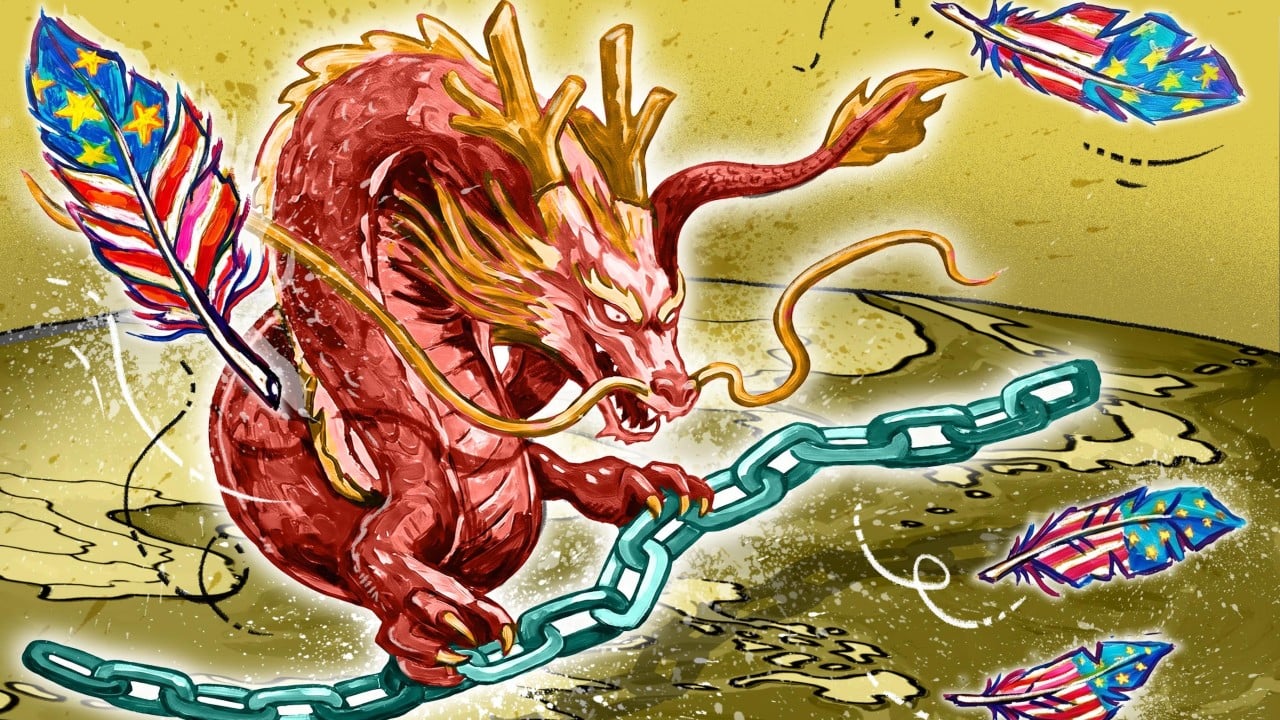
As the People’s Liberation Army marks its 99th anniversary on August 1, one year from the deadline for its centenary goals, its evolution highlights the past, present and future of China’s military strategy. In the second part of a series, Gabriel Dominguez examines how Beijing is pushing the envelope on its near-seas island arc.
Beijing has urged the People’s Liberation Army to transform into a “world-class military” by the mid-21st century, intent on piercing US-led chokepoints along an arc of islands extending from Japan through Taiwan to the Philippines.
Known as the first island chain, they underpin a US-aligned security architecture that Chinese strategists see as both a constraint on the PLA’s freedom to manoeuvre in a conflict and the likeliest entry route for US and allied forces in a regional crisis.
Long associated with Cold War-era strategy, the first island chain has become a principal arena of military competition between China and the United States, with the Pentagon’s latest China Military Power Report identifying it as central to Beijing’s regional strategy.
A year ahead of its 2027 centenary goal, the PLA has shown progress in areas that could challenge the US defence line – specifically its dual-carrier operations, large-scale arms production and improved nuclear deterrence beyond the island chain.
Meanwhile, the US and its allies have also ramped up their input, including the expansion of American base access in the Philippines and increasingly sophisticated defence drills involving Washington’s regional partners.