
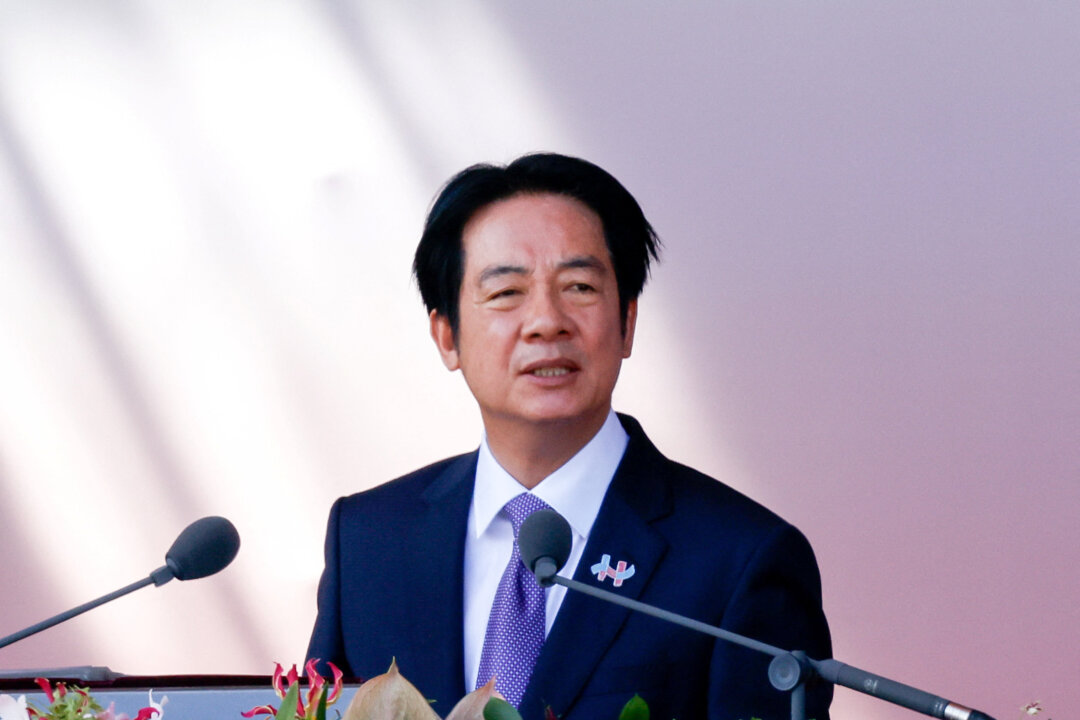
Taiwanese President Lai Ching-te has warned of coordinated online activity aimed at influencing public opinion ahead of Taiwan’s local elections on Nov. 28. He cited a surge in social media accounts registered with foreign phone numbers but displaying Taiwan as their location.
Speaking at a Democratic Progressive Party (DPP) meeting on Nov. 4, Lai said the accounts had appeared in large numbers across social media platforms and under news posts about specific issues. Through concentrated commenting and reposts, they appeared to be attempting to steer public opinion and influence how voters perceive political issues, he said.
Lai, who also chairs the party, urged party officials, candidates, and their campaign teams to remain calm and vigilant in the face of misinformation, smear campaigns, and other forms of malicious interference.
The ruling DPP in Taiwan is viewed as pro-Taiwanese sovereignty and opposes the Chinese Communist Party’s calls for “reunification” of a China under its rule.
Lai said the suspicious accounts share several characteristics: they were registered within a relatively concentrated period and follow recurring patterns of activity. Their presence across multiple platforms and under posts discussing particular issues suggested an effort to manipulate online discussions, he said.
He also said campaign teams had discovered that their official websites were being subjected to distributed traffic attacks intended to overwhelm servers and disrupt normal operations. Similar incidents were reported in the major cities of Taipei, Kaohsiung, and Hsinchu, he said.
“This is no longer ordinary election campaigning and political confrontation. It also involves cybersecurity and whether democratic elections can be conducted in a fair and normal environment,” Lai said.
Beyond election-related content, Lai warned that misleading information about public policies had also been circulating in closed online groups. Recent examples included government cash payments to the public, health insurance exemptions for people aged 65 and older, and proposed amendments to laws addressing drug-impaired driving.
He said the spread of misleading claims could lead people to make decisions based on incomplete or incorrect information, deepen social divisions and distrust, and potentially affect voters’ choices.
Lai’s remarks came after televised debates between mayoral candidates in Kaohsiung and Taipei concluded over the weekend. The debates, broadcast on television and online, allowed voters to compare candidates’ policy proposals and assess their plans for the cities’ futures, he said.
Lai also called on supporters to consult the fact-checking sections of the DPP’s official website and LINE account, verify information before sharing it, and help prevent false claims from spreading.
“Democratic elections must not be subject to improper interference,” he said, adding that voters should make their choices based on candidates’ platforms, abilities, and performance rather than being swayed by misinformation or deliberate manipulation.
Chung Yuan contributed to this report.
We had a problem loading this article. Please enable javascript or use a different browser. If the issue persists, please visit our help center.