
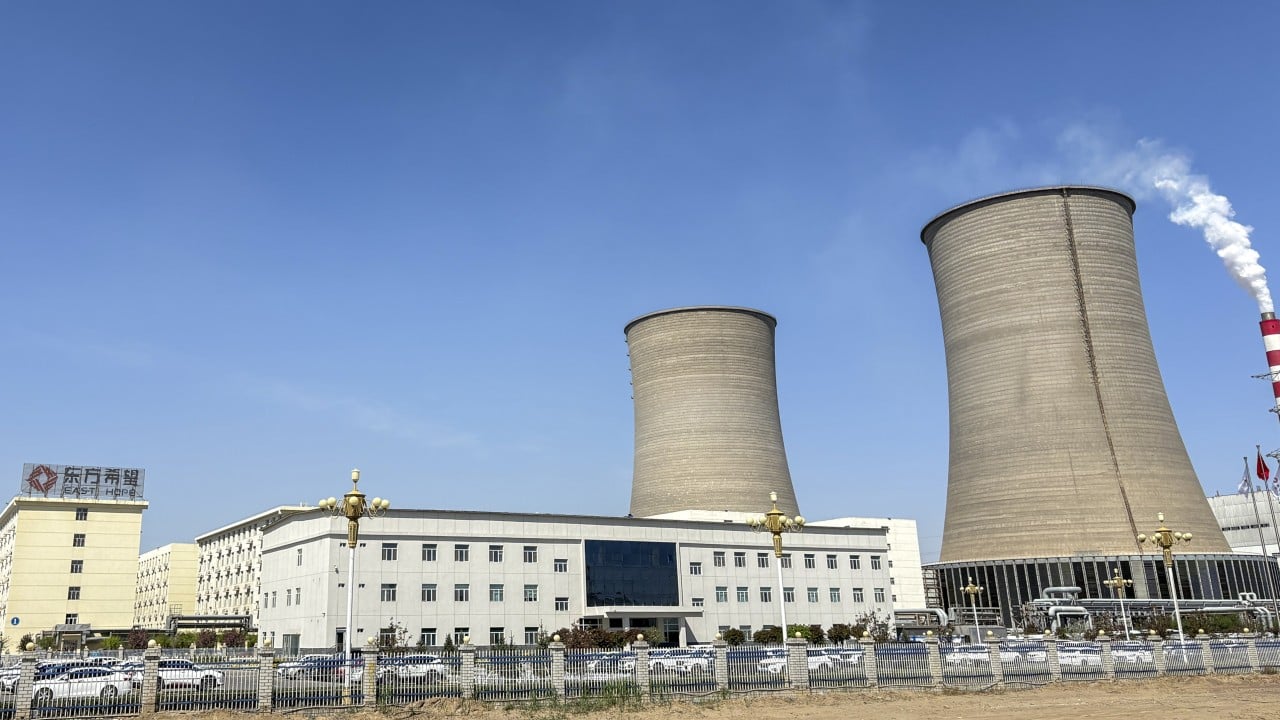
As the war in Iran disrupts global oil and chemical supplies, China’s coal-heavy energy sector is seizing an unprecedented opportunity. Dannie Peng visited Xinjiang Uygur autonomous region to witness the operations of one of China’s four major bases for large-scale, modern coal-chemical production. In this reporter’s note, she documents her observations and experiences during the trip. For her reporting, read the two-part series here.
As a journalist working for a non-local, non-state media outlet, gaining access to Xinjiang has never been easy, especially when it comes to its energy sector – a reality I began to understand even more deeply during my week there.
At the end of April, after several months of trying, I finally secured an invitation to visit a large coal mine to observe its unstaffed mining operations in person and set off for northern Xinjiang.
Advertisement
My plan was to use this as a starting point to explore the ecosystem of one of China’s four major bases for modern, large-scale coal chemical production. As the journey continued deeper into this energy heartland on China’s far western edge, a vast and mysterious industrial world gradually began to reveal itself.
My first stop, an open-pit coal mine producing more than 20 million tonnes a year, was in northeastern Changji Hui autonomous prefecture, nearly a four-hour drive from Urumqi, Xinjiang’s capital.
By the time I arrived on the first evening, darkness had already fallen. What lay before me was a landscape utterly unlike the city: wild and desolate, with almost nothing across the vast expanse of the Gobi Desert apart from the mine itself.