
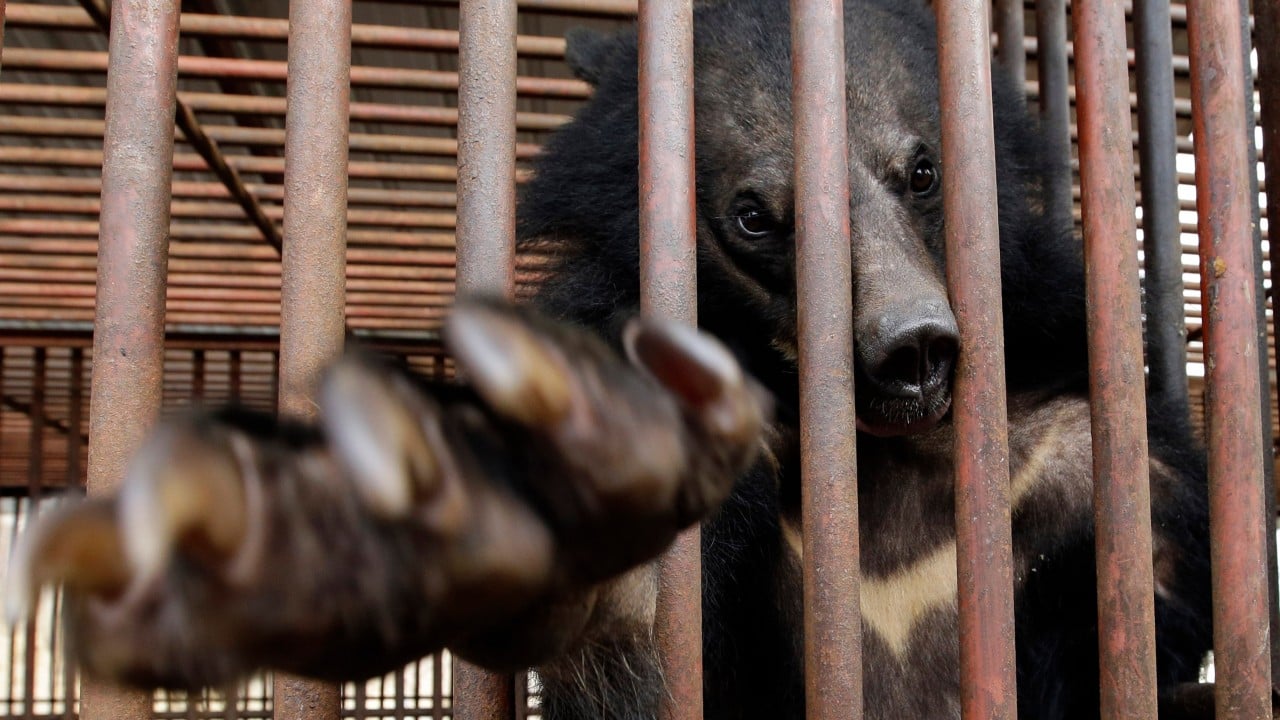
South Korea said it will formally end its dwindling yet much-criticised bear bile farming industry this week, though about 200 bears are still kept in pens and bred for their gall bladders.
The Ministry of Climate, Energy and Environment announced on Tuesday it will ban breeding and possession of bears and extraction of their bile beginning on January 1. The change is in line with a revised animal rights protection law that imposes up to two or five years of prison sentences for violators.
South Korea is one of the few countries that allow farming to extract bile from bears, mostly Asiatic black bears, also known as moon bears, for traditional medicine or food believed to promote vitality and stamina.
Advertisement
But the popularity of the practice has nosedived in the past two decades in response to questions about its medicinal effects, the introduction of cheaper medical alternatives and public awareness of animal cruelty.
The plan is part of a broader 2022 agreement among officials, farmers and animal rights campaigners to prohibit bear bile farming beginning in 2026. Animal rights groups are responsible for handling purchases of bears from farmers and the government establishing facilities to hold them.
Advertisement
A total of 21 bears have been bought and relocated to a government-run sanctuary in the southern Jelloa province this year. But 199 bears are still raised in 11 farms across the country while disputes continue over the amount of money to be paid to farmers for giving up their bears, according to officials, activists and farmers.
The Environment Ministry said it will place a six-month grace period for existing farmers and punish bile extraction within the law’s limits, while also providing a financial incentive to farmers who keep their animals until they are sold and moved.