
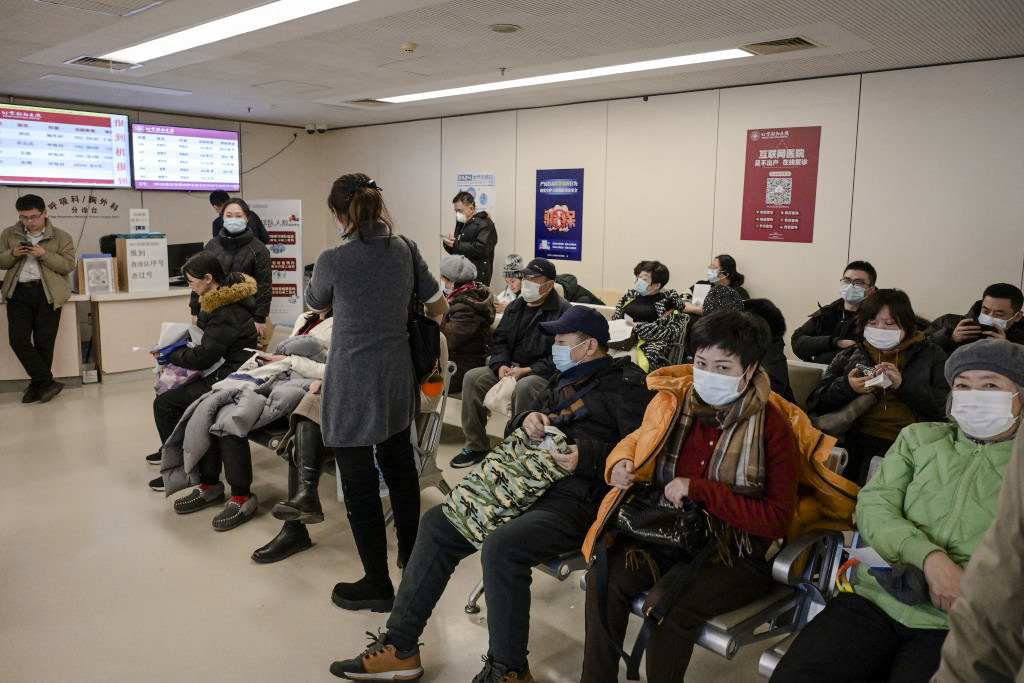
The H3N2 influenza A outbreak has continued to worsen across China, residents told The Epoch Times. Meanwhile, the World Health Organization (WHO) has issued statements warning that a new strain of H3N2, known as Subclade K, is causing outbreaks in many countries in the northern hemisphere this winter.
The ongoing H3N2 influenza outbreak in mainland China started in the fall. The Epoch Times reported in October that the widespread outbreak resulted in many schools suspending classes.
The ongoing outbreak has further worsened in December, local residents told The Epoch Times.
According to the China Center for Disease Control and Prevention (China CDC) weekly influenza reports, in November, the number of outbreaks each week jumped from 49 locations in mid-October to 1,541 at the end of November. In the first week of December, the China CDC reported outbreaks in 1,219 locations nationwide.
Residents expressed to The Epoch Times their distrust in the official reporting, saying that the numbers don’t match their lived experience.
Mr. Wang from Beijing, who only gave his last name due to safety concerns, told The Epoch Times that his child, who attends kindergarten, recently contracted influenza.
“The school is now experiencing a widespread outbreak; if one person in a family gets it, the whole family ends up getting it,” he said.
He noticed that this wave of influenza in Beijing started spreading widely in November.
“The fever clinics in various hospitals are packed with people. The medical staff are dressed in protective suits just like during the COVID-19 pandemic, to specifically treat influenza patients,” he said. “It takes at least seven days to recover, and even after recovering, the cough persists.”
Wang said that some medications for treating influenza have already sold out, “especially the imported Tamiflu brand, which is unavailable.” The domestic brands haven’t shown any effect after five or six days of use, he said.
He noted that people in Beijing are now afraid of the virus spreading and have started wearing masks again, especially in public places such as the subway.
Ms. Xu, a resident in Beijing who only gave his last name due to fear of reprisal, told The Epoch Times that the number of people in shopping malls and amusement parks has decreased significantly, and two-thirds of the children in her child’s kindergarten have contracted the flu and are staying at home.
A mother in Shanghai, who didn’t give her name due to fear of reprisal, said that in her daughter’s class, five children were infected with influenza A on one day, seven on the following day, and 15 the day after.
“My child is one of them. This strain of influenza is really contagious,” she said.
China CDC Reporting
According to the latest weekly Influenza epidemic report from Chinese authorities, which is dated for week 50 ending Dec. 14, a total of 651 locations had outbreaks of influenza, among which 525 were confirmed to be H3N2. In these outbreaks, 99.9 percent of the 10,096 influenza virus-positive cases were identified only as H3N2. The reporting did not identify which subclades of H3N2 were driving the outbreaks.
In its latest monthly infectious diseases report released on Dec. 5 for November, China CDC reported 4.8 billion Influenza A cases, with only four deaths. It also reported 13,959 cases of COVID-19, with one death.
In comparison, estimates from the U.S. CDC reported at least 4.6 million flu infections in the United States, a country with only a third of China’s estimated population, with 1,900 deaths so far this season. It reported 49,000 hospitalizations.
It also said that according to testing from week 50, ending Dec. 13, 89.9 percent of cases were tested as H3N2. Testing since Sept. 28 has shown that 89.8 percent of H3N2 samples tested belong to subclade K. The other 10.1 percent of cases were identified as the milder influenza A H1N1.
The Chinese communist regime has a record of publishing unreliable data, with a culture that promotes underreporting information that is seen as unfavorable to the regime, including the underreporting of COVID-19 infections and related deaths since early 2020. Accounts by local doctors and residents have become helpful supplementary information for understanding the situation on the ground in the totalitarian country.

H3N2 Subclade K
Meanwhile, the surge of H3N2 in China and many other countries in the northern hemisphere in recent months has attracted the attention of the WHO. In its global situation report, the WHO said, “Seasonal influenza activity has increased globally in recent months, with an increased proportion of seasonal influenza A(H3N2) viruses being detected.”
In a weekly global update issued on Dec. 17, the WHO said: “In the zones with elevated positivity, influenza A(H3N2) was predominant in all zones except Central America and the Caribbean.”
The WHO also reported the new mutant strain of the H3N2 virus, subclade K, as the dominant variant causing the spike in infections, warning of a severe flu season.
At least 27 of the 38 countries reporting data in the WHO European Region are now reporting high or very high influenza activity caused by subclade K, the WHO said in a notice on Dec. 17, “with a newly dominant virus strain placing health systems under significant pressure in some countries.”
The WHO also pointed out that this subclade K marks “a notable evolution” in influenza A(H3N2) viruses.
“The H3N2 subclade K has seven key mutations at the HA proteins, which results in significant antigenic drifts compared to previous H3N2 J2 subclade,” Xiaoxu Sean Lin, associate professor of biomedical science at Fei Tian College Northern Campus in New York, told The Epoch Times on Dec. 19.
“In addition, it also has a key mutation in NA protein that enhances its viral binding capacity. Therefore, this virus is transmitting significantly faster than the previous H3N2 J2 subclade that was the predominant strain in early 2025. The K subclade has quickly replaced it and become the overwhelming dominant strain for this flu season.”
Pandemic Potential?

There were three major influenza pandemics in the 20th century: in 1918, 1957, and 1968. The 1968–1969 pandemic, also known as Hong Kong Flu, was caused by H3N2. It resulted in more than 1 million deaths worldwide at the time. The death toll from COVID-19 is estimated to be millions more, according to WHO data.
Lin said that based on multiple research papers, there is no indication yet that the subclade K mutant is causing more severe diseases.
“But the hospitalization rate is increasing everywhere,” he said.
As to subclade K’s pandemic potential, he said that “it’s not likely to cause anything like the 1918 or 1968 flu pandemics. But it will be a back-to-back high flu season for two years in a row.”
Dr. Cheng Yuan-yu, a respiratory disease specialist at Shangwen Clinic in Kaohsiung, Taiwan, shared a similar assessment.
“Although this subclade K has already spread to multiple countries, the chance of it causing a severe global influenza pandemic is slim,” he told The Epoch Times on Dec. 21.
The WHO and health authorities in the United States and other countries are pushing vaccination for prevention. However, some experts say the effect of current flu vaccines on the new strain would be limited.
Lin said that “the vaccine for this season was developed before subclade K mutant, so the seed H3N2 strain is a significant mismatch for what is circulating right now. So the vaccine effectiveness will be significantly compromised, at least in terms of reducing hospitalization.”
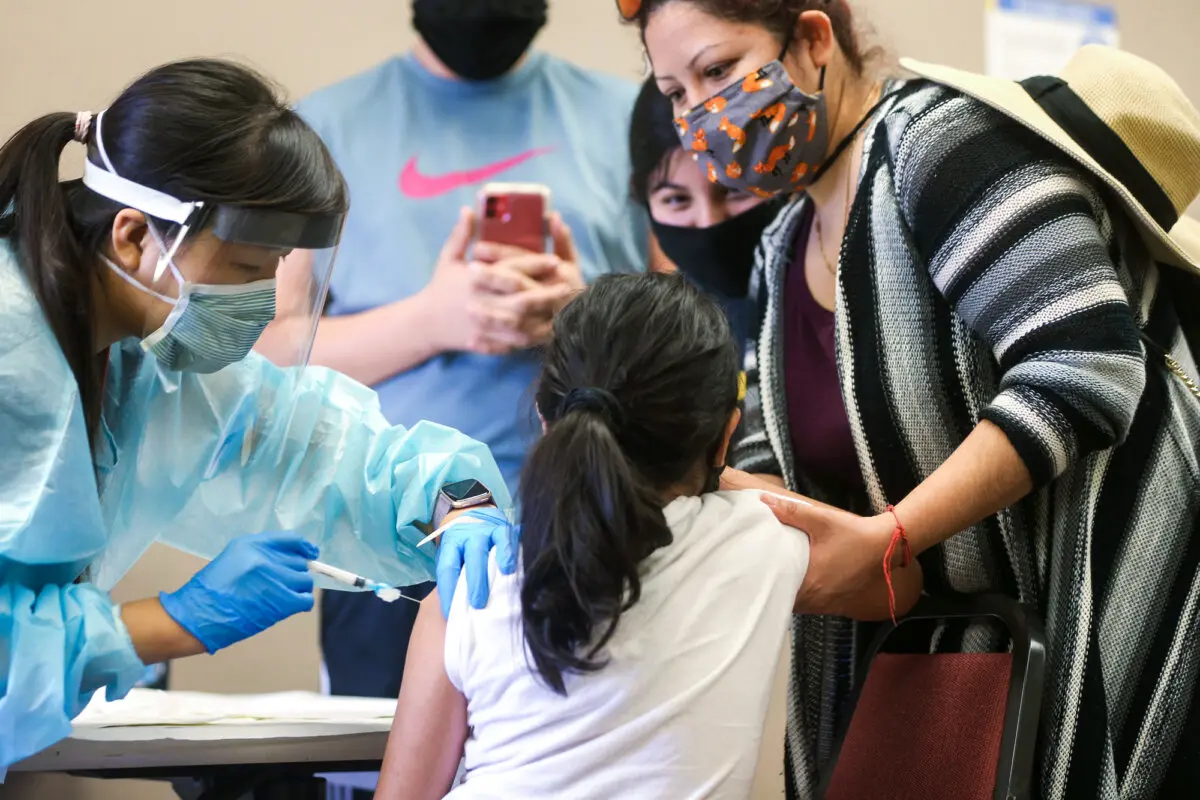
Cheng noted that the hospitalization rate for seasonal H3N2 is already relatively high and that the “protection provided by vaccines is limited.”
“Basic preventative measures are crucial, including frequent handwashing, avoiding touching your eyes, nose, and mouth in public places, and wearing a mask,” he said.
He added that healthy lifestyle habits, including diet, exercise, sleep, and stress management, have a significant impact on immunity, making it important to maintain good physical condition.
Luo Ya contributed to this report.
We had a problem loading this article. Please enable javascript or use a different browser. If the issue persists, please visit our help center.