
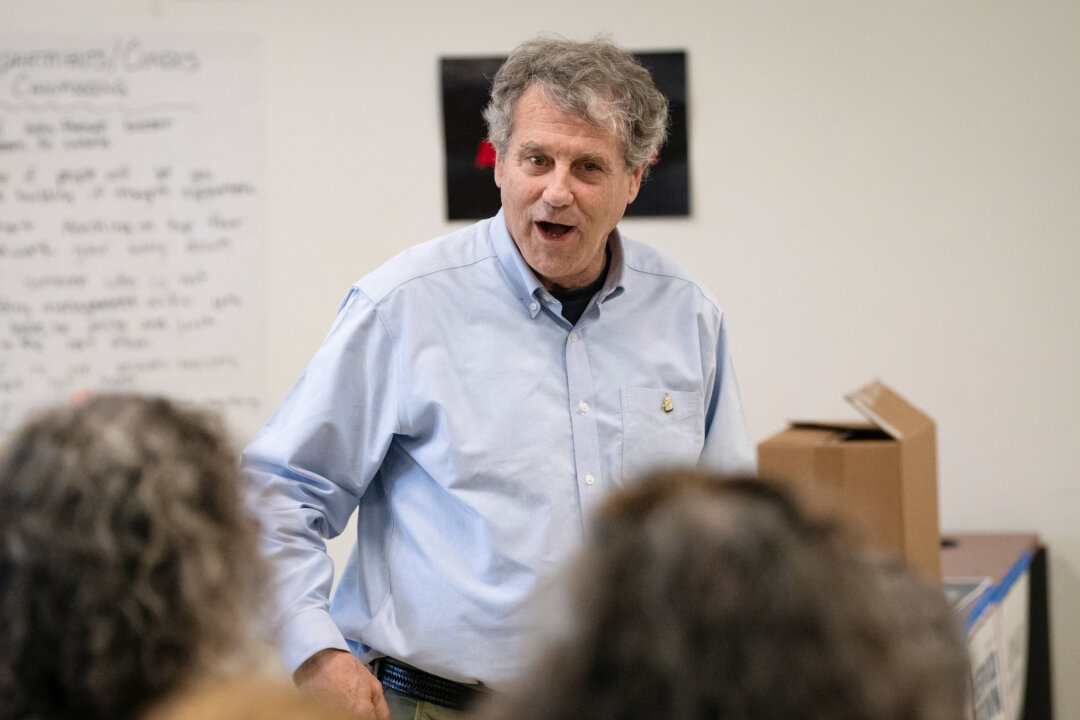
Former Sen. Sherrod Brown (D-Ohio) beat incumbent Sen. Jon Husted (R-Ohio) in the Nov. 3 election.
The Democratic candidate for senator won a special election in Ohio that could help determine the balance of power in the U.S. Senate.
Brown’s victory picks up a coveted seat that Republicans had held since 1999, when former astronaut John Glenn, a Democrat, left the Senate.
The race’s outcome holds implications for how much Congress advances President Donald Trump’s agenda during the second half of his term as the 47th president.
Because of that high-stakes profile, the contest was an expensive one.
As of Oct. 12, $422.6 million—from all sources, including “issue groups”—was paid or reserved advertisements about the race.
That’s according to spending tracker AdImpact.com, which called the Brown–Husted contest “the most expensive Senate general election this cycle, and third overall.” Husted’s side led with $246.2 million versus $176.5 million for Brown.
“The fight for Congress has never been more expensive,” AdImpact said in its report. Advertisers aired more than $3.8 billion targeting congressional races this cycle, $872.2 million more than at the same point in 2024.
Three weeks ahead of Election Day, Republicans held the “aired spending” advantage in seven of eight competitive Senate races, and 25 of the 42 House races that the Cook Political Report rated “toss up” or “lean.” At the same point in 2024, Democrats’ aired spending was above that of Republicans.
Even so, Brown consistently rated slightly above Husted in five out of seven polls listed on RealClear Politics.
Brown, a former three-term senator, lost his seat to Sen. Bernie Moreno (R-Ohio), two years ago, then faced off against Husted.
Husted has served in the Senate since early 2025, when Gov. Mike DeWine (R-Ohio) appointed him to fill the seat that then-Sen. JD Vance vacated when he became Trump’s vice president. The winner of the contest will serve the remainder of that term, which expires in January 2029.
Prior to joining the Senate, Husted held elected office in Ohio for 26 years, last serving as DeWine’s lieutenant governor.
Major issues included immigration, data centers, and affordability. Husted accused Brown of supporting lax immigration policies during the Biden administration; Brown accused Husted of being influenced by big-money interests and data-center developers.
Former Democratic President Barack Obama threw his support behind Brown.
In a video statement, Obama portrayed Brown as a champion of working people with a track record of “standing up to big corporations.”
The former president predicted: “This race is going to be close. It could determine which party controls the Senate and whether Ohioans can count on the people in Washington to be fighting for you.”
Brown received endorsements from many labor unions, including the AFL-CIO, United Auto Workers, United Federation of Teachers, and the Ohio Association of Professional Fire Fighters.
Republican President Donald Trump, in a video endorsement, called Husted “a patriot who has devoted his entire life to Ohio,” and “one of the most respected people in all of Washington.”
Husted’s vote was crucial in approving “the largest tax cuts in American history,” the president said, along with Trump’s measures to improve border security, reduce violent crime, and encourage jobs and investments.
Husted drew backing from law enforcement including the Border Patrol Council and the Ohio Fraternal Order of Police. In addition, 75 of Ohio’s 88 county sheriffs supported him. That was the highest number of such endorsements for any Ohio candidate, according to a campaign news release.
We had a problem loading this article. Please enable javascript or use a different browser. If the issue persists, please visit our help center.