
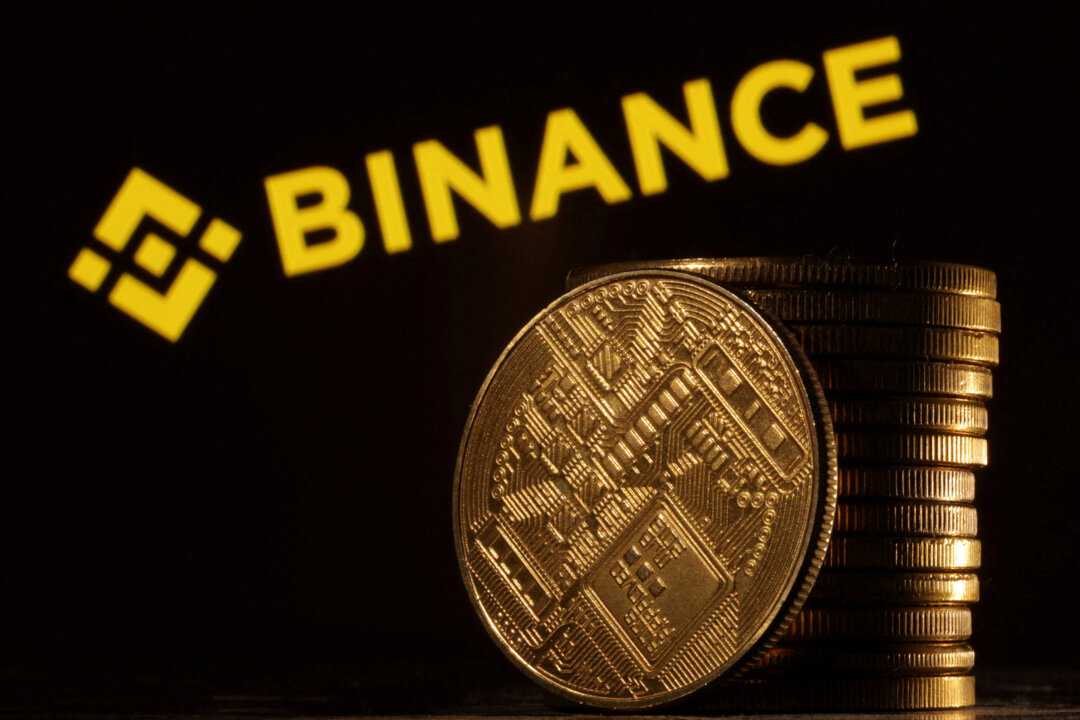
Kim Yo Jong, the sister of North Korean leader Kim Jong Un, has denied the FBI’s claims that Pyongyang was responsible for last week’s $6.3 billion hack of cryptocurrency exchange Binance, according to state-run news agency KCNA.
“The FBI is trying to brand the DPRK [Democratic People’s Republic of Korea] as a ‘cyber criminal state,’ claiming that it obtained information that a hacking organization ’supported’ by the DPRK was involved in the incident,” Kim Yo Jong said, according to a report published by KCNA on Tuesday.
“But the U.S. assertion is absurd rhetoric and nothing new,” Kim Yo Jong, an influential apparatchik in the ruling Workers’ Party of Korea, said.
‘Grave Political Provocation’
“It is a grave political provocation against the DPRK that the U.S. misleads international public opinion as if all the cyber crimes in different parts of the world are our deeds,” Kim Yo Jong said.
On Oct. 31, the FBI said it had identified a North Korean actor known as “TraderTraitor” as being responsible for the Binance hack. TraderTraitor allegedly carried out a $1.5 billion Bybit hack on Feb. 21, 2025.
In an attempt to stop TraderTraitor from further laundering the proceeds of the Binance heist, the FBI, along with the U.S. Secret Service and the IRS’s criminal investigation service, is urging private sector entities, such as THORNode operators, RPC node operators, instant exchanges and DeFi services, to block transactions derived from Ethereum addresses TraderTraitor has used, which are listed on the FBI’s website.
Blockchain analytics firm Elliptic said North Korea stole $7.6 billion in cryptocurrency in 2026, more than in any previous year.
Lim Eul-chul, a professor at Kyungnam University in South Korea, said crypto heists were being used by Pyongyang to keep the communist regime afloat under pressure of economic sanctions.
“With sanctions already in place, cryptocurrency theft has become one of North Korea’s key channels for securing funds for regime maintenance and weapons development,” Lim said.
The Binance theft would be about a sixth of North Korea’s gross domestic product, which South Korea’s central bank estimated at 47.18 trillion won ($35.09 billion) in 2025.

Binance co-CEO Richard Teng told a Hong Kong FinTech Week event that the exchange was bouncing back after last week’s heist.
“In the first 24 hours, there was a spike in terms of withdrawals, as can be expected. But after that … it’s pretty much normalized,” Teng said.
Binance in ‘Strong Financial Health’
“The company is in very strong financial health,” he said. “This is something that we can cover. We are able to do so.”
Teng said 95 percent of the affected cryptocurrency tokens had been replenished.
Binance says it has more than 335 million users globally, and trades $95 billion of digital assets and derivatives daily.
Investors withdrew $3.64 billion from Binance over a nine-hour period on Nov. 1, and the exchange said a further $4.72 billion was pulled out on Nov. 2.
But in a post early on X, Binance said hourly deposits were exceeding withdrawals, “reflecting improving user activity and stabilizing flows.”
Reuters contributed to this report.
We had a problem loading this article. Please enable javascript or use a different browser. If the issue persists, please visit our help center.