
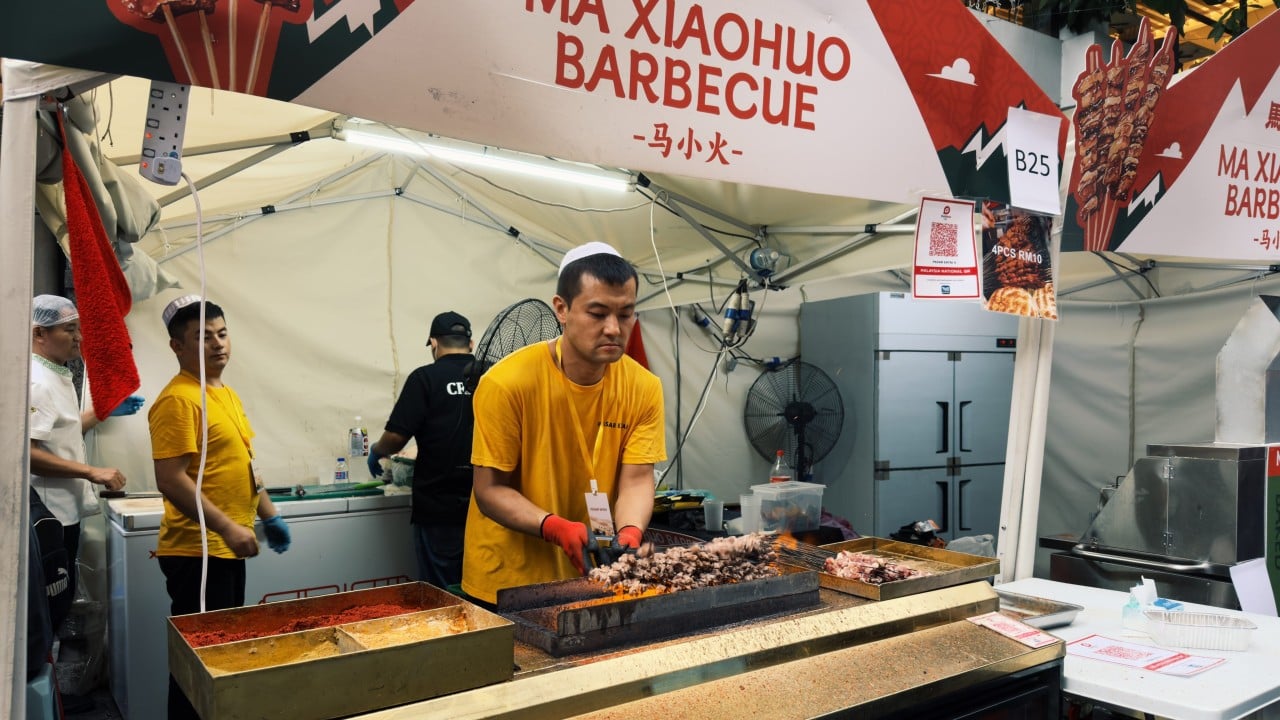
Smoke from charcoal grills hangs over rows of food stalls as vendors at a Kuala Lumpur mall skewer lamb and pull long strands of noodles by hand, with the smell of cumin and chilli filling the evening air.
At an outdoor area of 1 Utama Shopping Mall, dishes from China’s Muslim heartlands – Lanzhou beef noodles, Xinjiang lamb skewers, hand-grabbed lamb and others – are drawing steady crowds at a Chinese Muslim food festival, now in its third year.
The growing popularity of the festival is a sign that more Muslim entrepreneurs from China are using Malaysia’s strong halal standards and international reputation as a springboard to enter Muslim markets across Southeast Asia, the Middle East and Europe, according to organisers and industry players.
Advertisement
The 11-day festival, which concludes on January 4, features around 60 vendors selling food, art and handicrafts, mostly from China. Several participants have already set up restaurants, factories or distribution operations in Malaysia after earlier editions of the event, according to organiser Shoaib Ma, a Lanzhou-born food influencer and a restaurant owner.
“The halal industry is very big. In China, we have the capacity for mass production, but the problem is trust,” Ma told This Week in Asia on the sidelines of the festival.
Advertisement
China is home to an estimated 30 million Muslims, spread across regions including Xinjiang, Ningxia, Gansu and Qinghai, as well as major cities such as Xian.