
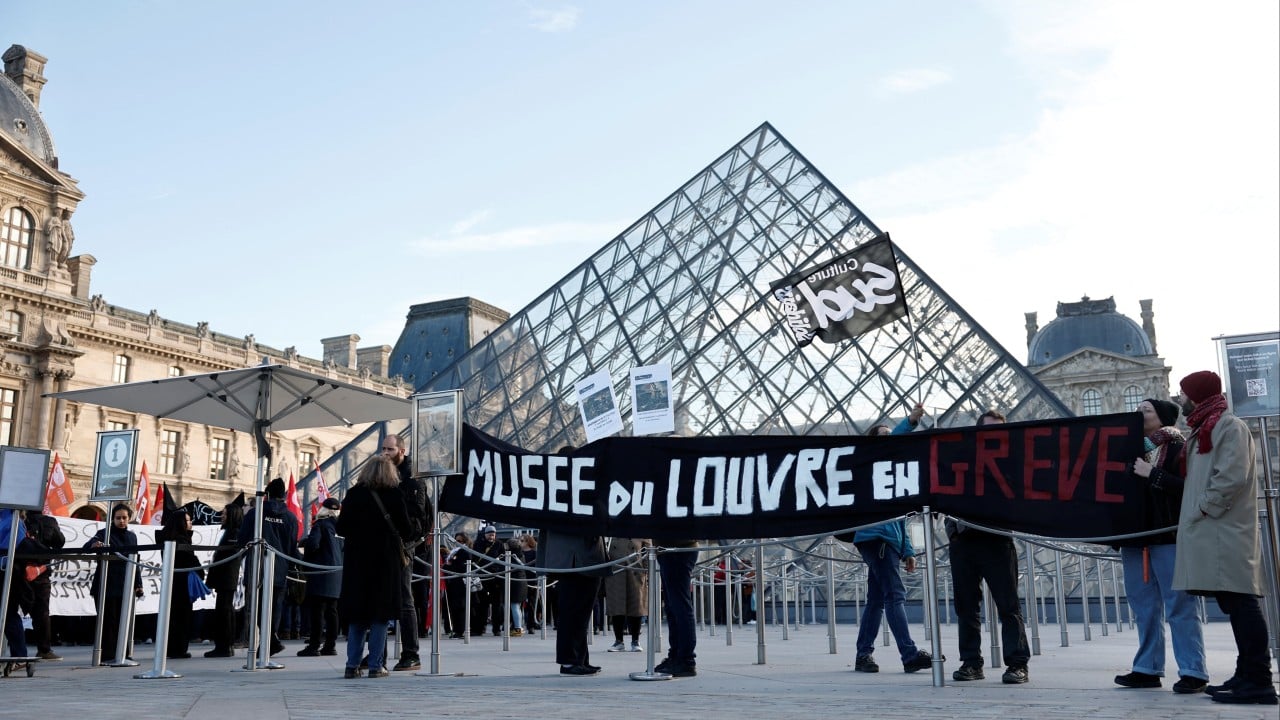
The ongoing strike at the Louvre is no longer just a labour dispute. It has become a test of how securely, credibly and competently the world’s most visited museum is being run.
Behind the walkout are not only frayed labour relations, but a building itself under strain, with crumbling parts of the ageing former palace now deemed unsafe.
At the heart of the crisis lies a deeper rupture: a US$102 million jewel heist that exposed security failures at the core of the institution and transformed long-simmering staff grievances into a national reckoning with global resonance.
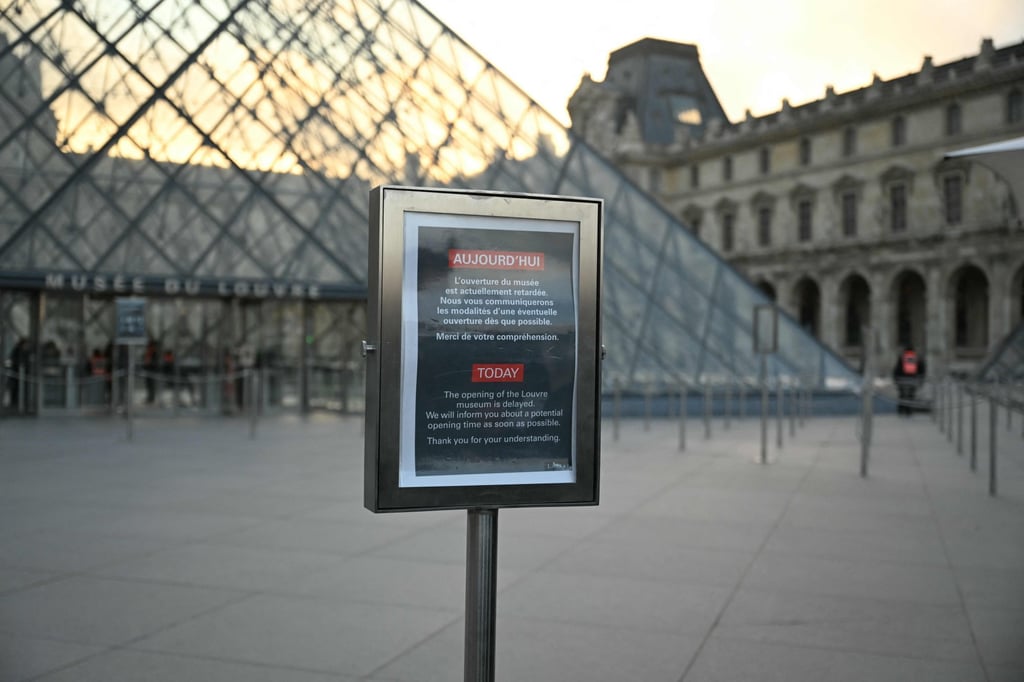
The walkout is hardening
Tensions were already rising when a wildcat June strike abruptly shut the museum, stranding visitors beneath I.M. Pei’s glass pyramid. Weeks later, the Louvre announced the closure of offices and a public gallery because of weakened floor beams, deepening concern about neglect across the ageing complex.
Advertisement
The October daylight robbery, in which thieves stole crown jewels, intensified scrutiny from lawmakers and auditors and reframed workplace complaints as questions of institutional failure.
Culture Ministry officials have tried to defuse the stand-off by proposing to cancel a planned 2026 funding cut, hire additional guards and visitor services staff, and raise pay. Unions rejected the measures as inadequate, signalling that trust has frayed beyond quick fixes.
Advertisement
On Monday, the CFDT union said that 400 workers at a meeting voted to strike over chronic understaffing, deteriorating buildings and management decisions. Workers on Wednesday voted to extend the action, forcing the Louvre to operate on a restricted footing.