
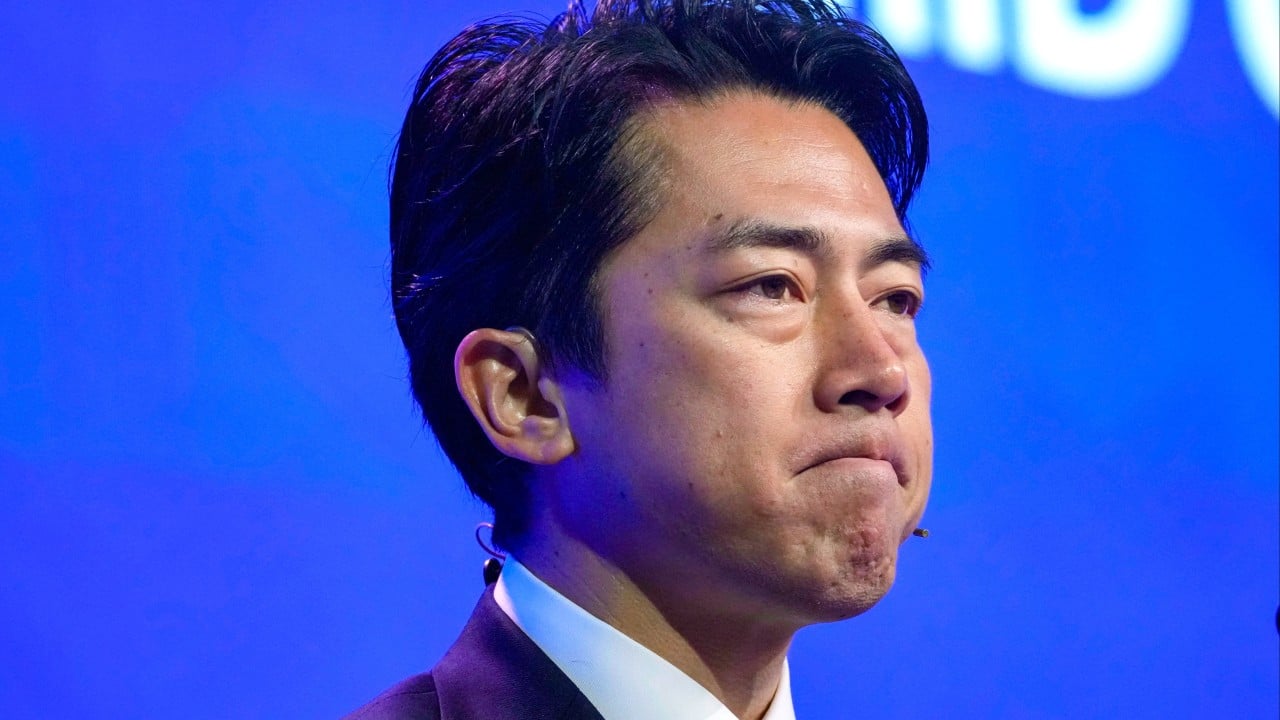
Japan’s defence minister has rejected suggestions that his country is reviving its militaristic past, telling a regional security conference that changes to its defence strategy would allow it to play a new cooperative role.
Shinjiro Koizumi also used his speech at the Shangri-La Dialogue on Sunday to state that Tokyo opposed “unilateral changes to the status quo by force or coercion”, a comment believed to refer to Beijing’s maritime activities, including in the East and South China seas, and possible military action to reunite Taiwan with mainland China.
“Every country must be able to choose its future by its own will. And this region must remain open to all countries that respect our shared rules and principles,” Koizumi said.
He did not specify which country the comments were aimed at but tensions between China and Japan have been particularly high since late last year when Japanese Prime Minister Sanae Takaichi suggested in comments to parliament that a conflict in the Taiwan Strait could constitute a “survival-threatening” situation – sufficient grounds for Japanese military intervention.
Advertisement
Takaichi’s administration is also pushing for revisions to the country’s policy framework to allow for a more proactive military posture, a shift condemned by China as a revival of the militaristic ideology that drove Japanese aggression during World War II.
Beijing also objected to Tokyo’s decision to send warships through the Taiwan Strait last month.
Advertisement
In an apparent reference to China on Sunday, Koizumi said Japan had neither nuclear weapons nor strategic bombers.
“There is a country that has a huge arsenal of nuclear weapons and strategic bombers. Japan has neither of such weapons. And yet Japan is labelled ‘new militarism’. Isn’t it strange?” Koizumi said.