
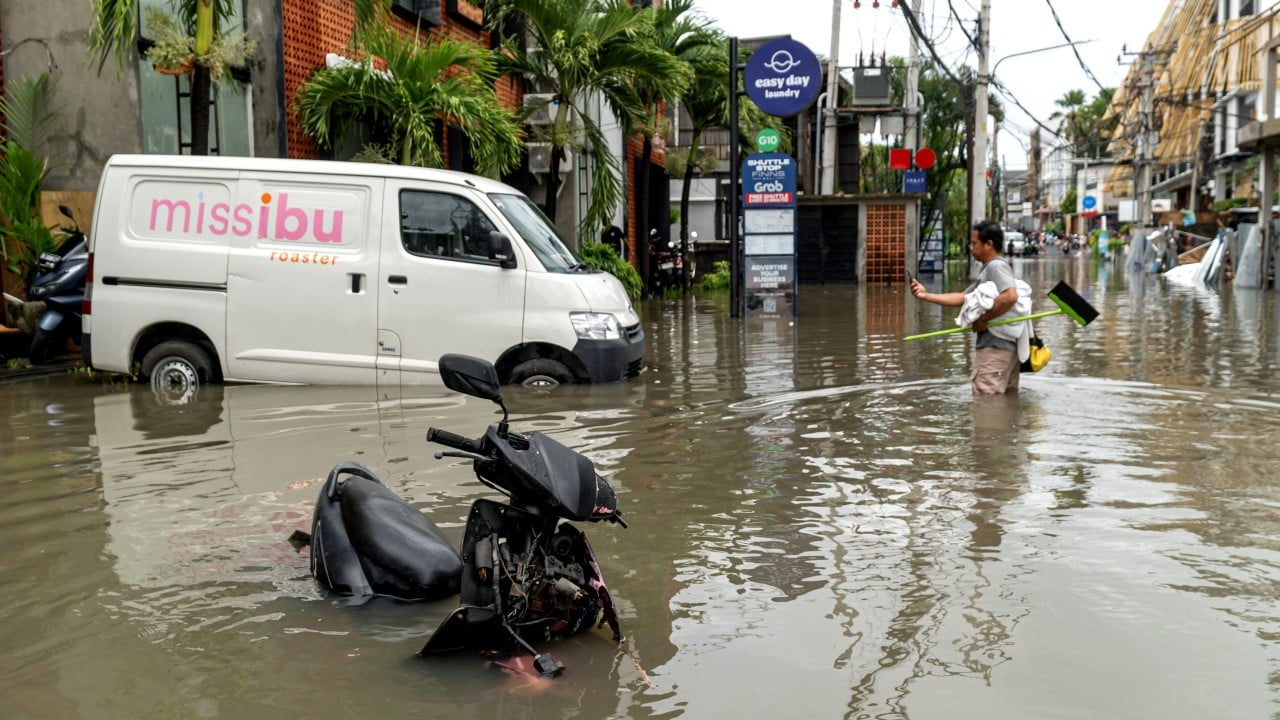
A surge of deadly floods in Bali has reignited concerns over the Indonesian resort island’s overdevelopment, with planning and green experts warning that rapid urbanisation, weak environmental controls and mass tourism have pushed it towards an ecological tipping point.
Advertisement
Flash floods hit parts of the island last Wednesday, killing 18 people and displacing 149 others, the national disaster agency said on Monday. The disaster was caused by extreme rainfall on September 9 to 10, which was recorded at more than 200mm (7.9 inches) per day, although other factors had exacerbated the situation, including piles of garbage blocking the riverbanks, the agency said.
“The ministry of environment stated that more than 200 tons of waste carried by the currents has blocked the rivers, causing flooding into residential areas,” Abdul Muhari, a spokesman with the agency, told reporters on Monday.
The floods last week mostly affected the provincial capital of Denpasar and regencies such as Badung, Gianyar, Buleleng and Karangasem. Floods hit Denpasar and Badung again on Monday following hours of heavy rainfall.
Abdul warned that massive floods in Bali were expected to occur again “within 50 years or 100 years”.
Advertisement
The clearing of forests and agricultural land for housing and commercial facilities had reduced Bali’s ability to absorb rainfall, Abdul said. Between 2012 and 2019, Bali lost 553 hectares (1,366 acres) of forest land and nearly 650 hectares of agricultural land, he added.