
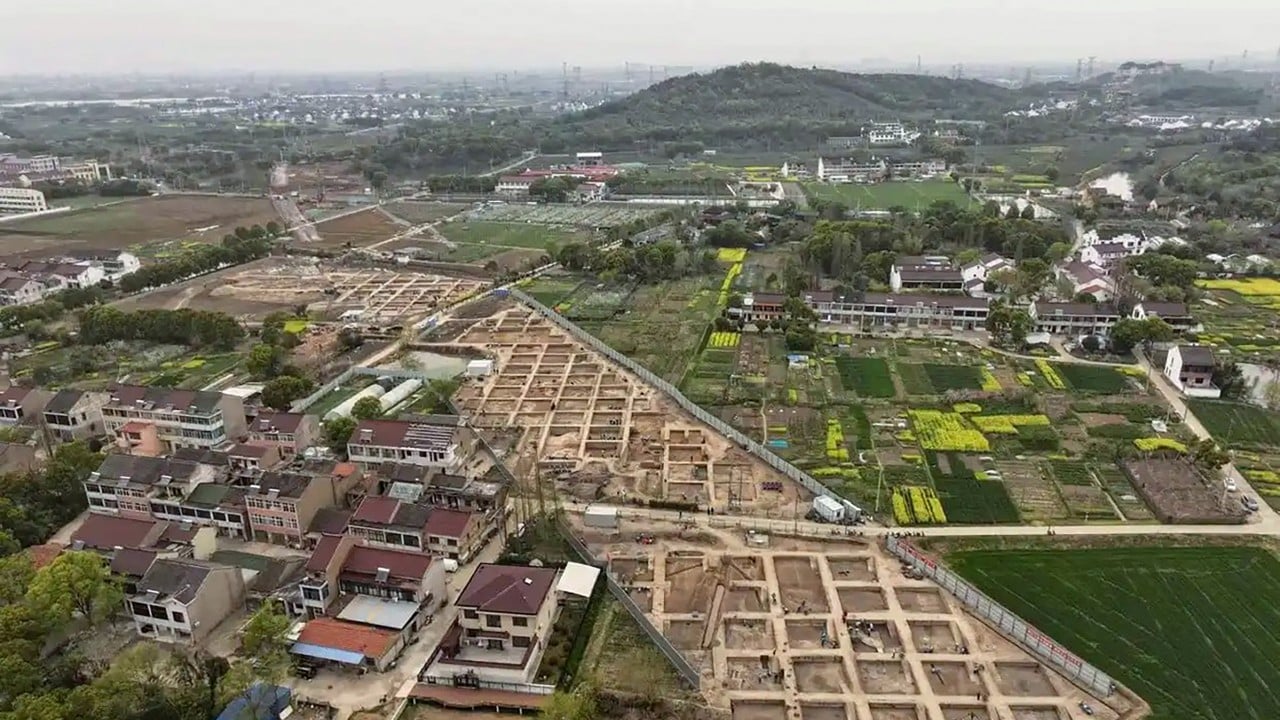
Chinese archaeologists unearthing the ruins of the earliest known settlement in the Yangtze River Delta say water management may have been the origin of ancient “cities” in the area.
Researchers began large-scale excavations of the Doushan site in Wuxi in the eastern province of Jiangsu in July last year, dating the city to about 6,000 years ago.
Previously, the oldest urban site in the delta area was the Liangzhu culture site near Hangzhou in Zhejiang province, dating back about 5,300 years.
Advertisement
More than two dozen experts gathered at the site last weekend to assess the progress so far and examine the extensive network of city walls and moats.
According to the Xishan district government, the archaeologists agreed that the network was likely not for defence, but for water management, suggesting that the origin of “cities” in the Yangtze River basin might be “guiding water for the benefit of the people”.
Advertisement
The Doushan site was discovered during surveying work for a highway construction project in 2023. Chinese law demands that archaeological surveys be carried out before any major construction projects can start.
A joint team from various provincial and national institutions then embarked on a large-scale dig at the prehistoric site, which sprawls over nearly 25 hectares (61 acres).