
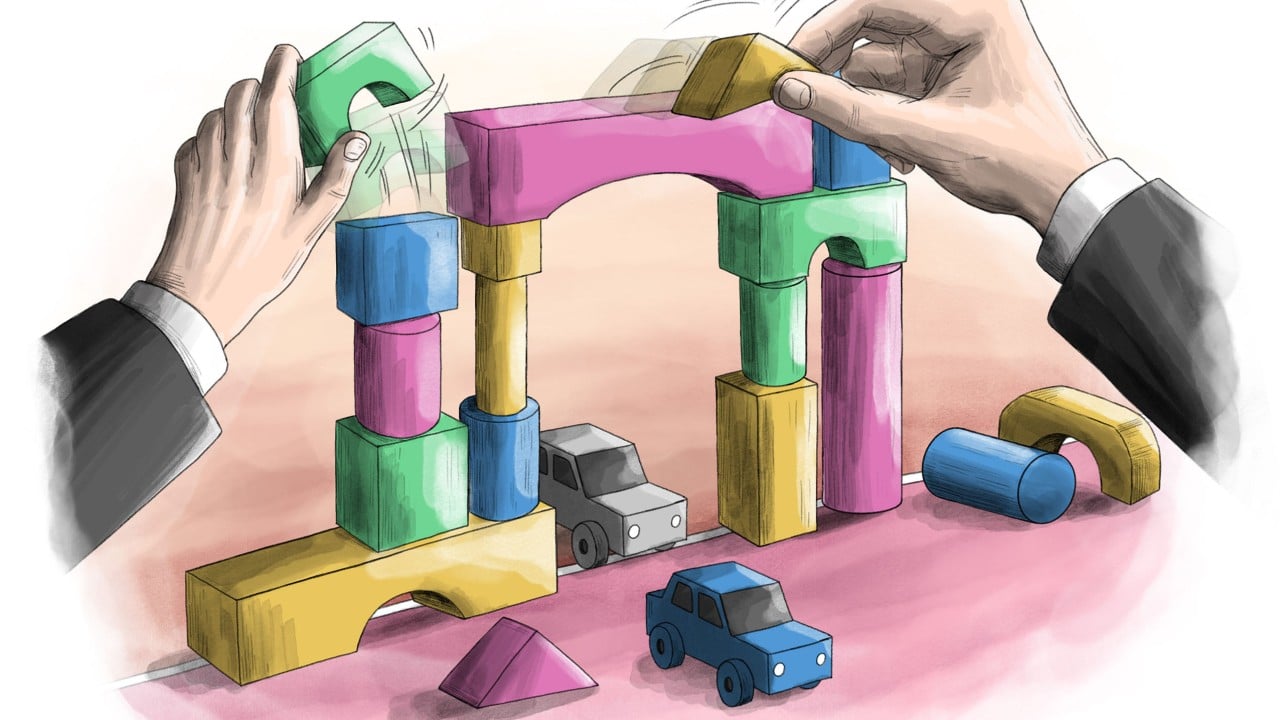
The much-anticipated revamped Huanggang Port, expected to open later this year, should be seen as more than a story about faster clearance. Its deeper significance lies in a question that deserves wider discussion: if border functions can be redesigned, where should border control actually operate?
Living in the Greater Bay Area, where people and businesses move across administrative boundaries every day, I have watched the meaning of borders change. A border is no longer simply a line separating two places. It is also a system of procedures, facilities and decisions that shapes how people, vehicles and goods move.
The previous generation of border crossings was built around separation. Travellers passed through one checkpoint on one side and then moved to another checkpoint on the other side. The physical boundary and the location of border procedures were closely connected.
West Kowloon Station offered an early example of a different approach. When the high-speed rail link opened in 2018, mainland immigration and customs facilities were introduced inside a railway station located in the centre of Hong Kong. A border function that traditionally existed at the edge of a city was brought into one of its busiest urban transport facilities.
The debate at the time was not simply about convenience. It reflected deeper questions about how a city should balance connectivity, jurisdiction and territorial boundaries. After years of operation, the station has provided practical experience in how different border systems can function within a shared transport environment.
The new Huanggang Port border crossing represents another step in this evolution. Unlike the previous arrangement, where travellers moved between separate checkpoints on the Hong Kong and Shenzhen sides of the boundary, the new port brings both sides’ clearance facilities into a single building in Shenzhen.