
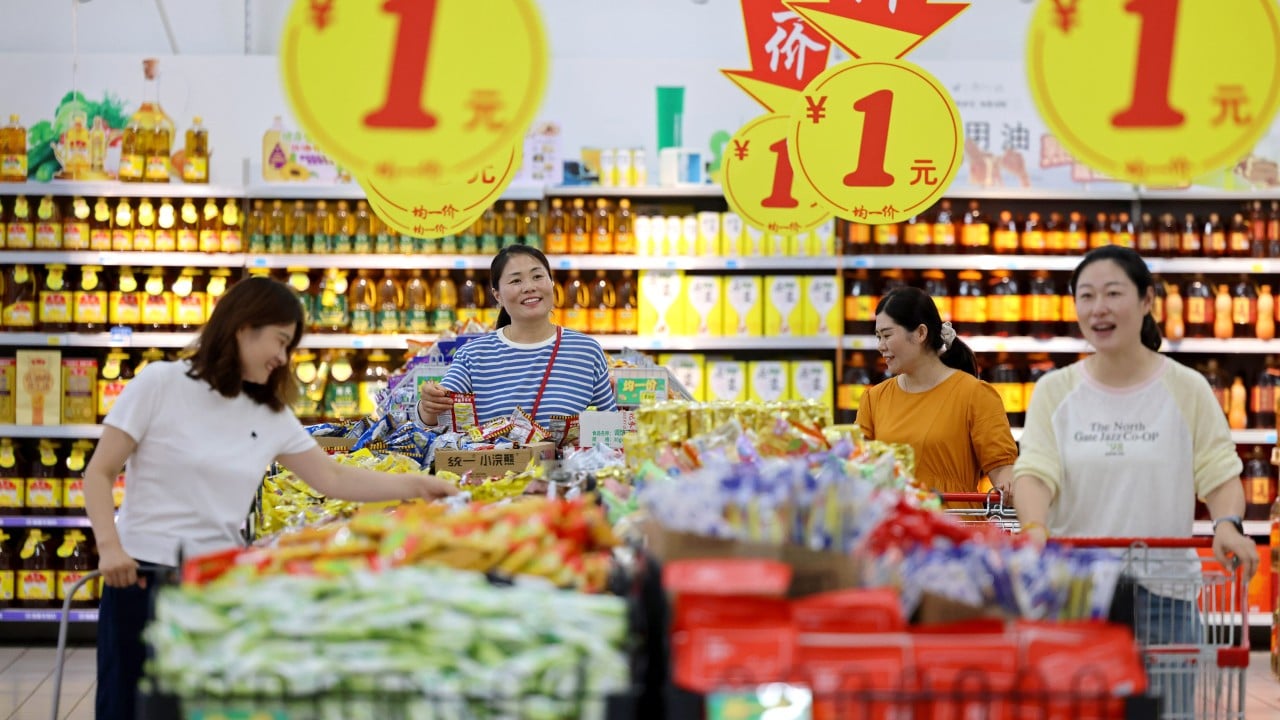
China’s most effective tool to revive consumption may be the simplest: a one-off distribution of 3,000 yuan (US$424) per person – funded by special sovereign bonds and valid for one year – could immediately lift demand, boost gross domestic product growth and help break the deflationary cycle that has taken hold since 2022.
This proposal comes as China prepares to announce its 15th five-year plan, with policymakers expected to target around 5 per cent growth amid a sluggish post-pandemic recovery. A persistent shortfall in domestic demand, particularly consumption, has become a central challenge. But fixing this requires understanding the slowdown’s true cause.
Over the past three years, China’s nominal GDP growth has remained below real GDP growth, signalling sustained deflation – a rare phenomenon in a modern fiat-currency economy. No major country aside from Japan has experienced even two consecutive years of deflation; China is approaching its third. Unsurprisingly, corporate profits have suffered: major industrial enterprises have posted three straight years of declines.
Advertisement
Many analysts attribute this weakness to China’s long-standing “high investment, low consumption” model. But that explanation does not withstand scrutiny. China’s economic structure has not shifted dramatically since 2022, nor can a long-term model explain such a sudden deterioration. In fact, the investment-consumption balance has been gradually tilting towards more consumption since 2010.
Long-term GDP growth depends on supply-side factors like capital accumulation, education and technology. Short-term fluctuations, however, are driven by demand. China’s relatively low consumption rate has historically been a strength, allowing for high investment and rapid growth.
Advertisement
The real culprit is the sharp downturn in the real estate sector.