
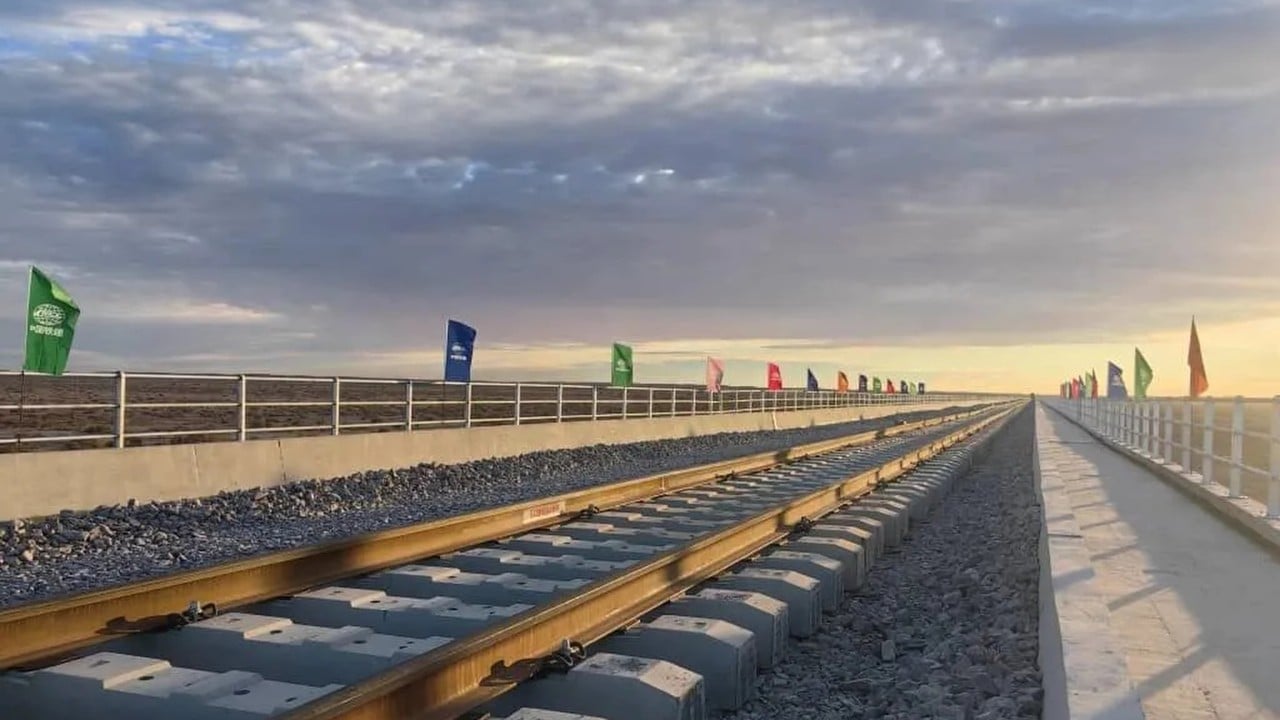
In the heart of Algeria’s Sahara Desert, Chinese state-owned giant China Railway Construction Corporation (CRCC) has completed laying track on the PK330 Bridge, a final and critical link in a new railway designed to unlock the nation’s mineral wealth.
The 6km (3.7-mile) bridge is part of the 950km railway linking the Gara Djebilet iron ore deposit in southwestern Tindouf province to the industrial hub of Bechar in the northeast.
It was the “most technically demanding railway engineering feat ever undertaken in North Africa”, CRCC said on December 10.

16:09
How China is reshaping its economic ties with Africa
How China is reshaping its economic ties with Africa
The ore will be processed at newly established industrial complexes in the region and taken to Mediterranean ports. The bridge, which is part of Beijing’s Belt and Road Initiative, was built in hostile conditions where temperatures as high as 50 degrees Celsius (122 Fahrenheit) and shifting sand dunes required engineers to pour concrete at night to ensure structural integrity.
Advertisement
With the final 60km of track laid, the entire route is expected to be fully operational by January, according to Algerian officials. It will finally bring the Gara Djebilet mine into production, decades after its initial discovery in the 1950s. The mine aims to produce between 2 million and 4 million tonnes of iron ore, eventually scaling up to 50 million tonnes per year by 2040.
Last month, Algerian President Abdelmadjid Tebboune ordered the railway link – which will ease exports from the deposit – into “immediate service” and inauguration in January. The first rail shipments are expected to reach the Tosyali steel complex, 40km east of the city of Oran, in the first quarter of next year.
Advertisement
The Algerian iron ore will come online within weeks of the start in early December of shipments to China from Guinea’s mega Simandou project. Beijing is expected to also ramp up sourcing from across Africa, particularly from Sierra Leone, Cameroon and the Republic of the Congo.