
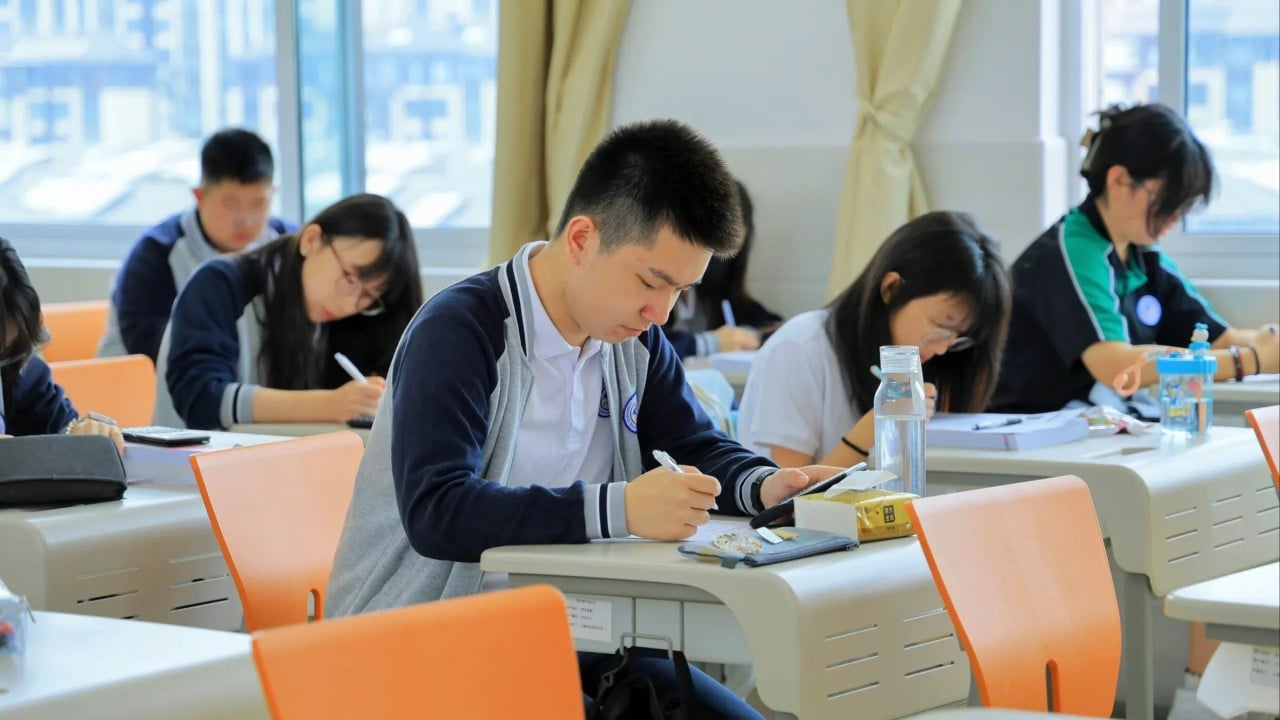
Interest in Hong Kong’s Diploma of Secondary Education has increased steadily in recent years. The government is committed to strengthening the city’s role as an international education hub, not just in tertiary education but also in basic education. Following this directive, the Education Bureau recently invited all Direct Subsidy Scheme schools to apply to increase their intake of non-local students.
Hong Kong’s education sector offers biliteracy and trilingualism, and provides a broader range of pathways. Today, 165 mainland institutions accept DSE students without requiring additional entry tests. Abroad, over 600 universities – including top institutions in Britain, Australia, Europe and the United States – recognise it as a standard qualification.
Growing interest from the mainland has been evident in recent years, where the gaokao university entrance exam, taken by about 13 million students annually, remains one of the most competitive exams globally. Research indicates that more than 100 mainland schools and several tutorial centres now teach the DSE curriculum, with more than 40 of them charging annual fees of 100,000 yuan (US$14,200) or above.
Advertisement
However, only four schools on the mainland, all within the Greater Bay Area, are officially recognised by the Hong Kong Examinations and Assessment Authority (HKEAA) as DSE “participating schools”, enabling them to enrol their pupils as “school candidates”. The rest rely on private candidate arrangements, leading to significant uncertainty. In particular, candidates under 19 must submit a special application which the HKEAA assesses case by case.
This gap between demand and regulation has caused problems. A recent case in Shenzhen saw dozens of private-candidate applications initially rejected, only to be approved after additional documentation was submitted. Concerns have also emerged about “shell schools”, where Hong Kong-registered institutions operate in practice as fronts for mainland tutorial centres.
Advertisement
Coupled with Hong Kong’s falling birth rate and the government’s aim of establishing the city as an international education hub, this all points to the need for a unified, secure and globally accessible DSE pathway to support the expected growth in non-local student enrolment, while tackling local manpower challenges.

02:44
A record of 16 students achieve perfect scores in Hong Kong’s university entrance exams
A record of 16 students achieve perfect scores in Hong Kong’s university entrance exams