
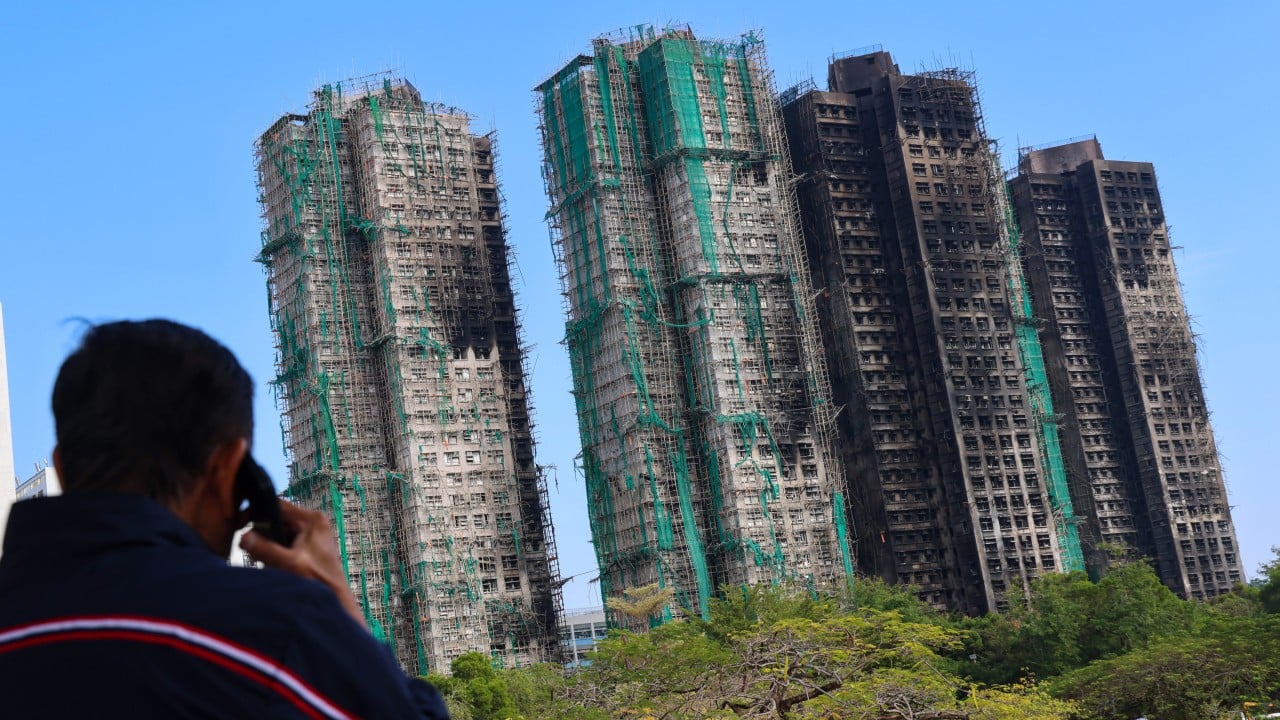
Ambiguous rules, lax supervision and uncoordinated policies involving at least four departments are among some deep-rooted problems contributing to the inferno that killed 160 residents in Hong Kong, analysts have said, as the Post reviewed what went wrong.
Some industry insiders also questioned whether housing authorities, who oversee a lesser-known independent checking unit, should have played a bigger role in supervising the renovation of Wang Fuk Court, a subsidised housing estate in Tai Po, where the city’s worst blaze in seven decades struck.
“[The departments responsible for site safety] could have been just doing their own jobs, but the fire demonstrated that the departments need to have clearer coordination among themselves,” an industry insider, requesting anonymity, said.
Advertisement
A preliminary investigation by authorities uncovered a range of problems. Fire alarm systems in most of the eight blocks in the estate did not ring when the blaze broke out on November 26.
Some scaffolding net samples also failed to meet fire-retardant standards, and subsequent investigations found that contractors at other estates had allegedly faked their net testing certificates.
Advertisement
The investigations also found that the use of styrofoam boards to cover windows at Wang Fuk Court by the workers caused the panes to burst, drawing flames inward.
There were also missed opportunities. In the aftermath of the fire, affected residents told the media that they had previously complained about workers smoking on site.